김석훈 | 우리말 뿌리연구가, 『우리말 범어사전』 편저자
| 역사계보 족보연구가, 『천제환국조선인류역사계보 』 두루마리 편
| '다일라 운동' 주창

비지땀과 솟구치는 생명: 여름 들녘에 새겨진 농부의 숨결
바람마저 뜨겁게 달아오르는 한여름.
씨앗이 제 힘으로 움을 트고 싹을 틔우고 나면,
대지와 농부가 온몸으로 써 내려가는 정직한 노동의 계절이 시작된다.
논에서는 허리를 굽혀 김을 매고, 밭에서는 돌아서면 자라나는 풀을 뽑는다.
비가 장대같이 오면 논둑이 무너질까 밤잠을 설치며 물길을 살피고,
가뭄이 들면 타들어 가는 농심(農心)으로 하염없이 하늘을 바라본다.
농사는 요령이나 잔꾀로 되는 일이 아니다. 자연은 결코 거짓을 모른다.
땀 흘린 만큼 자라고, 정성을 들인 만큼 열매를 맺는 법이다.
우리 선조들은 이 뜨겁고 역동적인 노동의 순간들을 우리가 쓰는 '말' 속에 고스란히 담아두었다.
그 위대한 생명의 언어들을 하나씩 꺼내어 본다.
1. 비지땀 — 들녘에 흘러내리는 위대한 활력
농부가 새벽 동이 틀 무렵부터 땅거미가 질 저녁까지
쉼 없이 몸을 움직이며 흘리는 땀을 우리는 ‘비지땀’이라 부른다.
여름 들판의 비지땀은 단순히 몸이 더워서 흐르는 노폐물이 아니다.
온몸의 기운을 남김없이 깨워 대지에 생명을 길러내기 위해 분출하는 '위대한 에너지' 그 자체다.
- 산스크리트어의 흔적: 산스크리트어 vaaja[바자]는 '힘, 활력, 생명력'을 뜻하며, vij[비지]는 '빠르게 움직이다, 힘차게 나아가다, 분투하다'라는 뜻을 가진다.
2. 솟아! — 가슴속에서 뿜어져 나오는 생명 에너지
끝없이 길게 이어지는 밭고랑을 매다 보면
어느새 숨이 턱 끝까지 차오르고 다리가 천근만근 무거워진다.
그럴 때 농부들은 서로를 향해, 혹은 스스로를 다잡으며 격려의 외침을 건넨다.
“힘이 솟아라!”
이 외침과 함께 지친 농부의 가슴속 깊은 곳에서도 마지막 한 방울의 기운이 다시 세차게 솟아오른다.
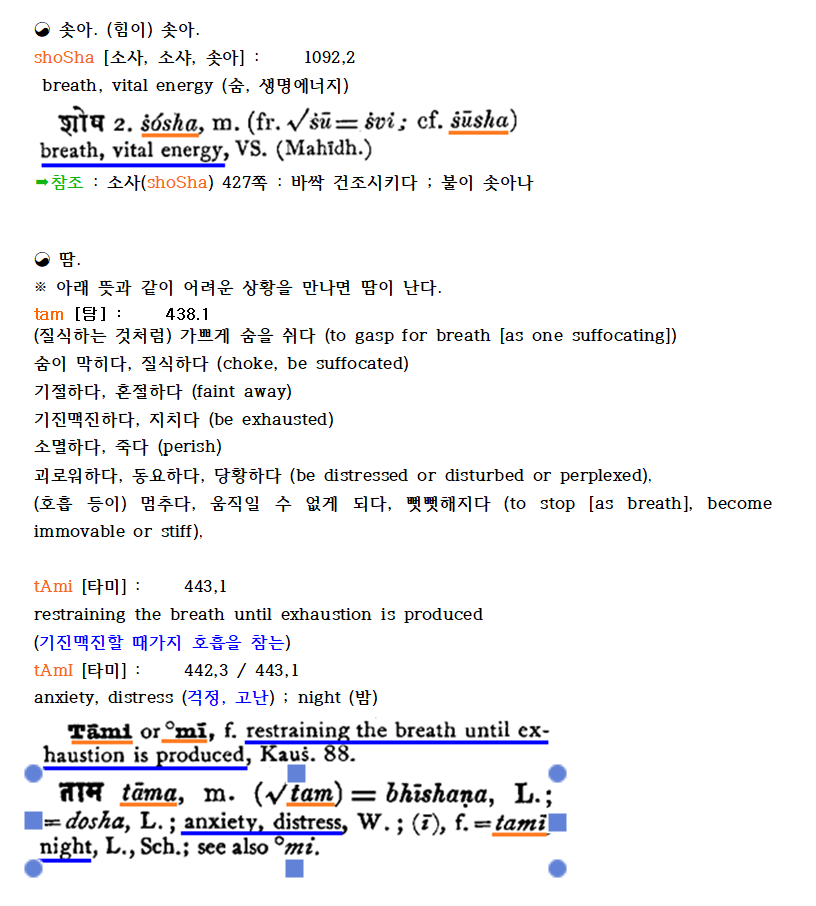
- 산스크리트어의 흔적: 산스크리트어 shoSha[소사·솟아]는 '숨, 생명 에너지, 활력'을 뜻한다.
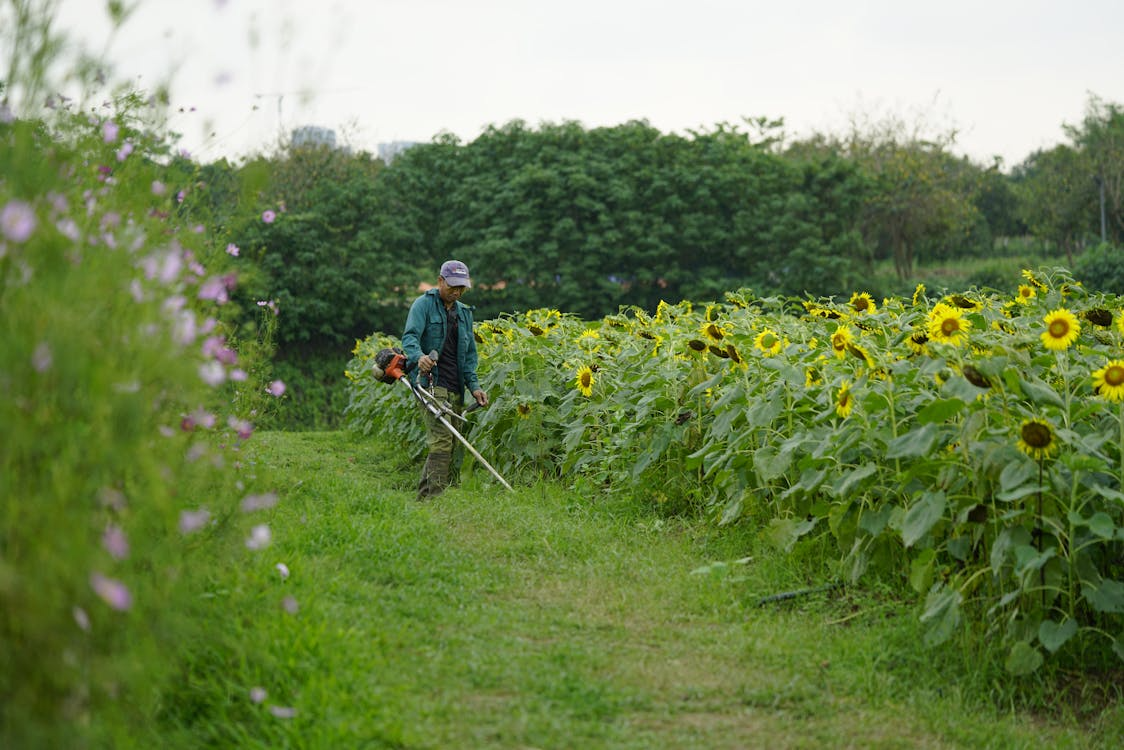
3. 땀 — 인간의 한계를 넘어선 거친 숨결
사람은 감당하기 어려운 상황이나 몸이 부서질 것 같은 고된 노동을 만나면
자연스럽게 온몸으로 땀을 흘린다.
그래서 땀은 단순한 체액이 아니라,
인간의 노력과 인내가 눈에 보이는 모습으로 치환된 것이다.
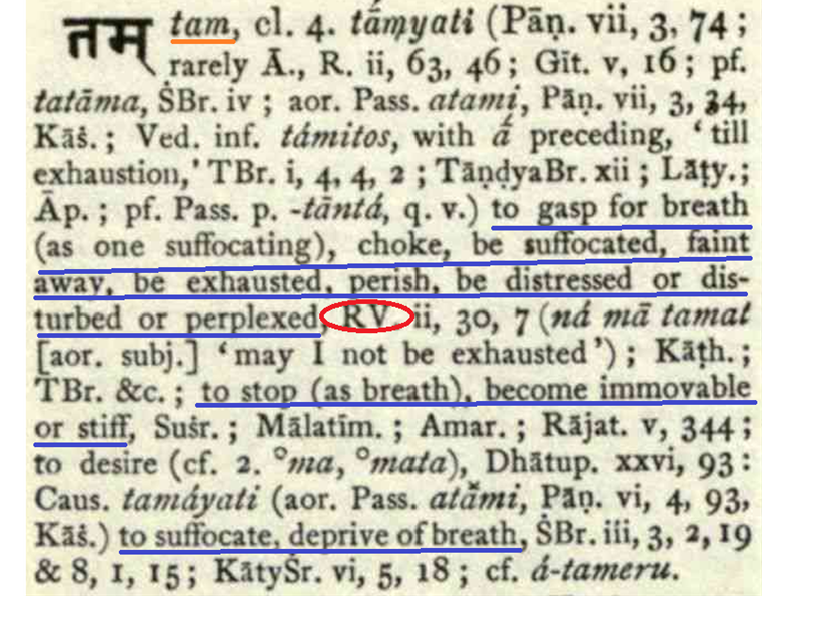
한여름의 논밭은 숨이 턱 막힐 듯한 질식의 공간(tam)이다.
가뭄과 잡초, 육신의 한계를 넘어 숨이 찰 때까지
헉헉거리는 농부의 모습이 곧 땀이다.
우리 선조들은 숨 막히는 찜통더위 속에서도 가을의 결실을 알고 있었기에,
그들이 흘린 땀은 숭고함 그 자체였다.
- 산스크리트어의 흔적:
- tam[탐]: '숨이 막히다, 헐떡이다, 기진맥진하다, 지치다'
- tAmi[타미]: '기진맥진할 때까지 숨을 참다'
- tAmI[타미]: '걱정, 고난, 고통'

4. 빡시다 — 대지라는 일터에 묶인 숙명
오늘날에도 우리는
몸과 마음이 지치고 힘든 일을 마주했을 때
구수하게 입버릇처럼 말하곤 한다.
“아이고, 오늘 일 참 빡시다.”
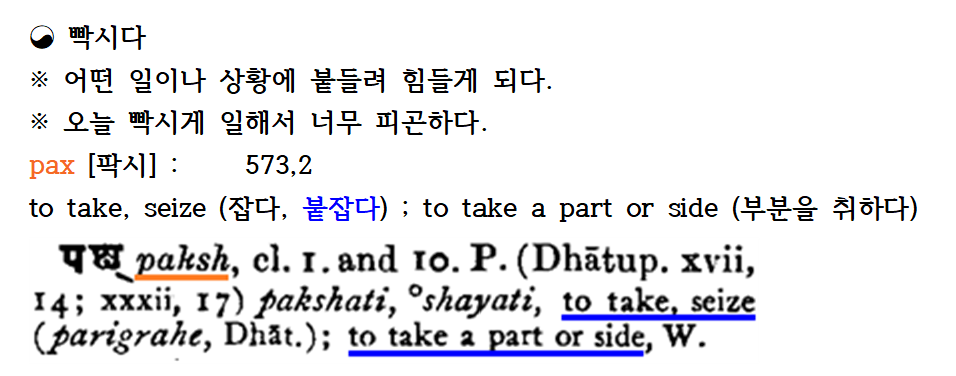
여름내내 농부는 농사일에 온몸이 단단히 붙들린 채 살아간다. 풀은 하루만 방심해도 무성하게 자라 논밭을 덮어버리고, 논물은 하루만 늦게 대주어도 벼가 말라버리기 때문이다. ‘빡시다’는 말은 대지라는 거대한 터전에 자신을 단단히 매어 두고, 단 하루도 게으름 피우지 않으며 성실하게 살아가는 농부의 아름다운 숙명을 보여준다.
- 산스크리트어의 흔적: 산스크리트어 pax[팍스]는 '묶이다, 붙잡히다, 얽매이다'라는 뜻을 지닌다.
5. 뻬다지 — 한 해의 수고를 정겹게 담아내는 그릇
전라도와 경기 일부 지역의 소박한 시골집에 가면,
어르신들이 작은 바구니나 서랍을 지금도
‘뻬다지’ 혹은 ‘뻬까’, '뻬다깐'이라고 정겹게 부르는 소리를 들을 수 있다.
뜨거운 여름날의 수고로움과 비지땀은
삶을 향해 솟아오르는 생명의 힘이자 결실의 다른 이름이다.
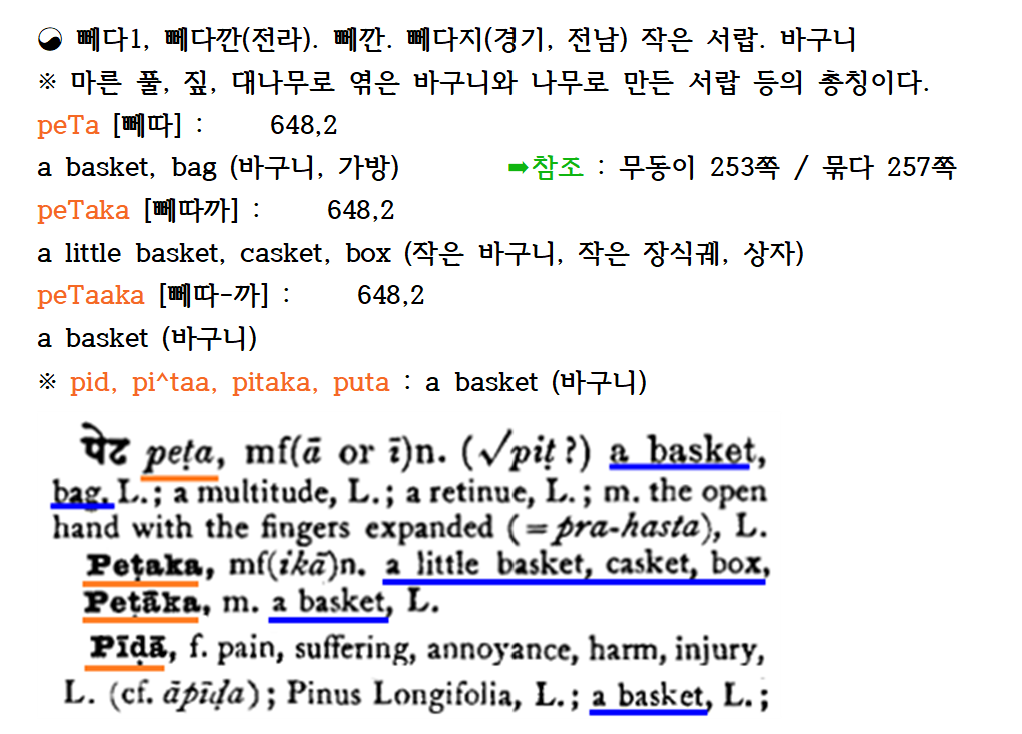
그 결실은 곧 풍성한 가을 곡식을 담을 바구니(peTa)이자 소쿠리이고 가마니가 된다.
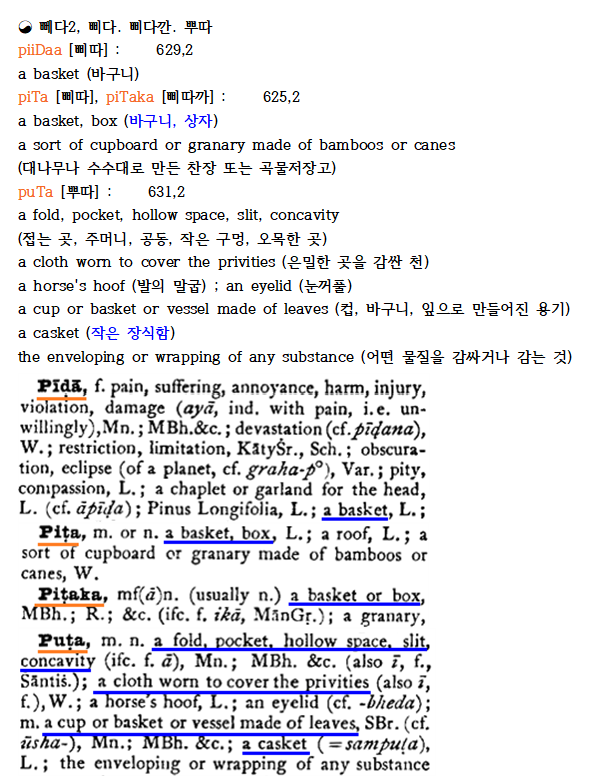
- 산스크리트어의 흔적: 산스크리트어 peTa[뻬타]는 '광주리, 바구니, 저장 용기'를 뜻하며, piiDaa[삐다]는 '곡식 저장고, 담아두는 그릇'을 뜻한다.
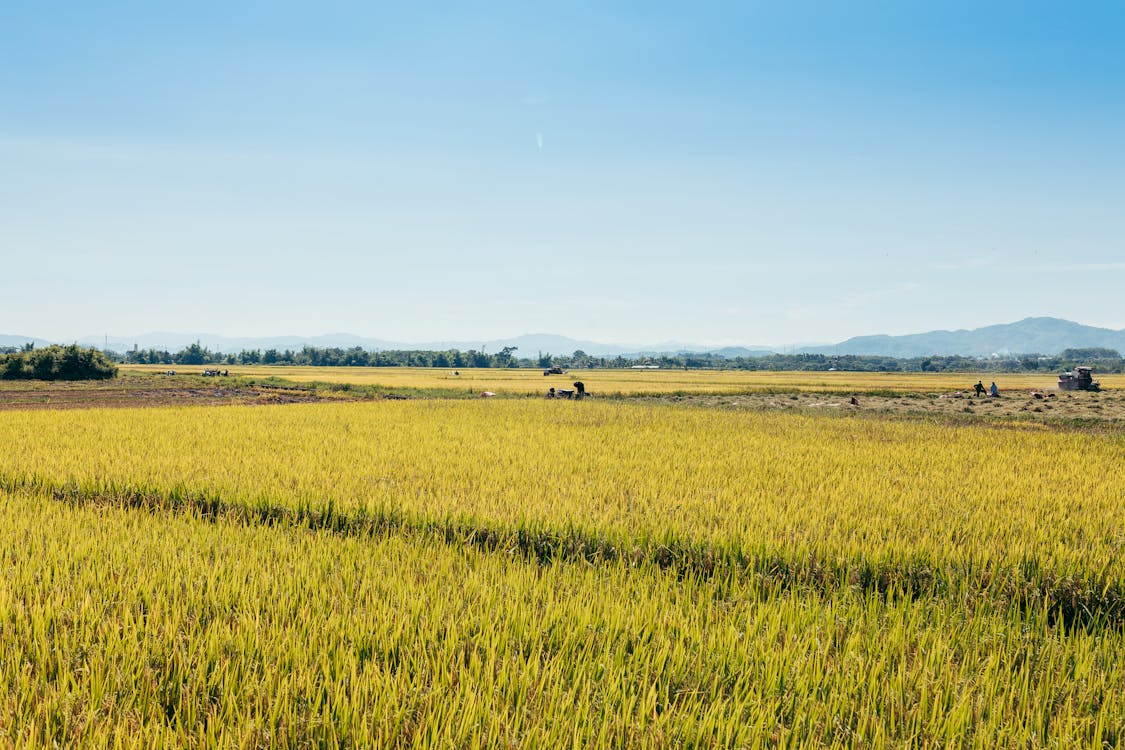
6. 부리다 — 일터를 지배하는 힘과 쏟아지는 결실의 무게
농촌의 여름은 사람도 일소도 쉴 틈 없이 움직이는 계절이다.
농부는 소를 ‘부려’ 논밭을 갈고,
가을이 되면 수확한 곡식 짐을 마당에 가득 ‘부린다’.
일하게 만드는 사역의 '부리다'와 짐을 풀어 내려놓는 '부리다' 속에는
고대인들이 바라본 노동의 역동성이 살아 숨 쉽니다.
부지런히 몸을 '부려(bhR^i)' 일한 자만이,
마당 가득 풍요로운 곡식 더미를 '부리는(vR^inda)' 기쁨을 누릴 수 있습니다.
- 산스크리트어의 흔적:
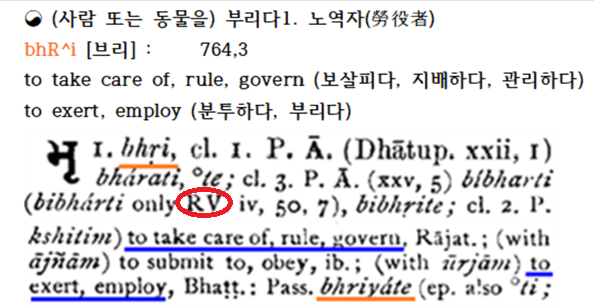
- bhR^i [브리]: '보살피다, 관리하다, 분투하다, 부리다(employ)'. 농부가 가축과 노역자를 세심하게 살피고(take care of) 다스리며 일터로 이끌던 거친 분투의 흔적입니다.
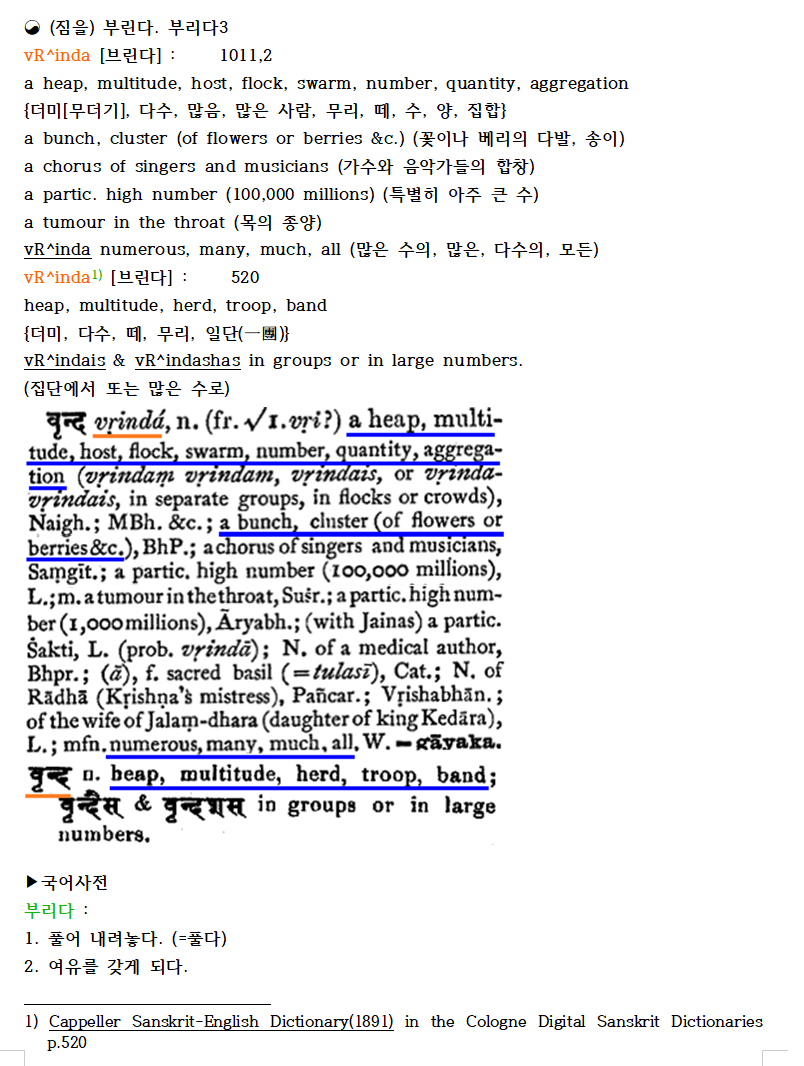
- vR^inda [브린다]: '더미, 무더기, 다수, 무리, 떼'. 지게나 달구지에 실어 온 풍성한 수확물을 마당에 쏟아내어 커다란 더미(heap)를 이룬 모습이 그대로 '짐을 부리다'라는 말로 굳어진 것입니다.
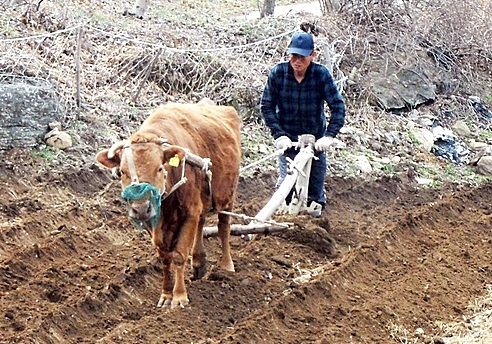
출처 :SDG뉴스
7. 맺음말: 자연의 순리를 믿는 농부의 위대한 여정
여름내내 농부는 가슴속에서 기운을 힘차게 솟아(shoSha) 올리며,
부지런히 비지(vij)땀 흘리고 몸을 움직여 들판을 누빈다.
때로는 온몸이 묶인 듯 빡신(pax) 노동을 묵묵히 견디고,
숨이 막힐 듯 기진맥진하도록 거친 땀(tam·tAmi)을 흘린다.
이 모든 과정 속에서 시원하게 쏟아지는 물(mrish)을 대어 곡식을 길러낸다.
그러나 농부는 단 한 순간도 의심하지 않고 잘 알고 있다.
그 모든 고단한 수고와 피땀이 머지않아 가을날의 풍요로운 황금 들판으로,
그리고 가득 찬 바구니 '뻬다지(peTa)'로 반드시 되돌아온다는 것을.
그것이 수천 년 동안 농부가 흙을 믿으며 지켜온 위대한 자연의 순리이며,
우리말 속에 세포처럼 살아남아 전해지는 생명의 기억이다.
다일라! 함께 일하고, 함께 견디고, 함께 결실을 거두리라.
대지를 일구며 인간의 한계를 극복해 온 선조들의 숭고한 숨결과
농부의 뜨거운 생명력(vaaja)에 깊이 감사해보는 따뜻한 하루가 되었으면 좋겠다.
●스스로 "나"를 사랑하고, 우리말과 역사를 사랑하는 모든 사람들에게 전달해 주십시오.
위 내용은 인터넷 주소창과 카톡에 아래와 같이 바로 입력하여 볼 수 있습니다.
www.다일라.한국/74
www.다일라.한국/61
www.다일라.한국/2
☆ 다 깨어 일어나라!!! 다일라!!! ☆ --대한민국 새로운 구호 제창
◈ ◈ ◈ ◈ ◈ ◈ ◈ ◈ ◈ ◈ ◈ ◈ ◈ ◈ ◈ ◈ ◈ ◈ ◈ ◈ ◈ ◈ ◈ ◈ ◈ ◈ ◈ ◈ ◈ ◈ ◈ ◈
Kim Seok-Hoon
Korean Etymology Researcher
Editor of Our Korean–Sanskrit Etymological Dictionary
Genealogical & Historical Lineage Researcher
Compiler of the scroll The Genealogical History of Humanity from the Heavenly Emperor Hwan-State and Joseon
Sweat and Surging Life: The Breath of Farmers Etched in Summer Fields
The height of summer, when even the wind burns with scorching heat.
Once the seeds sprout and shoot up by their own strength, the season of honest labor begins—written with the entire bodies of the earth and the farmers.
In the rice paddies, they bend their waists to weed the fields; in the dry fields, they pull out wild grass that grows taller by the day the moment they turn their backs. When torrential rain pours, they stay awake all night checking the water channels, anxious that their precious ridges might collapse. When drought strikes, they look up at the sky with a heart that burns as dry as the cracking soil.
Farming is not an endeavor of shortcuts or tricks. Nature never lies. Crops grow only as much as you sweat, and they bear fruit only as much as you dedicate your devotion. Our ancestors embedded these dynamic moments of labor into the very words we speak today. Let us uncover these great languages of life, one by one.
1. Bijittam (비지땀) — Sublime Vitality Pouring Over the Fields
The sweat that pours from a farmer’s body as they move without rest from the first light of dawn until the evening twilight is called 'Bijittam'. The sweat overflowing in the summer fields is not mere waste excreted because of the heat. It is the eruption of 'sublime energy' itself, awakening every cell in the body to nurture life upon the earth.
- Traces of Sanskrit: The Sanskrit word vaaja [바자] means 'power, vitality, and life force,' while vij [비지] means 'to move swiftly, to forge ahead powerfully, and to strive.'
2. Sosa! (솟아!) — The Life Energy Surging from Within
As they weed the endless rows of crop fields, farmers soon find their breath catching in their throats, and their legs become as heavy as a thousand pounds. In those moments, they shout out to encourage one another, or to steel their own resolve:
“Let your strength surge forth ('Him-i sosa-ra' / 힘이 솟아라)!”
Even in the deepest depths of an exhausted farmer's chest, the very last drop of energy surges back up powerfully with this cry.
- Traces of Sanskrit: The Sanskrit word shoSha [소사·솟아] means 'breath, vital energy, and vigor.'
3. Ttam (땀) — Human Breath Overcoming the Ultimate Limit
When human beings encounter overwhelming situations or body-crushing labor, they naturally shed sweat from their entire body. Therefore, sweat is not just a bodily fluid; it is the visible manifestation of human effort and endurance.
The summer rice paddies and crop fields become suffocating spaces of sheer exhaustion (tam). Sweat is the image of a farmer panting hard, pushing through drought, weeds, and physical limits. Our ancestors knew that this sweat was sacred. It wasn't just about the physical fluid dripping down; it was about enduring the suffocating heat because they already envisioned the autumn harvest in their minds.
- Traces of Sanskrit:
- tam [탐]: 'To gasp for breath, to choke, to be exhausted, to be distressed'
- tAmi [타미]: 'Restraining the breath until exhaustion is produced'
- tAmI [타미]: 'Anxiety, distress, hardship'
4. Ppaksida (빡시다) — A Destiny Bound to the Earth
Even today, when we face a grueling task that drains both body and mind, we often sigh using this earthy, rustic phrase:
“Ah, today’s work is truly 'ppaksida'.”
Throughout the summer, a farmer lives completely bound to the fields. If they let their guard down for a single day, the weeds overrun the crops; if they are a day late with the water, the rice stalks wither away. The word 'Ppaksida' perfectly captures the beautiful destiny of a farmer who binds themselves to the grand workplace of the earth, living each day with unyielding diligence.
- Traces of Sanskrit: The Sanskrit word pax [팍스] carries the meaning of 'to be bound, to be caught, or to be entangled.'
5. Ppedaji (뻬다지) — The Vessel for Holding Hard Work
If you visit rustic countryside homes in the Jeolla or Gyeonggi provinces, you can still hear the elders affectionately calling a small basket or drawer ‘Ppedaji’, ‘Ppeka’, or ‘Ppedakkan’. The grueling toil and heavy sweat shed on hot summer days are simply another name for the harvest, driven by the surging power of life. Soon, this harvest turns into baskets (peTa), sieves, and straw sacks overflowing with autumn grains.
- Traces of Sanskrit: The Sanskrit word peTa [뻬타] means 'a basket, a wicker vessel, or a storage container,' and piiDaa [삐다] refers to 'a grain storehouse or a vessel for keeping things safely.'
6. Burida (부리다) — The Power That Governs the Workplace and the Weight of Pouring Harvest
Summer in rural villages is a season when both humans and work oxen move without a moment's rest. A farmer 'buries' (commands/employs) an ox to plow the paddies and fields, and when autumn arrives, they 'bury' (unload/pour down) heavy loads of harvested grain into the courtyard. Within 'burida,' which means to make someone work (command), and 'burida,' which means to unpack and unload cargo, the dynamism of labor as viewed by ancient people breathes alive.
Only those who diligently 'employ (bhR^i)' their bodies can enjoy the joy of 'unloading (vR^inda)' a bountiful heap of grain into the courtyard.
- Traces of Sanskrit:
- bhR^i [브리]: 'To take care of, rule, govern, exert, employ.' This is a trace of the rugged struggle where a farmer carefully tended to (take care of) and governed livestock and laborers, leading them into the workplace.
- vR^inda [브린다]: 'A heap, multitude, host, flock, swarm, number, quantity, aggregation.' The sight of rich harvests, brought on an A-frame backpack (jige) or a cart, being poured out onto the courtyard to form a massive heap is what became fixed as the expression 'unloading (burida) cargo.'
7. Conclusion: The Great Journey of a Farmer Believing in the Laws of Nature
All summer long, farmers summon their vital energy to surge upward (shoSha), swiftly moving their bodies to shed heavy sweat (vij). They silently endure grueling labor (pax) that feels as though their entire body is bound, pouring out sweat (tam · tAmi) to the point of utter exhaustion. Throughout this entire journey, they tend to the fields by drawing water (mrish) to raise the crops.
Yet, the farmer never doubts for a single moment. They know with absolute certainty that all this exhausting toil, blood, and sweat will eventually return as a golden, bountiful autumn plain, filling the storage baskets (peTa) to the brim.
This is the great law of nature that farmers have trusted for thousands of years by placing their faith in the soil. It is the memory of life that has survived like living cells inside the words we speak today.
Da·illa! (다일라!)
Let us work together, let us endure together, and let us reap the fruits together.
I hope we can take a warm moment to deeply appreciate the sublime breath of our ancestors who overcame human limits to cultivate the earth, and the burning life force (vaaja) of our farmers.