김석훈 | 우리말 뿌리연구가, 『우리말 범어사전』 편저자
| 역사계보 족보연구가, 『천제환국조선인류역사계보 』 두루마리 편
| '다일라 운동' 주창

푸때죽과 밥심
곡식을 갈고, 힘을 모으고, 함께 일어나던 사람들의 언어
우리 선조들의 삶은 말 속에 남아 있다.
논과 밭을 일구고,
곡식을 갈아 죽을 쑤고,
함께 힘을 모아 울력을 하며 살아온 세월이 우리말 곳곳에 스며 있다.
때로는 푸때죽이 되었고,
때로는 으랏짜짜가 되었으며,
때로는 다일라가 되었다.
말은 단순한 소리가 아니라 삶의 기억이다.
1. 곡식을 갈고 빻던 삶의 언어
먹을 것이 넉넉하지 않던 시절,
사람들은 한 톨의 곡식도 허투루 하지 않았다.
도정하고 남은 겨와 거친 알곡까지 갈아 죽을 쑤어 허기를 달랬다.
전남 남해안에서나 북한지역서 지금도 그런 죽을 푸때죽이라 부른다.
- 산스크리트어의 흔적
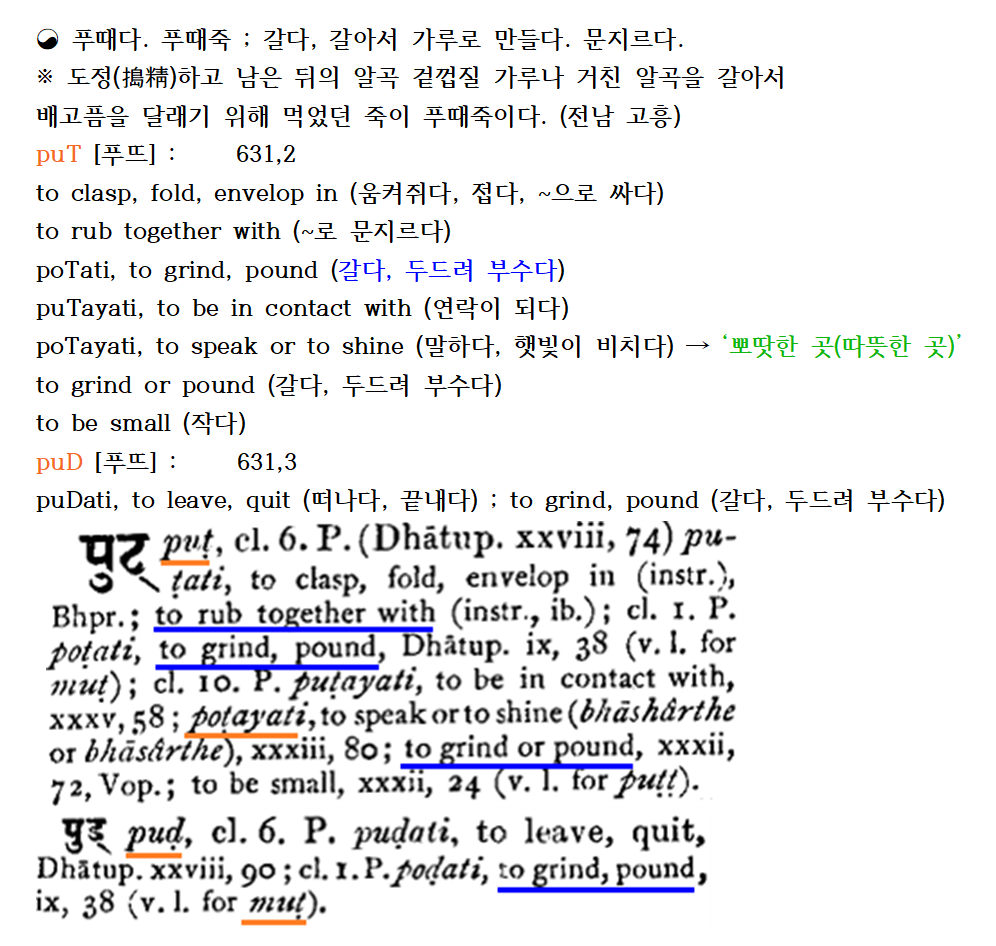
- put [뿌트] / puḍ [푸뜨] : 갈다, 빻다
- poṭati : 갈다, 두드려 부수다
푸때죽의 "푸때" 역시 곡식을 갈고 빻아 어떻게든 식구들을 먹이려 했던
어머니의 손길, 즉 '갈고 빻는 행위'를 고스란히 담고 있는 가장 오래된 삶의 흔적입니다.
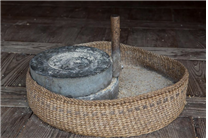
2. 맷돌, 생명을 이어 준 돌
곡식을 먹을 수 있게 만드는 가장 중요한 도구가 맷돌이었다.
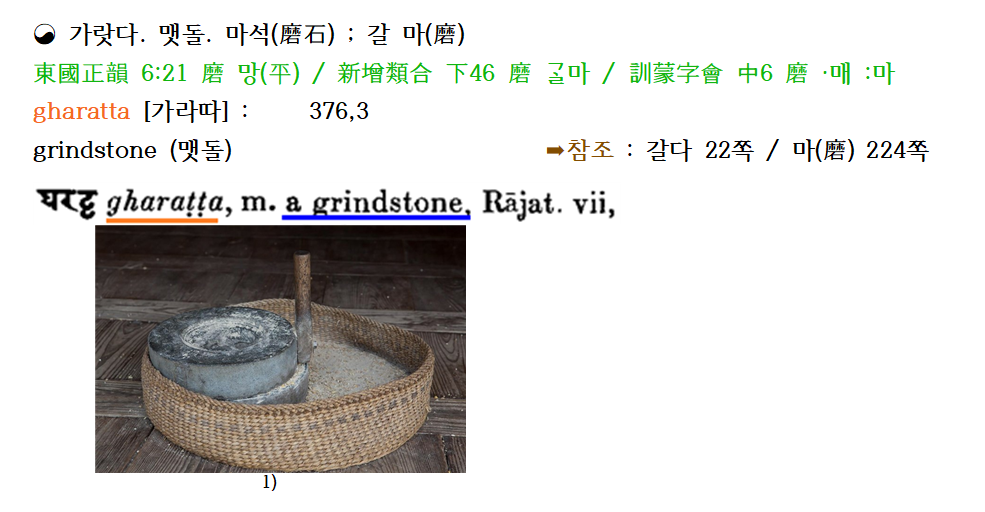
《훈몽자회》에는
磨 · 매 : 마
라고 기록되어 있다.
맷돌은 단순히 곡식을 가는 돌이 아니라
생명을 이어 주는 생활의 중심이었다.
- 산스크리트어의 흔적
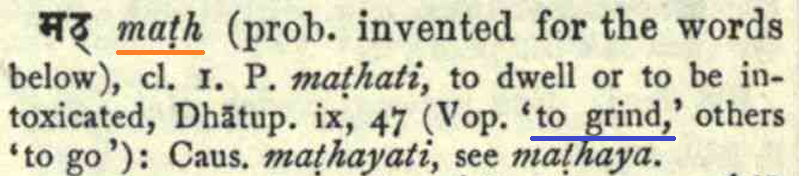
- maTh [마트] : 갈다(grind) '맡 + 돌'이 언어의 세월을 거쳐 '맽돌'을 지나 오늘날의 '맷돌'로 변화했을 음운적 궤적을 보여줍니다.
- gharatta [가라따] : 맷돌(grindstone) 그 자체를 뜻하는 오래된 이름입니다.
맷돌은 곡식을 가루로 만들고,
가루는 죽이 되고,
죽은 다시 사람의 생명이 되었다.
선조들의 하루는 맷돌 소리와 함께 시작되고 끝났을 것이다.
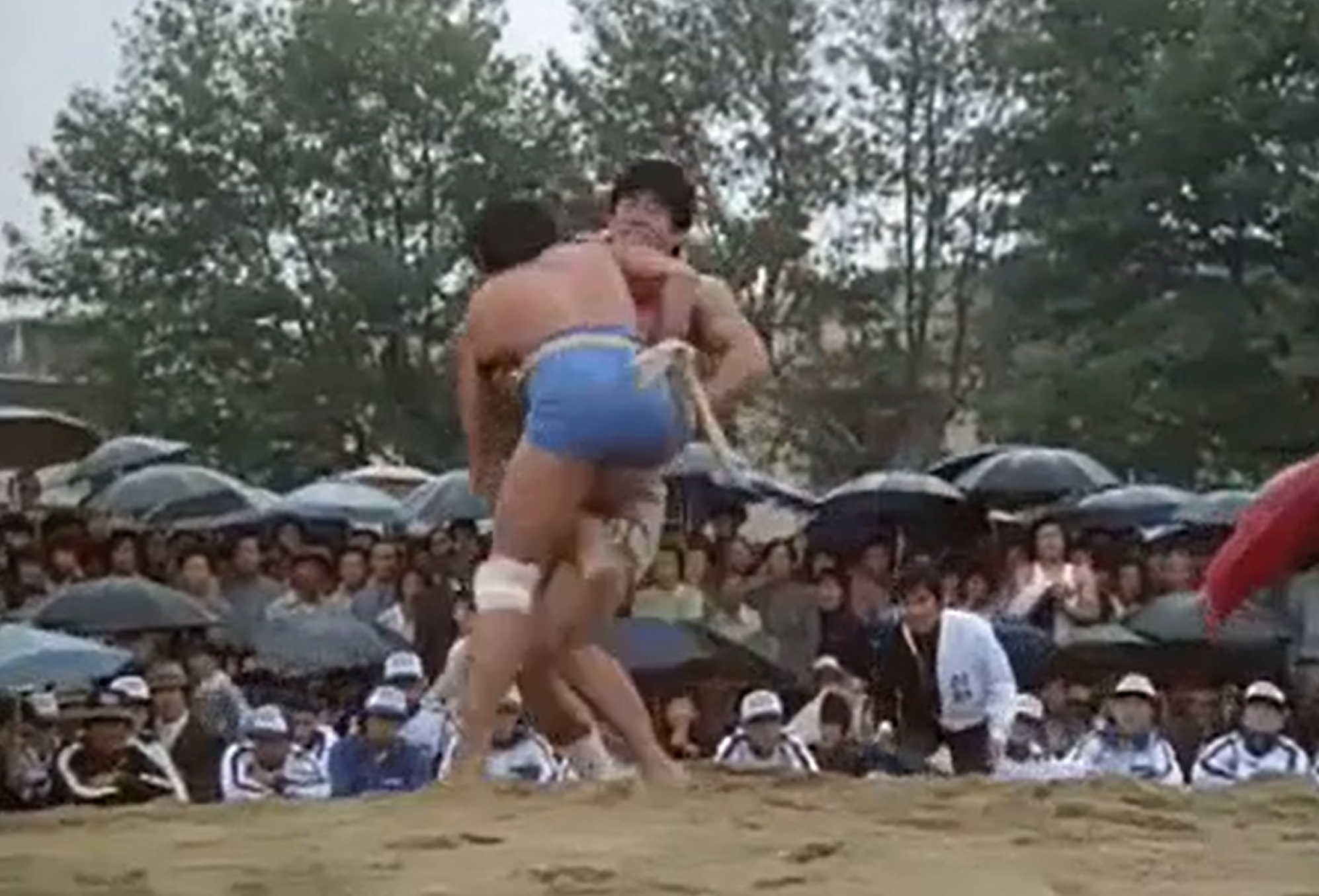
3. 힘은 본래 심이었다
오늘날 우리는 "힘"이라고 말한다.
그러나 옛사람들은
밥심으로 산다
라고 말했다.
그 속에는 오래된 언어의 흔적이 남아 있다.
- 산스크리트어의 흔적
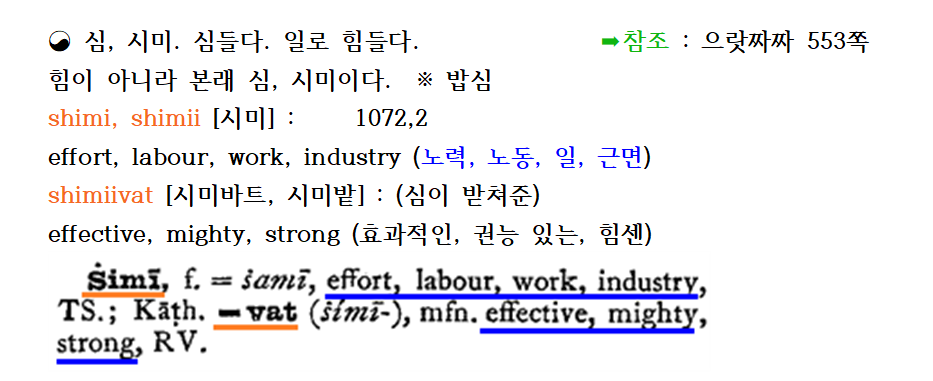
- shimi, shimii [시미] : 노력, 노동, 일(effort, labour, work)
- shimiivat [시미밭] : 힘이 받쳐 주는, 강한, 힘센(mighty, strong)
심은 단순한 근육의 힘이 아니다.
삶을 버티게 하는 기운이고,
사람을 움직이게 하는 생명의 에너지였다.
그래서 오늘도 우리는
"밥심으로 버틴다"고 말한다.
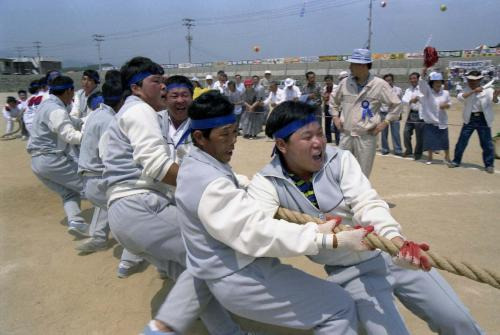
4. 울력, 함께 대지를 다듬던 시간
곡식을 갈아 '심'을 얻은 사람들이 향한 곳은 공동체의 일터였습니다.
마을이나 사찰에서 모두가 손을 걷어붙이고
함께 길을 내고,
풀을 베고,
도랑을 다듬던
협동의 역사가 바로 '울력'입니다.
- 산스크리트어의 흔적
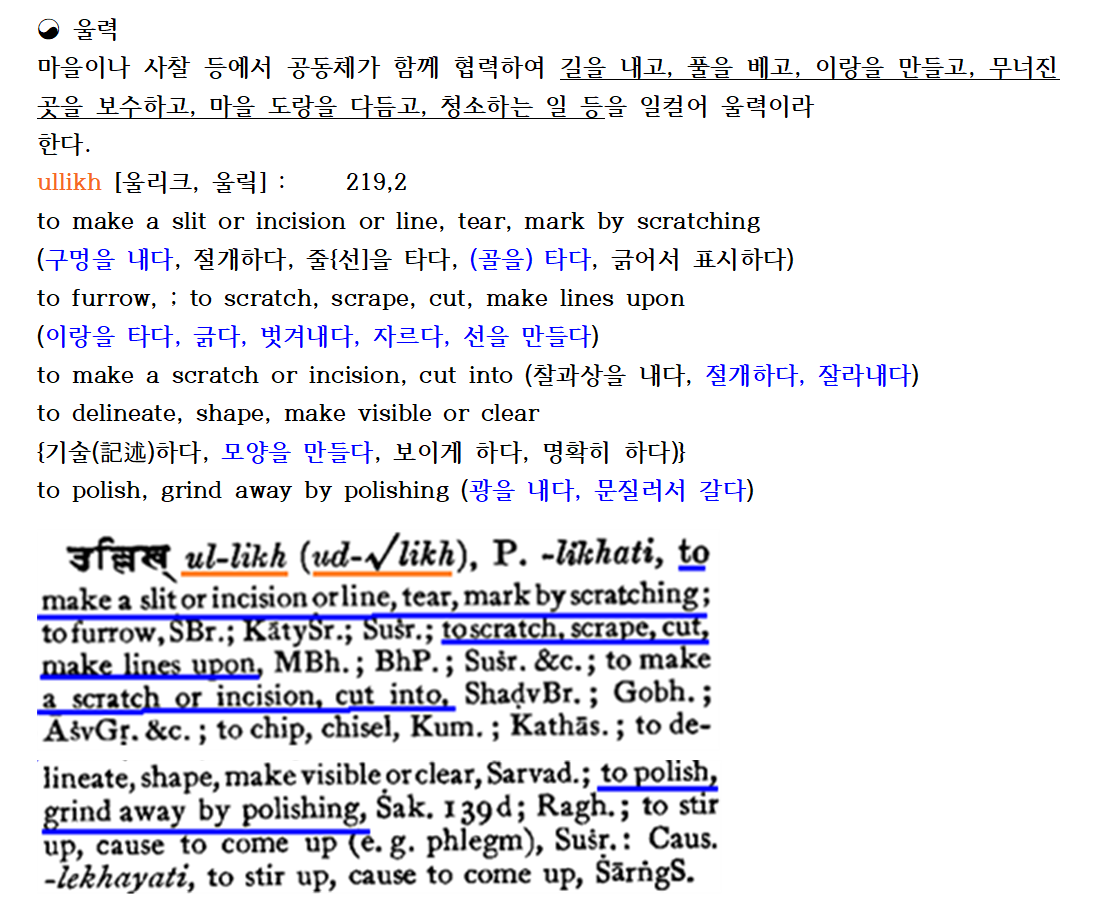
- ullikh [울리크] : 이랑을 타다(furrow), 긁어내고 다듬다(scrape), 선과 모양을 명확히 만들다(delineate)
- 선조들이 삽과 괭이를 들고 땅에 금을 그어 길을 내고, 흙을 긁어내 도랑을 치며, 밭에 이랑을 타던 역동적인 노동의 풍경이 ullikh라는 발음 속에 고스란히 박제되어 있습니다. 울력은 거친 대지를 함께 다듬어 살 만한 터전으로 정화해 가던 땀방울의 언어였습니다.
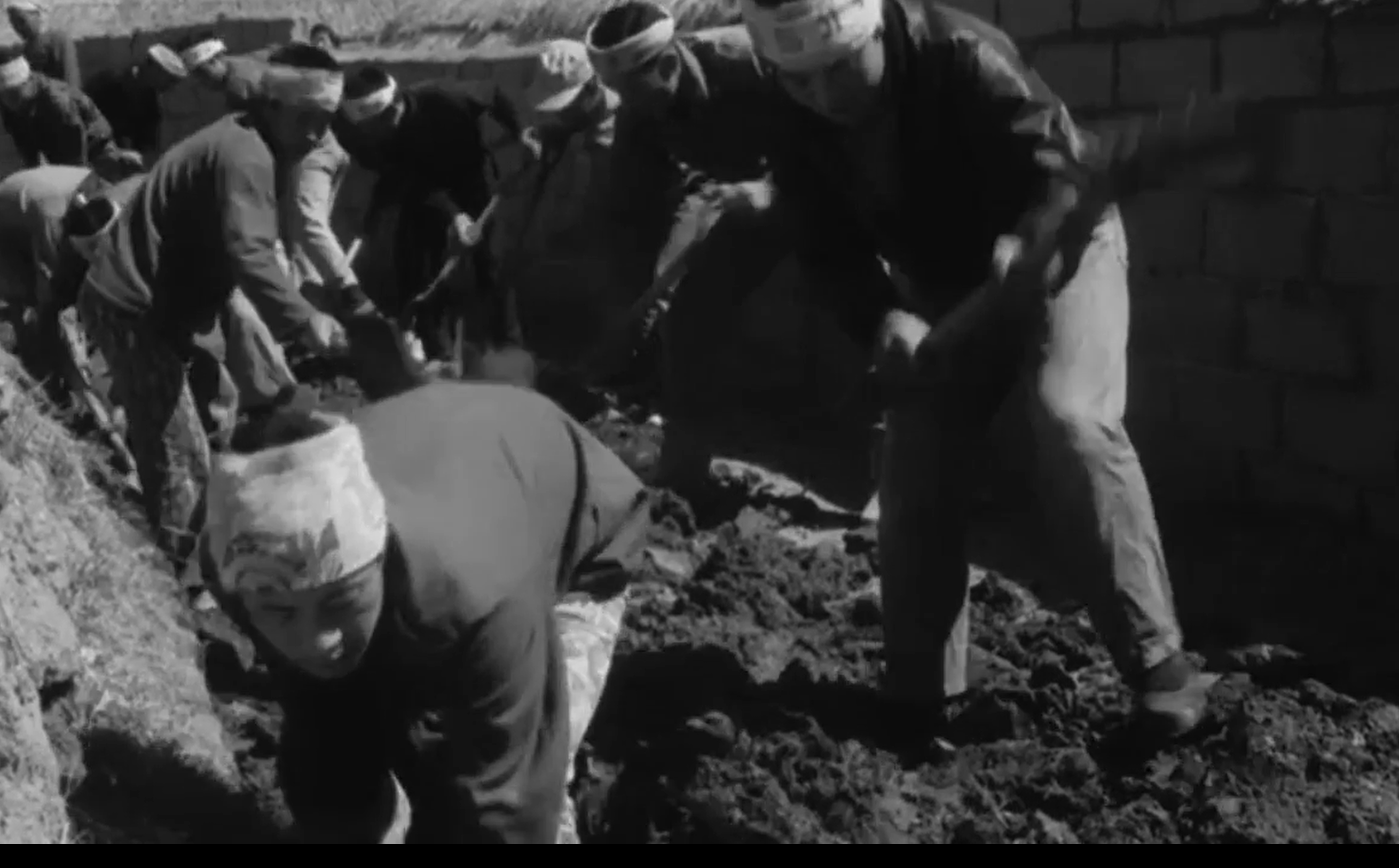
5. 함께 힘을 모으던 외침
옛 농촌에는 혼자 하는 일이 많지 않았다.
논을 매고,
둑을 쌓고,
큰 돌을 옮기고,
곡식을 거둘 때마다
사람들은 소리를 맞추며 서로의 숨을 골랐습니다.
| 우리말 감탄사 | 산스크리트어 원형 | 본래의 의미 |
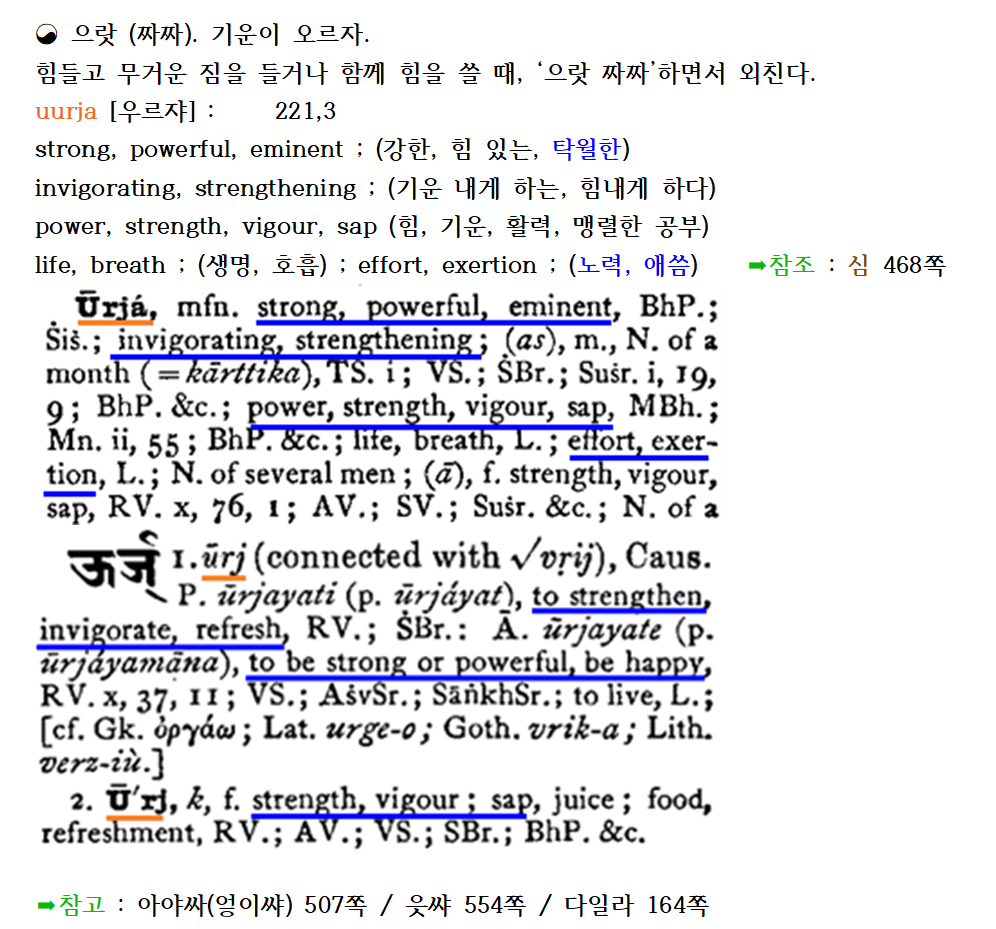
| 으랏짜짜 | ūrjā [우르자] | 힘, 기운, 활력 (strength, vigour) |
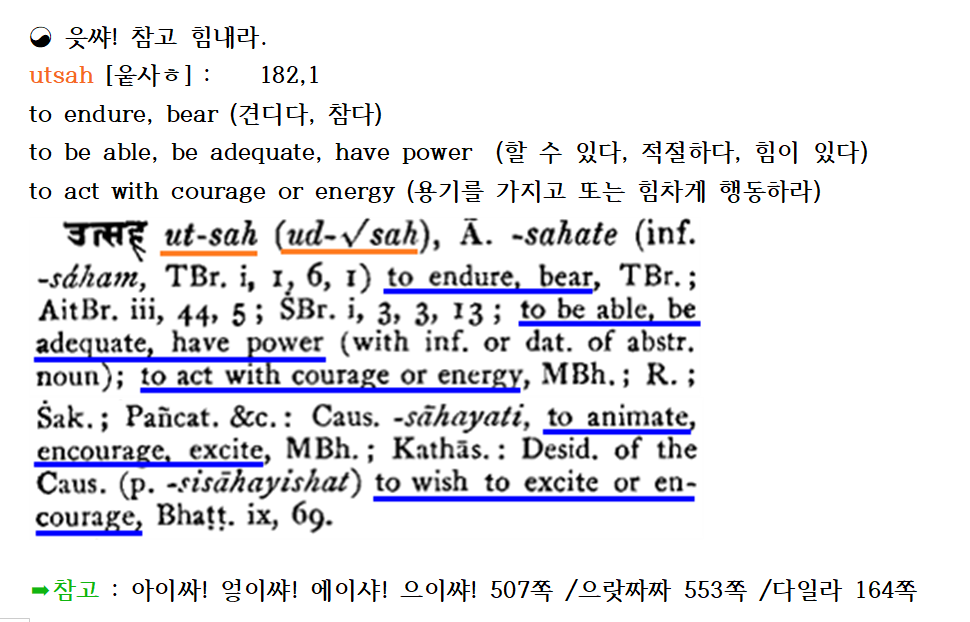
| 읏쌰! | utsāha [웉사하] | 용기, 분발, 힘차게 행동함 (courage, enthusiasm) |
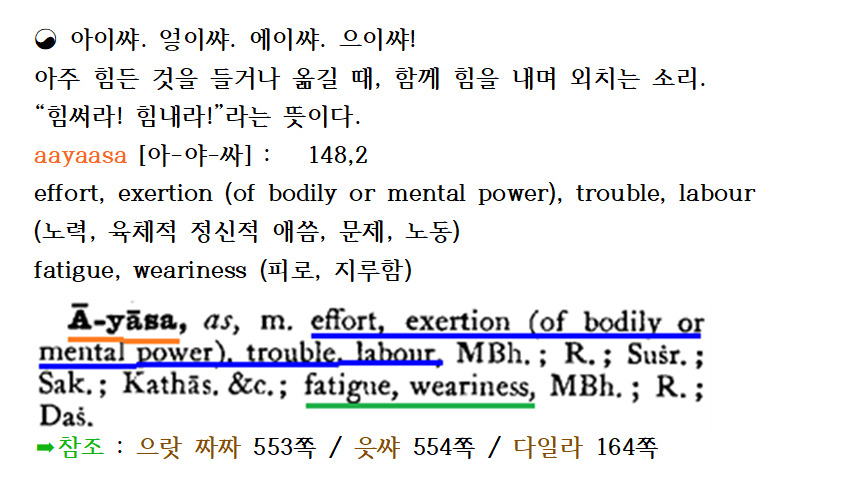
| 아이쌰 · 어이쌰 · 으이쌰 | āyāsa [아야사] | 애씀, 노동, 수고 (effort, exertion) |
이러한 소리는 단순한 감탄사가 아니었다.
서로의 숨을 맞추고,
서로의 기운을 북돋우며,
무거운 삶을 함께 들어 올리는 공동체의 언어였다.
6. 다일라! 함께 일어나라
고흥 보성 순천 여수 등 남도 사람들은 지금도 상대의 말에 깊이 공감할 때
"다일라~~~"
라고 말한다.
그 속에는 오래된 공동체 정신이 담겨 있다.
다일라는
"다 함께 일어나라!"
라는 뜻으로도 읽히고,
"그럼 그렇고말고요!"
"정말 맞는 말씀입니다!"
라는 최고의 맞장구로도 쓰인다.
●스스로 "나"를 사랑하고, 우리말과 역사를 사랑하는 모든 사람들에게 전달해 주십시오.
위 내용은 인터넷 주소창과 카톡에 아래와 같이 바로 입력하여 볼 수 있습니다.
www.다일라.한국/71
www.다일라.한국/61
www.다일라.한국/2
☆ 다 깨어 일어나라!!! 다일라!!! ☆ --대한민국 새로운 구호 제창
◈ ◈ ◈ ◈ ◈ ◈ ◈ ◈ ◈ ◈ ◈ ◈ ◈ ◈ ◈ ◈ ◈ ◈ ◈ ◈ ◈ ◈ ◈ ◈ ◈ ◈ ◈ ◈ ◈ ◈ ◈ ◈
Kim Seok-Hoon
Korean Etymology Researcher
Editor of Our Korean–Sanskrit Etymological Dictionary
Genealogical & Historical Lineage Researcher
Compiler of the scroll The Genealogical History of Humanity from the Heavenly Emperor Hwan-State and Joseon
Living on Putaejuk and Drawing Strength from Sim
The Language of a People Who Ground Grain, Gathered Their Strength, and Rose Together
The lives of our ancestors remain preserved in their words.
They tilled the fields,
ground grain into porridge,
and joined their strength in communal labor.
The traces of those lives still echo throughout the Korean language.
Sometimes they appear as Putaejuk,
sometimes as the cry "Eurat-jjajja!",
and sometimes as DA·ILLA.
Words are not merely sounds.
They are memories of life itself.
1. The Language of Grinding and Pounding Grain
In times when food was scarce, people wasted not a single grain.
Even husks and coarse kernels left after milling were ground into porridge to ease hunger.
Along Korea's southern coast and in parts of North Korea, such porridge is still known as Putaejuk.
Linguistic Traces from Sanskrit
put [pput] / puḍ [put]
: to grind, to pound
poṭati
: to grind, to crush by pounding
The word Putae in Putaejuk preserves the memory of grinding and pounding grain—the tireless hands of mothers who struggled to feed their families by making use of every last kernel.
It is not merely the name of a food.
It is a memory of survival.
2. The Millstone: The Stone That Sustained Life
The most important tool for turning grain into food was the millstone.
The Hunmong Jahoe (訓蒙字會) records:
磨 — "mae : ma"
(to grind)
A millstone was not merely a stone for grinding grain.
It stood at the very center of daily life.
Linguistic Traces from Sanskrit
maTh [math]
: to grind
This suggests a possible phonetic path:
mat + dol
→ maet-dol
→ maetdol
(the modern Korean word for millstone)
Another Sanskrit word,
gharatta [garatta]
means
"millstone" or "grindstone"
itself.
The millstone turned grain into flour.
The flour became porridge.
And the porridge became life.
The days of our ancestors likely began and ended with the sound of the millstone turning.
3. Strength Was Once Sim
Today Koreans say him (힘), meaning strength.
Yet older generations often said:
"One lives by bapsim."
("Strength comes from food.")
Within that expression lies an older layer of language.
Linguistic Traces from Sanskrit
shimi, shimii [simi]
: effort, labor, work
shimiivat [simivat]
: supported by strength, powerful, mighty
Sim was more than muscular power.
It was the life-force that enabled people to endure hardship and continue living.
It was the energy that moved people forward.
That is why Koreans still say:
"I'm getting through it on bapsim."
4. Ullyeok, a Time of Shaping the Earth Together
Those who gained sim (vital energy) from their bowls of porridge headed toward the communal workspace. The history of this cooperation—where everyone rolled up their sleeves at villages or temples to clear paths, cut grass, dredge ditches, and restore their surroundings—is known as Ullyeok.
- Traces in Sanskrit
- ullikh: To furrow (make a slit/line); to scrape or shape; to delineate (make visible or clear).
- The dynamic scenery of our ancestors lifting shovels and hoes to cut paths in the earth, scraping away mud to clear ditches, and furrowing the ridges of the fields remains perfectly preserved within the pronunciation of the word ullikh. Ullyeok was an language written in sweat—a collective effort to tame the wild earth and transform it into a place where life could beautifully endure.
- ullikh: To furrow (make a slit/line); to scrape or shape; to delineate (make visible or clear).
4. Cries That Gathered Strength
Traditional rural life was rarely a solitary endeavor.
When weeding fields,
building embankments,
moving large stones,
or harvesting crops,
people synchronized their efforts through rhythmic cries.
| Eurat-jjajja | ūrjā | strength, vigor, vitality |
| Utssya! | utsāha | courage, enthusiasm, energetic action |
| Aissya / Eoissya / Euissya | āyāsa | effort, labor, exertion |
These sounds were more than simple exclamations.
They synchronized breath,
encouraged one another,
and helped people lift the burdens of life together.
They were the language of cooperation.
5. DA·ILLA — Rise Together!
DA·ILLA (da il-la)
Even today, in the southern regions of Korea—including Goheung, Boseong, Suncheon, and Yeosu—people often respond to a statement they deeply agree with by saying:
"DA·ILLA~~~!"
The spelling DA·ILLA intentionally separates the two elements.
Without the separator, many Western readers naturally pronounce Daila as "Day-la."
Writing it as DA·ILLA encourages the intended pronunciation:
Da Il-la
while preserving its original meaning.