김석훈 | 우리말 뿌리연구가, 『우리말 범어사전』 편저자
| 역사계보 족보연구가, 『천제환국조선인류역사계보 』 두루마리 편
| '다일라 운동' 주창
놉과 새참의 언어
— 함께 일하고 함께 먹으며 생명을 키우다
봄이 오면 농부들은 다시 들녘으로 나선다.
겨우내 잠들었던 땅을 깨워 씨곡을 뿌리고,
모종을 심고, 김을 매며 한 해 농사를 정성껏 보살핀다.
자연은 농부의 땀에 늘 정직하게 응답한다.
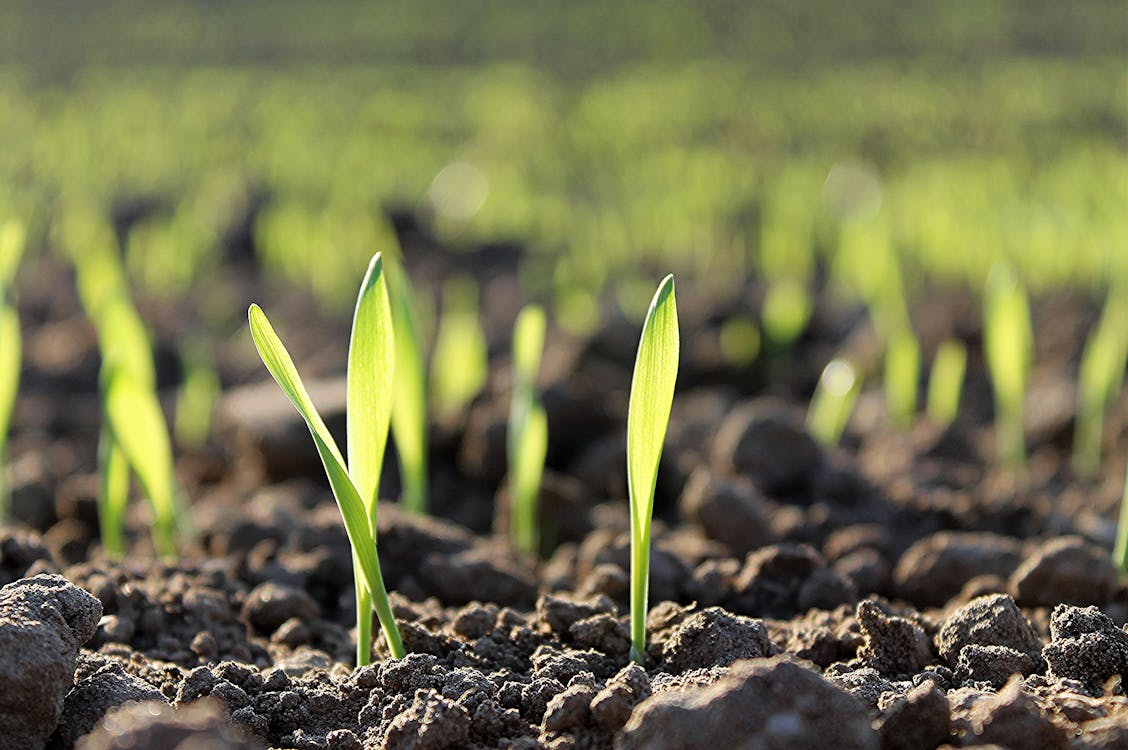
뿌려놓은 논과 밭에서는 마침내 움이 트고, 연한 싹이 돋아난다.
검은 흙을 밀어내고 나온 작은 싹은 가을의 풍요를 약속하는 첫 번째 생명의 인사였다.
1. 움이 트고 싹이 돋다
농부가 가장 기다리는 순간은 바로 움이 트고 싹이 돋는 순간이다.
단단한 씨앗이 껍질을 깨고 세상 밖으로 얼굴을 내민다.
그 작은 생명 하나에 가을의 결실이 담겨 있다.
생명의 어원
- 움 (타밀어 umi)
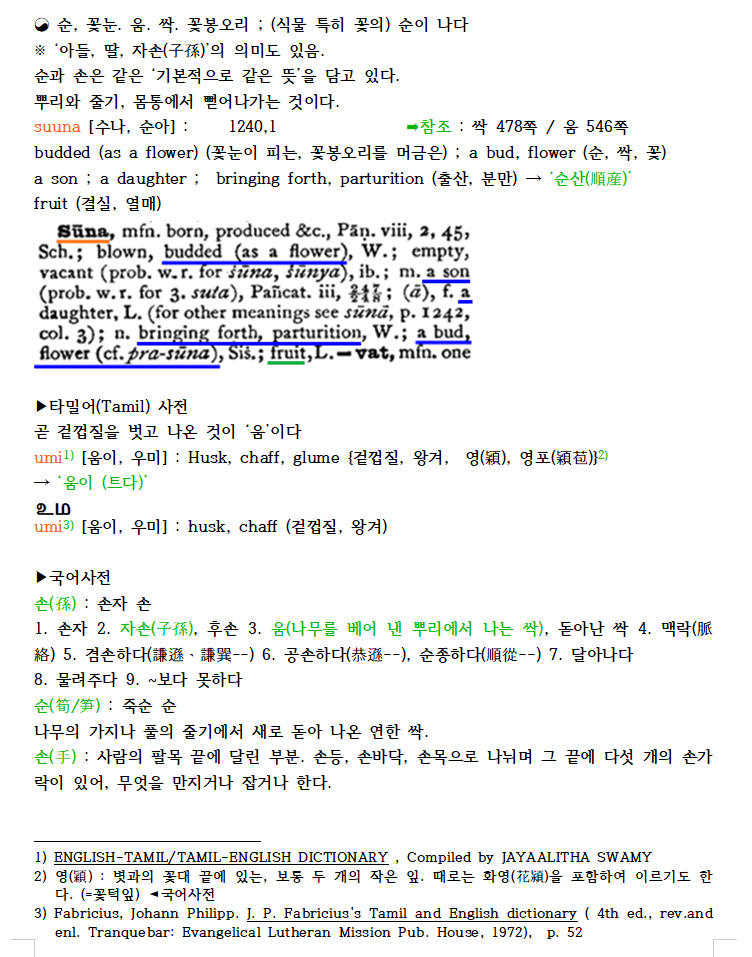
- 타밀어 umi는 ‘겉껍질, 왕겨, 껍질’을 뜻한다.
- 즉, '움이 튼다'는 것은 씨앗이 단단한 껍질을 깨고 나오는 생명의 시작을 의미한다.
- 순 · 싹 (산스크리트어 suuna)
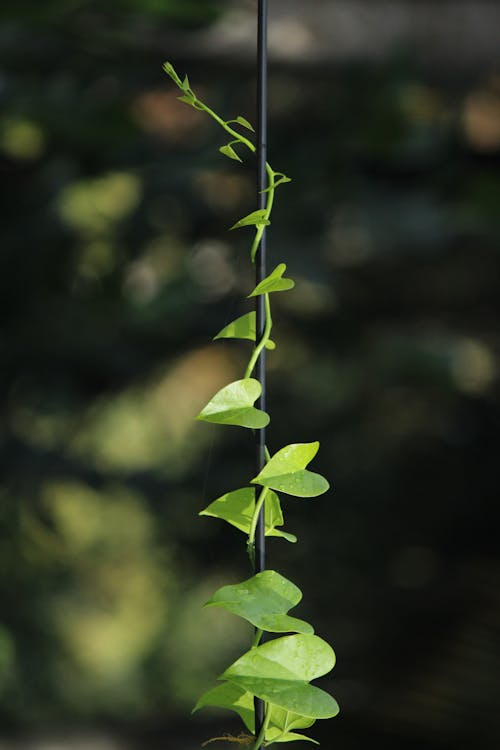
- suuna는 ‘꽃눈, 꽃봉오리, 순, 싹’을 뜻한다.
- 놀랍게도 이 단어는 ‘아들, 딸, 자손’이라는 뜻도 함께 가진다.
- 식물에게서 순(筍)이 돋고, 사람에게서는 손(孫)이 태어나듯, 순과 손은 모두 새로운 생명이 사방으로 뻗어 나가는 아름다운 모습을 담고 있다.
- 사람의 손(手)도 몸에서 나온 순과 같다. 영어 Son(아들)도 부모에게 뻗어나온 순(筍)이자 손(孫)이다.

2. 놉을 아스고 품앗이를 하다
농사는 결코 혼자 짓는 일이 아니었다.
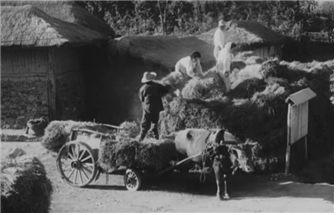
모내기철이 오고 김매기가 시작되면 일은 산더미처럼 늘어난다.
그래서 농부들은 미리 일꾼을 구해 놓고, 이웃들과 품앗이를 했다.
전라도에서는 지금도 이 정겨운 표현을 일상에서 쓰곤 한다.
“내일 일해줄 놉을 미리 아서놨다.”
협력의 어원
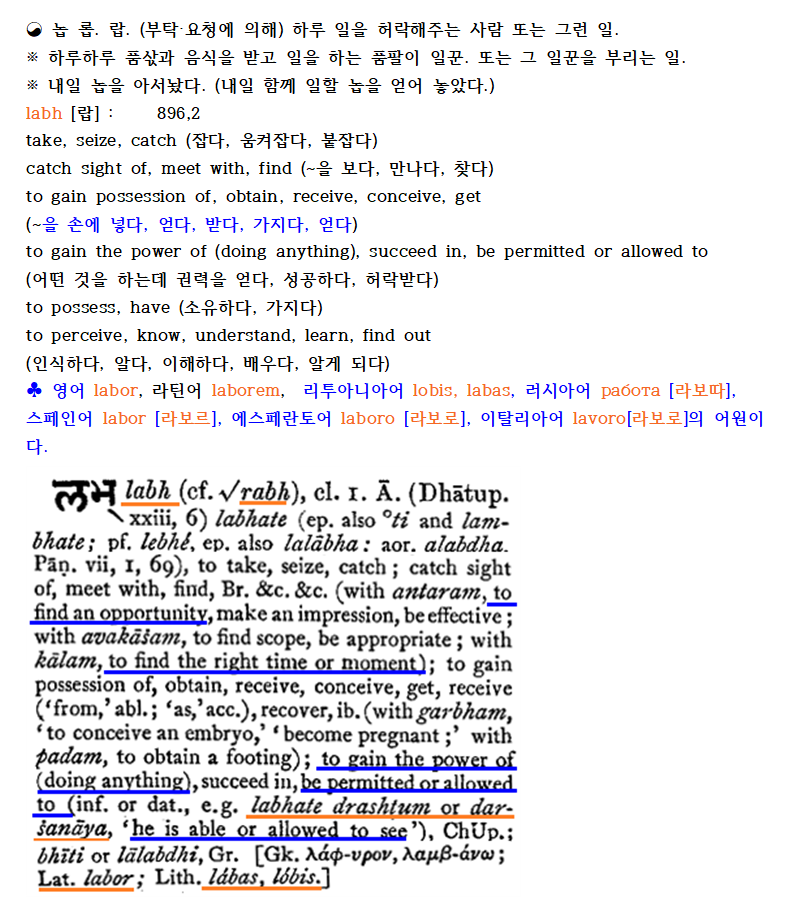
- 놉 (산스크리트어 labh)
- labh는 ‘얻다, 구하다, 손에 넣다, 허락받다’를 뜻한다.
- 하루 품삯을 받고 일하는 '놉'은 단순한 고용인이 아니라, 우리 집에 와준 ‘얻은 사람’, ‘귀하게 구한 일손’이었다.
- 영어 labor, 러시아어 rabota, 스페인어 labor 역시 같은 계열의 어원으로 설명된다.
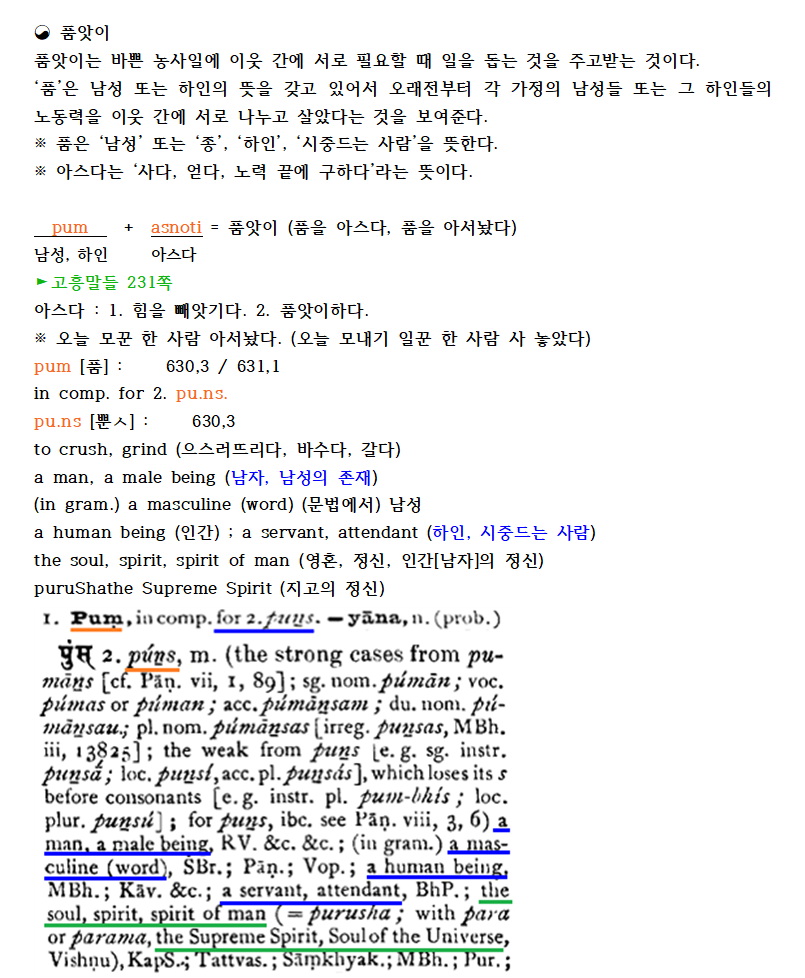
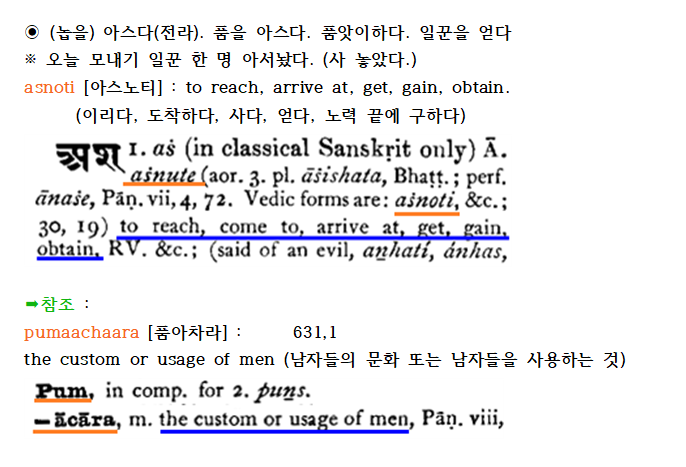
- 품앗이 (산스크리트어 pum + asnoti)
- pum은 ‘남성, 사람, 하인, 노동하는 사람’을 뜻한다.
- asnoti는 ‘얻다, 구하다, 도달하다’를 뜻한다.
- 결국 품앗이란 서로의 귀한 품(노동력)을 얻고 나누며 위험을 분산하고 함께 살아가는 농촌의 지혜였다.
3. 애쓰고 욕보다
뜨거운 뙤약볕 아래서도 농부들은 쉬지 않았다.
논에서는 허리를 굽혀 김을 매고, 밭에서는 호미질을 하며,
비바람이 불어도 농작물을 살폈다.
몸과 마음을 다해 온 힘을 쏟아부었다.
그렇게 고된 하루 일을 마칠 때면,
사람들은 서로를 향해 깊은 위로를 건넸다.
“오늘 참 욕봤다.”
노동의 어원
- 애쓰다 (산스크리트어 Iha / Ihita)
- iha는 ‘노력, 애씀, 수고’를 뜻하고, ihita는 ‘애써 이룬 것, 분투한 것’을 의미한다.
- 온 정성을 다해 땅을 일구는 농부의 근면함 그 자체다. 이하 → 이해 → 애(ㅎ탈락)
- 욕보다 (산스크리트어 yuga / yukta)
- yuga는 소나 말의 목에 거는 ‘멍에(yoke)’를 뜻하고, yukta는 ‘멍에를 멘 상태’를 뜻한다.
- 따라서 “욕봤다”는 말은, 소가 무거운 멍에를 메고 묵묵히 자갈밭을 가는 것처럼
- ‘오랜 시간 큰 수고와 무게를 견뎌냈다’는 눈물겨운 위로와 존경이 담긴 말이다.
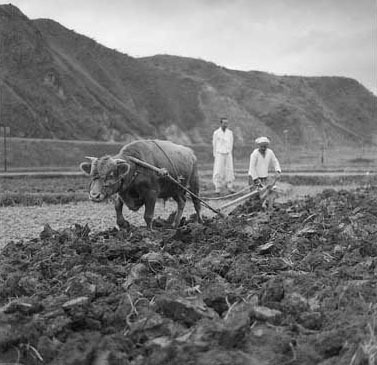
4. 새참과 샛거리 — 들녘의 작은 잔치
고된 노동 뒤에는 언제나 새참 시간이 기다리고 있었다.
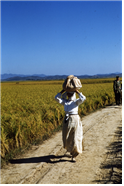
머리에 들밥 광주리를 이고 밭머리로 걸어오는 가족의 모습은
농촌의 가장 따뜻한 풍경 가운데 하나였다.
농부들은 일손을 멈추고 둥글게 모여 앉아 새참과 샛거리를 나누어 먹었다.
하지만 새참은 단순한 허기를 채우는 식사가 아니었다.
길을 지나가는 나그네, 저 멀리 다른 밭에서 일하는 이웃까지 목청 높여 불러 세웠다.
“어이, 어서 오소! 여기 와서 막걸리 한잔하고 가소!”
한 그릇의 투박한 밥과 한 사발의 시원한 막걸리를 아낌없이 나누며
사람들은 굳은 살 박힌 서로의 삶에 정을 채웠다.
나눔의 어원
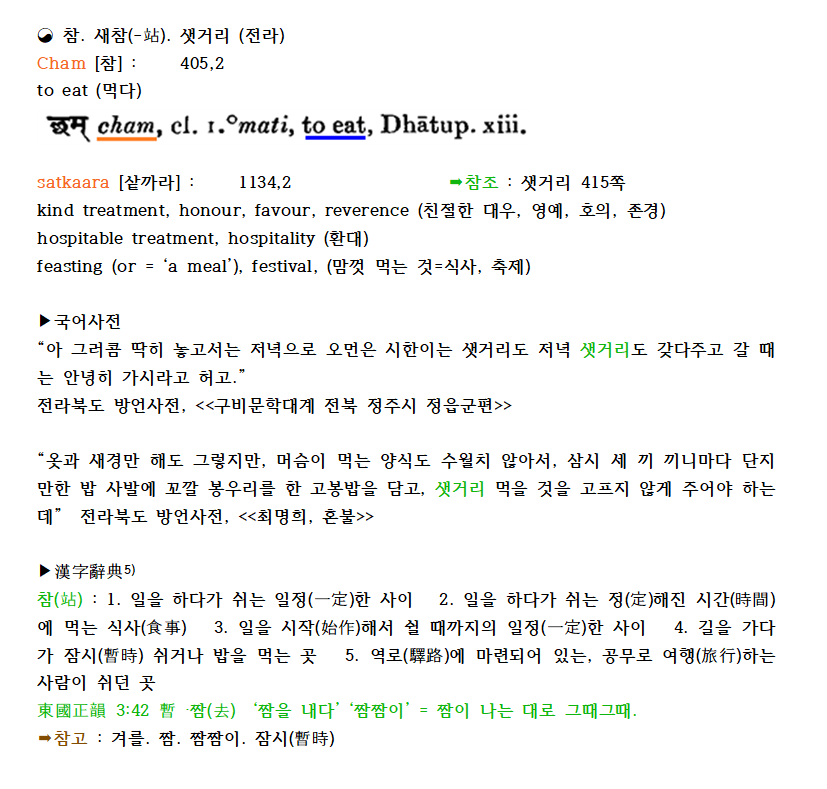
- 새참 · 샛거리 (산스크리트어 Cham + satkaara)
- 참(Cham)은 ‘먹다(to eat)’를 뜻한다.
- 삿까라 (satkaara)는 ‘환대, 대접, 풍성한 식사, 잔치’를 뜻한다.
- 이처럼 새참은 숨을 돌리는 단순한 간식이 아니라, 먼 길 온 사람과 일하는 사람을 귀하게 대접하고 베푸는 '들녘의 작은 축제'였다.
- 샅까라 → 샛까리 → 샛꺼리
오늘날 기계화된 농촌에서는 그 시절의 풍경을 쉽게 볼 수 없게 되었지만,
우리 마음속에는 아직도 워낭 소리가 아스라이 들리고,
새참 광주리가 들어오며,
막걸리 한 사발 권하던 따뜻한 옛 고향의 정서가 살아 있다.
농사는 단순히 곡식을 키워내는 일이 아니었다.
싹을 틔우고,
사람을 얻고,
힘을 나누고,
함께 먹으며 살아가는 일이었다.
그것은 생명이 또 다른 생명을 품고 키워내는,
가장 아름다운 공동체의 문화였다.
다일라! 그렇게 함께 일하고, 함께 먹고, 함께 살아가리라.
태양이 일어나고(일라),
잠에서 깨어 일어나고(일라)
어머니는 쌀을 조리로 일고(일라)
아버지는 쟁기로 땅을 일구시다(일라)
모두 다 들불처럼 훨훨 일어나라(일라)

●스스로 "나"를 사랑하고, 우리말과 역사를 사랑하는 모든 사람들에게 전달해 주십시오.
위 내용은 인터넷 주소창과 카톡에 아래와 같이 바로 입력하여 볼 수 있습니다.
www.다일라.한국/70
www.다일라.한국/61
www.다일라.한국/2
☆ 다 깨어 일어나라!!! 다일라!!! ☆ --대한민국 새로운 구호 제창
◈ ◈ ◈ ◈ ◈ ◈ ◈ ◈ ◈ ◈ ◈ ◈ ◈ ◈ ◈ ◈ ◈ ◈ ◈ ◈ ◈ ◈ ◈ ◈ ◈ ◈ ◈ ◈ ◈ ◈ ◈ ◈
Kim Seok-Hoon
Korean Etymology Researcher
Editor of Our Korean–Sanskrit Etymological Dictionary
Genealogical & Historical Lineage Researcher
Compiler of the scroll The Genealogical History of Humanity from the Heavenly Emperor Hwan-State and Joseon
The Language of Farmhands and Field Meals
— Working Together, Eating Together, and Nurturing Life
When spring arrives, farmers return to the fields.
They awaken the land that has slept through the winter, sow seeds, plant seedlings, weed the fields, and carefully tend their crops throughout the year.
Nature always responds honestly to the farmer's sweat.
In the rice paddies and fields, tender shoots finally emerge. Pushing through the dark soil, these tiny sprouts offer the first greeting of life and the first promise of autumn's abundance.
1. When Shoots Emerge and Sprouts Appear
The moment farmers wait for most is the moment when the first sprouts break through the earth.
A seed cracks open its shell and reveals itself to the world.
Within that small new life lies the promise of the coming harvest.
The Etymology of Life
Um (Tamil: umi)
The Tamil word umi means "husk," "chaff," or "shell."
Thus, when Koreans say a seed "sends up an um (움)," it evokes the image of life breaking through its protective shell and beginning its journey.
Sun (shoot) and sprout (Sanskrit: suuna)
The Sanskrit word suuna means:
- flower bud
- blossom
- shoot
- sprout
Remarkably, it also carries the meanings:
- son
- daughter
- offspring
- descendants
Just as a shoot emerges from a plant, a descendant is born from a family.
The Korean words sun (shoot) and son (descendant) both reflect the beautiful image of life extending outward and continuing itself. A person's hand is like a shoot that grows from the body. The English word "son," too, can be seen as a living shoot extending from his parents—a descendant (孫) growing from the family tree.
2. Hiring Farmhands and Sharing Labor
Farming was never a task accomplished alone.
When rice-transplanting season arrived and the weeding began, the workload grew tremendously.
Farmers therefore secured extra help in advance and exchanged labor with their neighbors through a cooperative system known as pumasi.
Even today, people in Jeolla Province sometimes say:
"I've already arranged a farmhand for tomorrow."
The Etymology of Cooperation
Nop (Sanskrit: labh)
The Sanskrit word labh means:
- to obtain
- to acquire
- to gain
- to receive permission
A nop was not merely a hired worker.
He was "a person obtained," a valued helping hand who came to assist the household.
The same linguistic family is often compared with words such as:
- English: labor
- Russian: rabota
- Spanish: labor
Pumasi (Sanskrit: pum + asnoti)
pum means:
- man
- person
- servant
- worker
asnoti means:
- to obtain
- to gain
- to reach
Pumasi was therefore a way of sharing precious labor, helping one another, reducing hardship, and sustaining the community together.
3. To Strive and To Endure Hardship
Even beneath the blazing summer sun, farmers never stopped working.
They bent over in the paddies pulling weeds, hoed the dry fields, and watched over their crops through wind and rain.
They poured all of their strength into the land.
At the end of such a difficult day, they would offer each other words of comfort:
"You've worked hard today."
The Etymology of Labor
To strive (Sanskrit: iha / ihita)
iha means:
- effort
- striving
- labor
ihita means:
- something achieved through effort
- something attained through perseverance
It perfectly reflects the diligence of farmers who devote themselves to the land.
To suffer hardship (Sanskrit: yuga / yukta)
yuga means a yoke placed upon the neck of an ox or horse.
yukta means "yoked" or "bound to a yoke."
Thus the Korean expression meaning "to have gone through hardship" evokes the image of an ox patiently carrying a heavy yoke across rough ground.
It is a phrase filled with respect, sympathy, and admiration for someone who has endured great effort over a long period.
4. Saecham and Saetgeori — A Small Festival in the Fields
After hours of hard labor, the time for saecham finally arrived.
One of the warmest scenes in rural Korea was seeing family members carrying baskets of food to the edge of the fields.
Farmers stopped their work, gathered together, and shared their saecham and saetgeori.
Yet these meals were far more than a way to satisfy hunger.
Travelers passing by and neighbors working in distant fields would be called over:
"Hey! Come over here!"
"Have a bowl of makgeolli before you go!"
Sharing a simple bowl of rice and a cup of cool rice wine, people filled one another's lives with warmth and friendship.
The Etymology of Sharing
Saecham and Saetgeori (Cham + satkaara)
Cham means:
- to eat
Satkaara means:
- hospitality
- welcome
- generous meal
- feast
Saecham was therefore not merely a snack.
It was a small celebration in the fields—a tradition of honoring guests, feeding workers, and sharing abundance with everyone present.
Today, in the age of mechanized agriculture, such scenes have largely disappeared.
Yet within our hearts we can still hear the distant sound of cowbells, see baskets of field meals arriving at the edge of the paddies, and remember the warmth of a cup of makgeolli offered with a smile.
Farming was never simply about growing crops.
It was about nurturing sprouts,
gathering people,
sharing strength,
and sharing food.
It was a culture in which life nurtured life,
one of the most beautiful forms of human community.
Da·illa!
May we continue to work together,
eat together,
and live together.