김석훈 | 우리말 뿌리연구가, 『우리말 범어사전』 편저자
| 역사계보 족보연구가, 『천제환국조선인류역사계보 』 두루마리 편
| '다일라 운동' 주창


이것이 살아있는 고어다
— 우리말 ‘타다’에 남아 있는 오래된 언어의 결
■ 1. 문제 제기 — 이것이 살아있는 고어다
『우리말 범어사전』은 부제로
“이것이 살아있는 고어(古語)다”라고 밝힌다.
이 말은 단순한 수사가 아니라,
우리말 속에 남아 있는 오래된 의미 구조에 대한 문제 제기다.
그 대표적인 낱말이 바로 ‘타다’이다.
■ 2. ‘타다’의 폭넓은 사용
한국어의 ‘타다’는 매우 널리 쓰인다.
산을 타고
차를 타고
배를 타고
길을 타고
바람을 타고
불이 타고
속이 타고
복을 타고
재주를 타고 나고
상을 타고
계를 타고
몫을 타고
손을 타고
옻을 타고
두려움을 타고
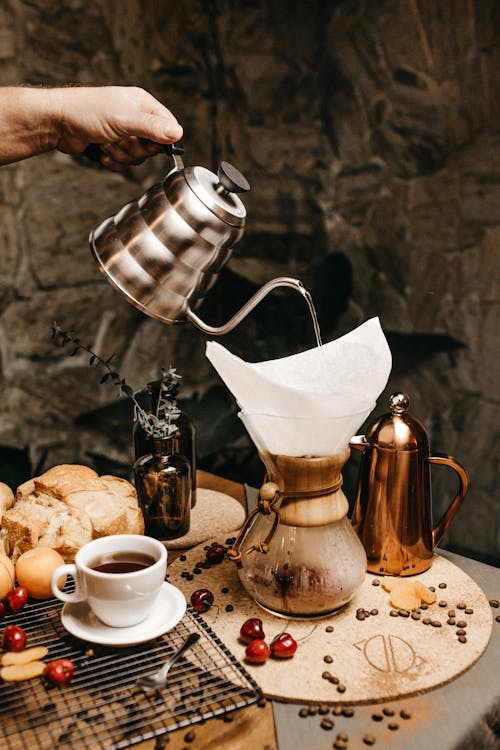
커피를 타고
설탕을 타고
목이 타고
천을 타고
솜을 타고
소문을 타고
뉴스를 타고
유행을 타고
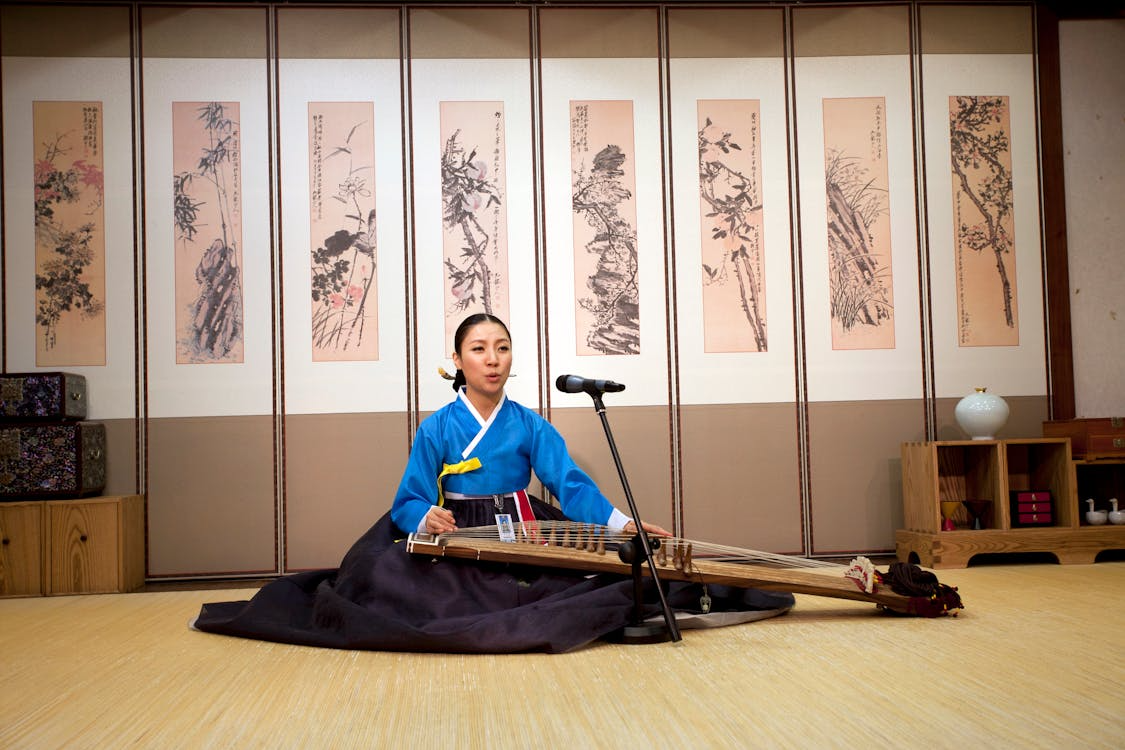
가야금·거문고를 탄다(彈琴).
또
타자(打者), 타격(打擊)과 같이
때릴 타(打)를 사용하고,
부처를 불타(佛陀)라 부른다.
겉으로 보면 서로 다른 의미들이지만,
이들은 하나의 구조로 연결된다.
■ 3. 모니에 윌리엄스 범영사전이 보여 주는 핵심 어근
이 구조가 산스크리트어 어근에서도 확인된다는 점이다.
모니에 윌리엄스 경(卿),
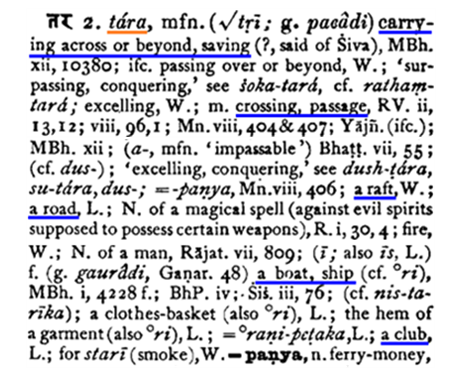
A Sanskrit-English Dictionary(범영사전) - 1899년
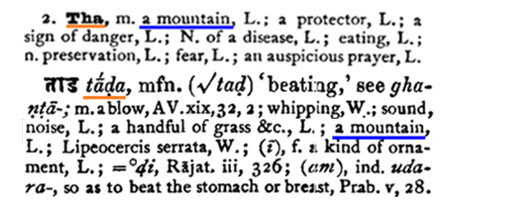
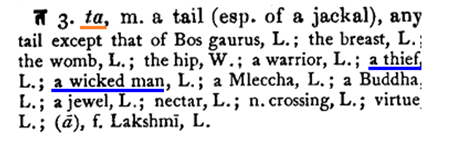
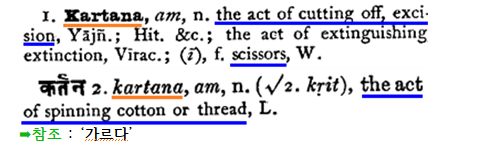
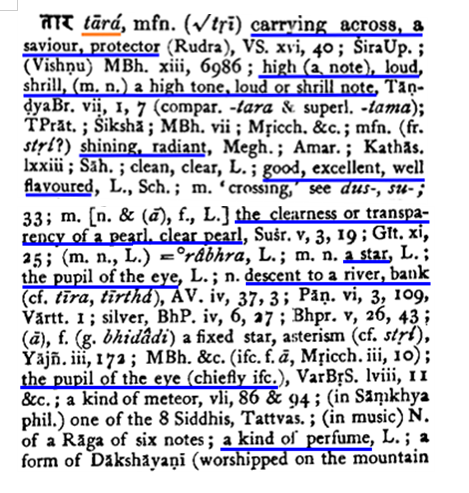
438쪽 / 464쪽 / 431쪽 / 435쪽 / 441쪽 / 257쪽
특히
tara / ta / tha / tan / taaraa / taaDa / kartana가 핵심이다.
이 어근들은 각각
건너감 / 통로 / 작용 / 감응 / 울림 / 타격 / 절단이라는
서로 다른 의미 영역을 갖고 있음에도 불구하고,
우리말에서는 이 모든 의미가
단 하나의 말, ‘타다’로 통합되어 사용된다.
이 모든 어원이
우리말 ‘타다’라는 하나의 말 속에서
지금도 실제로 사용되고 있다는 사실은
매우 놀라운 일이다.
■ 3-1. tara [타라]
• carrying across or beyond (건너가게 함, 넘어 옮김) → 배를 타고 건너다, 강을 건너다 → 그네를 타다
• passing over or beyond (넘어 지나감) → 산을 타고 넘다, 나무를 타다
• crossing, passage (가로지름, 통로) → 길을 타다→ 골·고랑을 타다 → 썰매 스케이트를 타다
• a raft (뗏목) → 뗏목을 타다 → 배를 타다
• a road (길) → 길을 타다
• fire (불) → 불이 타다 →얼굴이 타다
• a boat, ship (배, 선박) → 배를 타다 → 말을 타다, 비행기를 타다
• the hem of a garment (옷자락) → 바지가랑이가 타지다
• a club (곤봉) → 때리다(打), 곤봉으로 치다
이 어근의 중심에는 건너감, 통로, 이동, 불, 도구, 작용이 함께 들어 있다.
■ 3-2. ta [타]
• crossing (가로지름) → 천을 타다, 이랑을 타다
• a Buddha (부처) → 불타(佛陀)
• a jewel (보석) → 상을 타다, 계를 타다
• nectar (꿀, 과일즙) → 설탕을 타다, 커피를 타다
• virtue (미덕, 복) → 복을 타고 나다, 재주를 타고 나다
• the breast (가슴) → 속이 타다, 가슴이 타다
• a thief (도둑) → 손타다 (도둑맞다)
• the hip (엉덩이), the womb(자궁) → 올라타다 (성교하다)
여기에는 가로지름, 복, 가치, 가슴, 도둑, 부처가 함께 놓여 있다.
■ 3-3. tha [타]
• a sign of danger (위험의 신호) → 벌을 타다, 모기를 타다, 간지럼을 타다
• disease (질병) → 옻을 타다
• eating (먹는 것) → 목이 타다
• preservation (보존) → 먼지· 때(垢)가 타다 / 가을을 타다, 때(時)·기회를 타다 / 부끄러움을 타다
• fear (두려움) → 두려움을 타다
• a protector (보호자) → 연줄을 타다
• a mountain (산) → 산을 타다
이 어근은 외부 자극, 감응, 두려움, 생존과 맞닿아 있다.
■ 3-4. tan [탄] (彈)
• to afflict with pain (고통을 주다, 고통을 겪게 하다) → 애가 타다, 속이 타다
• to resound, roar (울려 퍼지다, 크게 울리다) → 가야금을 타다 (彈琴) , 거문고를 타다(彈·打琴)
이 어근은 내면의 고통과 울림의 확산을 동시에 품고 있다.
■ 3-5. taaraa [타라]
• carrying across (건너게 함) → 배를 타다, 뗏목을 타다
• high tone (높은 소리) → 목이 탄 소리가 나다
• shining, radiant (빛나는, 환한) → 불이 타다, 태양이 타다 → 얼굴이 타다
• crossing (가로지름) → 천을 타다, 고랑을 타다
• a star (별) → 별처럼 빛나다. 스타
• the pupil of the eye (눈동자) → 불타는 눈동자, 눈동자가 반짝이다
• descent to a river bank (강가로 내려감) → 강을 타고 내려가다
이 어근은 빛, 소리, 이동, 가로지름의 방향으로 확장된다.
■ 3-6. taaDa [타다]
• beating (때리기) → 타(打), 때리다
• a blow (한 방 때리기, 치기) → 타격, 안타, 타자(打字), 타종(打鐘), 난타(亂打) , 타자(打者·打字)
• whipping (채찍질) →타격하다
• sound, noise (소리, 소음) → 장작이 '타닥 타닥'하면서 탄다, 타다닥 소리가 나다.
이는 한자 타(打)와 연결되는 물리적 작용의 층위다.
■ 3-7. kartana [까르타나]
• cutting off, excision (잘라냄, 절단) → 천을 타다, 콩을 타다 / 생선 배를 타다(가르다)
• scissors (가위) → 가위로 천을 타다
• spinning cotton (솜을 탐, 솜을 다룸) → 솜을 타다
이는 천을 타다, 솜을 타다, 콩을 타다 같은 분할·절단의 의미와 맞닿는다.
■ 4. 우리말 ‘타다’의 실제 사용례와 구조
■ 4-1. 이동과 탑승
차를 타다, 배를 타다, 말을 타다, 자전거를 타다, 뗏목을 타다.
이때 ‘타다’는 몸을 어떤 매개 위에 싣고 이동하는 뜻이다.
• carrying across / a raft / a boat / passage → 배를 타고 이동하다, 물을 건너다
이는 tara = carrying across, a raft, a boat, passage와 연결된다.
★ 오늘날 소문을 타다, 뉴스를 타다, 인터넷을 타다, 유행을 타다 라는 표현은
고대 ‘건너가다’의 의미가
네트워크라는 새로운 통로 위에서 다시 살아난 것이다.
■ 4-2. 길과 선을 따름
길을 타다, 산을 타다, 나무를 타다, 강을 타고 내려가다, 고랑을 타다.
이 경우는 이미 나 있는 길이나 결을 따라 움직이는 것이다.
• road / passage / crossing / mountain / descent to a river bank → 길·지형·흐름을 따라 이동하다
road, passage, crossing, mountain, descent to a river bank와 자연스럽게 이어진다.
■ 4-3. 가르고 나눔
천을 타다, 이랑을 타다, 박을 타다, 콩을 타다, 솜을 타다.
이때 ‘타다’는 통로를 내고 선을 따라 갈라 나누는 뜻이다.
• crossing → division → 가로지르며 나누다, 선을 따라 분할하다
이는 crossing이 가로지름 → 분할로 확장된 모습이며,
• cutting off / scissors / spinning cotton → 자르고 나누고 풀어내다
kartana = cutting off, scissors, spinning cotton과 맞물린다.
■ 4-4. 불, 열, 내면의 고통
불이 타다, 목이 타다, 속이 타다, 가슴이 타다, 애가 타다.
이것은 실제 불의 작용이기도 하고, 갈증이기도 하며, 내면이 소모되고 아파 오는 정서적 상태이기도 하다.
• fire → 불이 타다, 열이 퍼지다
• the breast → 가슴이 타다, 속이 타다
• to afflict with pain → 애가 타다, 고통이 타오르다
자료에서는 tara = fire, ta = the breast, tan = to afflict with pain이 함께 제시된다.
■ 4-5. 영향을 받음과 감응
옻을 타다, 벌을 타다, 모기를 타다, 간지럼을 타다, 노여움을 타다, 두려움을 타다, 부끄러움을 타다, 가을을 타다.
이때 ‘타다’는 외부 자극이나 감정, 계절, 기운이 몸과 마음에 쉽게 작용하는 상태를 뜻한다.
• sign of danger → 벌·자극에 반응하다
• fear → 두려움을 타다
• eating → 목이 타다 (생존 반응)
• preservation → 계절·때를 타다 / 기회를 타다 , 부끄러움을 타다, 때(垢)가 타다
이는 tha = sign of danger, fear, eating, preservation과 연결된다.
■ 4-6. 수용과 타고남
복을 타고나다, 재주를 타고나다, 돈을 타다, 상을 타다, 계를 타다, 몫을 타다.
이 경우는 자기 앞으로 돌아온 것을 받는다는 뜻이다.
• virtue → 복을 타고 나다, 재주를 타고 나다
• jewel → 상을 타다, 계를 타다
• nectar → 가치 있는 것을 받아들이다
특히 ta = virtue, jewel, nectar와 연결되며,
복·재주·상·계·몫은 모두 흐름 속에서 도달한 것을 수용하는 행위로 이해된다.
■ 4-7. 음식과 혼합
커피를 타다, 물에 설탕을 타다, 미숫가루를 타다.
이때 ‘타다’는 단순히 ‘먹는 것’이 아니라,
물이라는 매개 속에 어떤 것을 풀어 넣어 전체로 퍼지게 하고 작용하게 하는 것으로 이해된다.
• nectar (꿀, 과일즙) → 액체 속에 풀려 퍼지는 구조
• crossing / passage / carrying across → 매개 속에서 확산되고 섞이는 흐름
특히 nectar (꿀, 과일즙)은 짜내어 얻은 액체라는 점에서,
풀어 스며들고 퍼지는 구조와 연결해 볼 수 있다.
tha = eating도 한 단서가 되지만,
실제 구조는 tara / ta / taaraa의 carrying across, crossing, passage와도 잘 맞는다.
■ 4-8. 악기와 울림
가야금을 타다, 거문고를 타다.
이는 줄을 건드려 소리를 울리게 하는 것이다.
• to resound / roar → 소리를 울려 퍼지게 하다
자료의 tan = to resound, roar가 여기에 대응된다.
즉 ‘악기를 타다’는 소리를 일으켜 퍼지게 하는 행위다.
■ 4-9. 때리고 치는 작용
곤봉으로 타다, 타(打), 타자(打者), 타격(打擊), 채찍질하다.
• a club → 곤봉으로 치다
• beating / a blow / whipping → 때리고 타격하다
이는 tara = a club, taaDa = beating, a blow, whipping과 연결된다.
즉 ‘타다’는 단순 이동만이 아니라, 힘을 가해 변화를 일으키는 물리적 작용이기도 하다.
■ 4-10. 손을 타다
손을 타다, 손타다.
이는 남의 손길이 미쳐 상태가 달라지는 경우를 뜻하고,
• a thief → 도둑의 손이 미치다, 도둑맞다
자료에서는 ta = a thief, taayu = a thief와 연결된다.
여기서 ‘손타다’는 ‘도둑의 손이 미치는 것’,
곧 도둑맞는 것까지 포함하는 의미로 해석된다.
■ 5. ‘다리’와의 구조적 연결
• tari → a boat (배)
• tarika → a raft, boat (뗏목, 배)
• taarika → a ferry-man (배따라기, 뱃사공)
즉
배 = 다리
사람을 건너게 하는 구조
과거에는 다리를 걷는 것이 아니라
배를 타고 건넜다.
따라서
▶ 타는 것(배) = 건너게 하는 것(다리)
라는 구조가 성립한다.
이는
tara(건너다) → tari(배) → 다리(건너는 구조)
로 이어지며,
‘타다’가 단순한 이동이 아니라
건너게 하는 매개와 구조까지 포함하는 말임을 보여준다.
■ 6. 더 깊은 질문 — 사람과 언어의 이동
이 글에서 가장 중요한 대목은 바로 이것이다.
오늘날 인도에서 산스크리트어는 생활어로 거의 쓰이지 않지만,
그 핵심 어근과 의미 구조가 약 7,000km 떨어진 한반도에서
생활어로 살아 있다는 점이다.
그것도 종교 경전 속 몇 단어가 아니라,
배를 타고
길을 타고
상을 타고
계를 타고
옻을 타고
속이 타는
생활 전체의 언어 구조로 남아 있다는 것이다.
그래서 이 현상은 단순한 차용이나 우연한 유사성으로만 보기 어렵고,
단순한 종교 전래나 일부 문화 이동만으로 설명되기 어렵다.
오히려 이것은
인도, 중앙아시아, 동아시아를 아우르는
광대한 공간 속에서
우리 선조들이 이동하고 살아가며
공유했던 오래된 언어층의 흔적일 가능성을 시사한다
■ 7. 맺음말
결국 ‘타다’는 한 개의 동사가 아니다.
그것은
길을 건너고
강을 따라가고
불이 번지고
가슴이 아리고
복이 돌아오고
소리가 울리고
몸이 반응하는
삶 전체의 결을 품은 오래된 말이다.
그리고 그 말은 지금도
차를 타고
길을 타고
상을 타고
가을을 타는
우리의 일상 속에서 계속 살아 움직이고 있다.
이것이 살아있는 고어다.
어쩌면 우리는
고어를 연구하는 사람이기 전에,
이미 고어를 말하며 살아가는 사람들인지도 모른다.

●스스로 "나"를 사랑하고, 우리말과 역사를 사랑하는 모든 사람들에게 전달해 주십시오.
위 내용은 인터넷 주소창과 카톡에 아래와 같이 바로 입력하여 볼 수 있습니다.
www.다일라.한국/62
www.다일라.한국/61
다일라! - 대한민국 정신적 좌표
김석훈 | 우리말 뿌리연구가, 『우리말 범어사전』 편저자 | 역사계보 족보연구가, 『천제환국조선인류역사계보 』 두루마리 편 다일라!!! 다 + 일라 다 깨어 일어나라 세종대왕께서 훈민정음을
www.xn--2j1b40gc5q.xn--3e0b707e
◈ ◈ ◈ ◈ ◈ ◈ ◈ ◈ ◈ ◈ ◈ ◈ ◈ ◈ ◈ ◈ ◈ ◈ ◈ ◈ ◈ ◈ ◈ ◈ ◈ ◈ ◈ ◈ ◈ ◈ ◈ ◈
Kim Seok-Hoon
Korean Etymology Researcher
Editor of Our Korean–Sanskrit Etymological Dictionary
Genealogical & Historical Lineage Researcher
Compiler of the scroll The Genealogical History of Humanity from the Heavenly Emperor Hwan-State and Joseon
This Is a Living Ancient Language
— The Linguistic Structure Preserved in the Korean Word “Tada”
■ 1. Problem Statement — This Is a Living Ancient Language
The book Urimal Sanskrit Dictionary declares in its subtitle:
“This is a living ancient language.”
This is not merely a rhetorical phrase,
but a question raised about the deep semantic structures preserved within the Korean language.
A representative word that embodies this is “tada”.
■ 2. The Wide Usage of “Tada”
The Korean word tada is used in an extremely wide range of contexts.
to ride along the mountain
to ride a car
to ride a boat
to follow a path
to ride the wind
fire burns
the inside burns
to be born with fortune
to be born with talent
to receive an award
to receive a share
to receive a portion
to be affected by touch
to react to lacquer
to be affected by fear
to mix coffee
to mix sugar
the throat burns
to cut cloth
to card cotton
to ride the trend
to covered in the news
to play a gayageum
Also,
in words like hitter (打者) and strike (打擊),
the character “ta (打)” meaning “to hit” is used,
and Buddha is called Bul-ta (佛陀).
Although these meanings appear different on the surface,
they are connected through a single underlying structure.
■ 3. Core Roots Revealed in the Monier-Williams Sanskrit Dictionary
The key point is that this structure can also be identified in Sanskrit roots.
Monier-Williams,
A Sanskrit-English Dictionary,
pp. 438 / 464 / 431 / 257 / 435 / 441
In particular,
tara / ta / tha / tan / taaraa / taaDa / kartana are central.
Each of these roots carries distinct semantic domains such as
crossing / passage / action / reaction / resonance / striking / cutting,
yet in Korean, all of these meanings are
integrated and used within a single word, “tada.”
The fact that all these etymological roots
are still actively used today
within one single Korean word, tada,
is truly remarkable.
■ 3-1. tara
• carrying across or beyond → to cross by riding a boat, to cross a river, to swing
• passing over or beyond → to climb over a mountain, to climb a tree
• crossing, passage → to follow a path, to move along furrows, to skate
• a raft → to ride a raft
• a road → to follow a road
• fire → fire burns
• a boat, ship → to ride a boat, horse, airplane
• the hem of a garment → pant hems get burned
• a club → to strike, to hit with a club
This root contains the meanings of crossing, passage, movement, fire, tool, and action.
■ 3-2. ta
• crossing → to cut across cloth, to follow ridges
• a Buddha → Bul-ta (Buddha)
• a jewel → to receive an award, to receive a share
• nectar → to mix sugar, to mix coffee
• virtue → to be born with fortune, to be born with talent
• the breast → the chest burns, the inside burns
• a thief → to be affected by touch (to be stolen from)
• the hip / the womb → to mount, to ride (sexual sense)
This root brings together crossing, virtue, value, chest, theft, and Buddha.
■ 3-3. tha
• a sign of danger → to react to bees, to be ticklish
• disease → to react to lacquer
• eating → the throat burns
• preservation → dust gathers, to be affected by seasons or timing
• fear → to be affected by fear
• a protector → to rely on connections
• a mountain → to climb a mountain
This root relates to external stimuli, sensitivity, fear, and survival.
■ 3-4. tan
• to afflict with pain → the heart burns, to suffer deeply
• to resound, roar → to play the gayageum, geomungo
This root contains both inner pain and resonance.
■ 3-5. taaraa
• carrying across → to ride a boat, a raft
• high tone → a dry, strained voice
• shining, radiant → flames burn, the sun blazes
• crossing → to cut cloth, to follow furrows
• a star → to shine like a star
• the pupil of the eye → shining eyes
• descent to a river bank → to go down along a river
This root expands into light, sound, movement, and crossing.
■ 3-6. taaDa
• beating → to hit
• a blow → strike, hit, typing, bell-striking
• whipping → to whip
• sound, noise → crackling sounds of burning wood
This connects to the physical force expressed by the Chinese character 打.
■ 3-7. kartana
• cutting off, excision → to cut cloth, to split beans, to cut fish
• scissors → to cut with scissors
• spinning cotton → to card cotton
This corresponds to division and separation.
■ 4. Real Usage Structure of “Tada”
■ 4-1. Movement and Riding
To ride a car, boat, horse, bicycle, or raft.
This means placing one’s body on a medium and moving.
• carrying across / a raft / a boat / passage → movement across a medium
■ 4-2. Following Paths and Lines
To follow a road, climb a mountain, move along a river or furrow.
• road / passage / crossing / mountain / descent → movement along a given path
■ 4-3. Cutting and Dividing
To cut cloth, split ridges, divide beans, card cotton.
• crossing → division → cutting along a line
• cutting off / scissors / spinning cotton → division and separation
■ 4-4. Fire, Heat, and Inner Pain
Fire burns, the throat burns, the heart burns.
• fire → burning heat
• the breast → inner burning
• to afflict with pain → emotional suffering
■ 4-5. Reaction and Sensitivity
To react to lacquer, bees, mosquitoes, fear, seasons.
• sign of danger → reaction to stimuli
• fear → emotional response
• eating → survival reaction
• preservation → seasonal or temporal influence
■ 4-6. Receiving and Inheriting
To be born with fortune, talent, or to receive money, awards, shares.
• virtue → innate qualities
• jewel → received value
• nectar → absorbed value
■ 4-7. Mixing and Diffusion
To mix coffee, sugar, or grain powder.
• nectar → liquid diffusion
• crossing / passage / carrying across → spreading within a medium
■ 4-8. Sound and Resonance
To play instruments like the gayageum or geomungo.
• to resound → producing and spreading sound
■ 4-9. Striking and Physical Force
To hit, strike, whip.
• a club / beating / blow → physical force and impact
■ 4-10. Being Touched (Affected)
To be affected by someone’s touch (even theft).
• a thief → influence of another’s hand
■ 5. Structural Connection with “Bridge”
• tari → a boat
• tarika → a raft, boat
• taarika → a ferry-man
Thus
boat = bridge
a structure that enables crossing
In the past, people did not cross by walking on a bridge,
but by riding a boat.
Therefore,
→ what is ridden (boat) = what enables crossing (bridge)
This forms the structure:
tara (to cross) → tari (boat) → bridge (structure for crossing)
It shows that tada does not simply mean movement,
but includes both the medium and the structure that enable crossing.
■ 6. A Deeper Question — Movement of People and Language
This is the most important point of this study.
Although Sanskrit is no longer widely used as a daily language in India,
its core roots and semantic structures are still alive
in everyday Korean, over 7,000 km away.
Not just in religious texts,
but in daily expressions:
riding a boat
following a path
receiving a prize
being affected by seasons
feeling one’s heart burn
This cannot be easily explained as mere borrowing or coincidence.
Rather, it suggests
a deep linguistic layer shared across
India, Central Asia, and East Asia,
formed through the long movement and life of ancient peoples.
■ 7. Conclusion
“Tada” is not just a verb.
It is
crossing paths
flowing along rivers
spreading like fire
burning in the heart
receiving fortune
resonating sound
responding in the body
It is a word that contains the entire texture of life.
And even now,
in riding cars
following roads
receiving rewards
feeling the seasons
this word continues to live and move within us.
This is a living ancient language.
Perhaps we are not merely studying ancient language,
but already living and speaking it.