김석훈 | 우리말 뿌리연구가, 『우리말 범어사전』 편저자
| 역사계보 족보연구가, 『천제환국조선인류역사계보 』 두루마리 편
| '다일라 운동' 주창
230년 전 석촌마을을 기록하다
— 호적단자가 보여주는 조선 후기 한 마을의 삶
1. 집안에 남아 있던 한 장의 종이
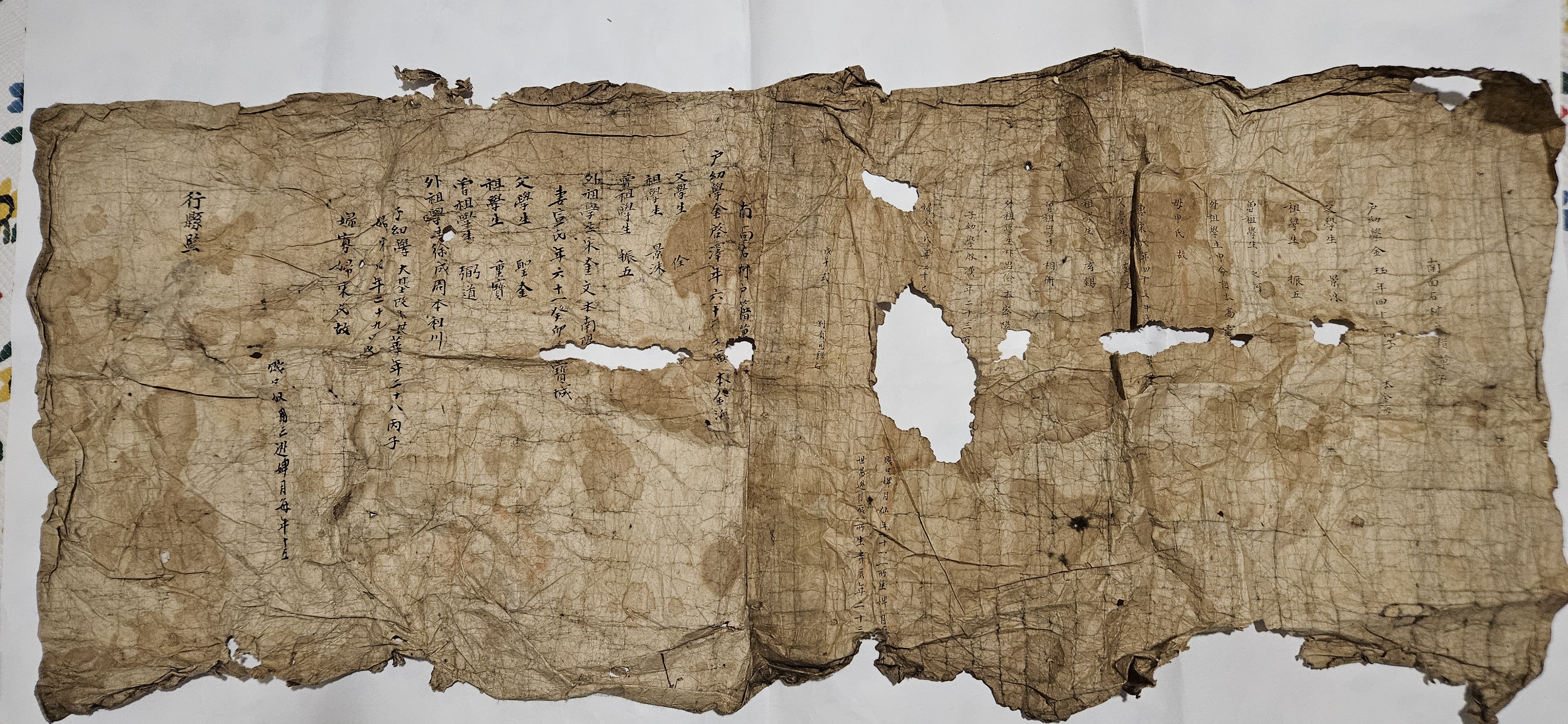
전남 고흥군 과역면 석촌마을 김녕김씨 집안에는 오래전부터 전해 내려오는 한 장의 문서가 있다. 얼핏 보면 낡은 종이에 지나지 않는다. 그러나 이 문서를 펼쳐 읽어 보면, 그 속에는 조선 후기 한 마을의 사회 구조와 가족 관계, 그리고 당시 사람들의 삶이 고스란히 기록되어 있다.
이 문서는 조선시대의 호적단자(戶籍單子)이다. 호적단자는 오늘날의 주민등록과 비슷한 성격을 가진 문서로, 한 집안의 구성원과 신분, 나이, 가족 관계 등을 기록하여 관에 제출하던 공식 문서였다.
특히 이 문서는 같은 종이에 두 세대의 기록이 이어져 있어 더욱 특별하다. 먼저 아버지 김각(金珏)=김전(金佺)의 기록이 있고,
그 위에 아들 김계택(金啓澤)의 기록이 이어진다. 한 장의 종이에 약 50년의 시간이 겹쳐 있는 셈이다.
2. 문서의 첫 줄이 말해주는 역사
문서의 첫 줄에는 다음과 같은 기록이 보인다.
南面石村戶籍單子
(남면 석촌 호적단자)
이 짧은 문장은 매우 중요한 의미를 가진다.
여기서 남면(南面)은 조선시대 흥양현의 행정 구역 이름으로 지금 과역면과 남양면을 아우르는 지역이며,
석촌(石村)은 오늘날까지 이어지는 마을 이름이다.
즉 이 문서는 18세기 이미 “석촌”이라는 지명이 공식 문서에 사용되고 있었음을 보여준다.
이로써 석촌마을이 근대에 새로 생긴 이름이 아니라, 오래전부터 이어져 온 지명임을 확인할 수 있다.
3. 김각(=김전)의 호적 기록
문서의 첫 기록은 다음과 같다.
戶幼學金珏年四十三丙子本金海
이를 풀어 보면 다음과 같은 뜻이다.
집의 호주 유학 김각,
나이 43세,
병자생,
본관 김해.
여기서 유학(幼學)은 벼슬을 하지 않았지만 학문을 닦는 선비 계층을 가리키는 표현이다.
또 문서 말미에는 戊午式이라는 기록이 보인다. 이 표기는 이 호적단자가 무오년(1798년) 기준으로 작성되었음을 뜻한다.
김각이 병자생(1756년)이므로, 1798년에 나이 43세가 되는 계산이 정확히 맞아떨어진다.

4. “본관 김해” 기록의 역사적 배경
문서에는 본관이 “本金海”, 즉 김해로 기록되어 있다.
그러나 오늘날 이 가문은 김녕김씨(金寧金氏)로 알려져 있다.
이는 조선 후기 본관 표기의 역사적 변화와 관련이 있다.
김녕김씨의 본래 본관은 김녕(옛 김해)이었으나,
오랜 세월 동안 행정 지명의 변화와 기록상의 혼용으로 인해 김해 김씨와 혼동되는 경우가 많았다.
특히 “선김(先金)·후김(後金)”과 같은 표현이 생길 정도로 본관 표기에 혼란이 나타났다.
이러한 혼란을 바로잡기 위해 1865년(고종 2년) 왕명에 따라 본관을 다시 김녕(金寧)으로 확정하고 환원하였다.
따라서 김녕김씨의 본관 표기는
김녕(옛 김해) → 김해(개칭과 기록 혼용) → 김녕(고종 때 환원)
이라는 과정을 거쳤다. 이는 단순한 지명 변경이 아니라,
가야계 김해 김씨와의 혈통적 차이를 분명히 하기 위한 역사적 과정이었다.
5. 가족과 혼인 관계 기록
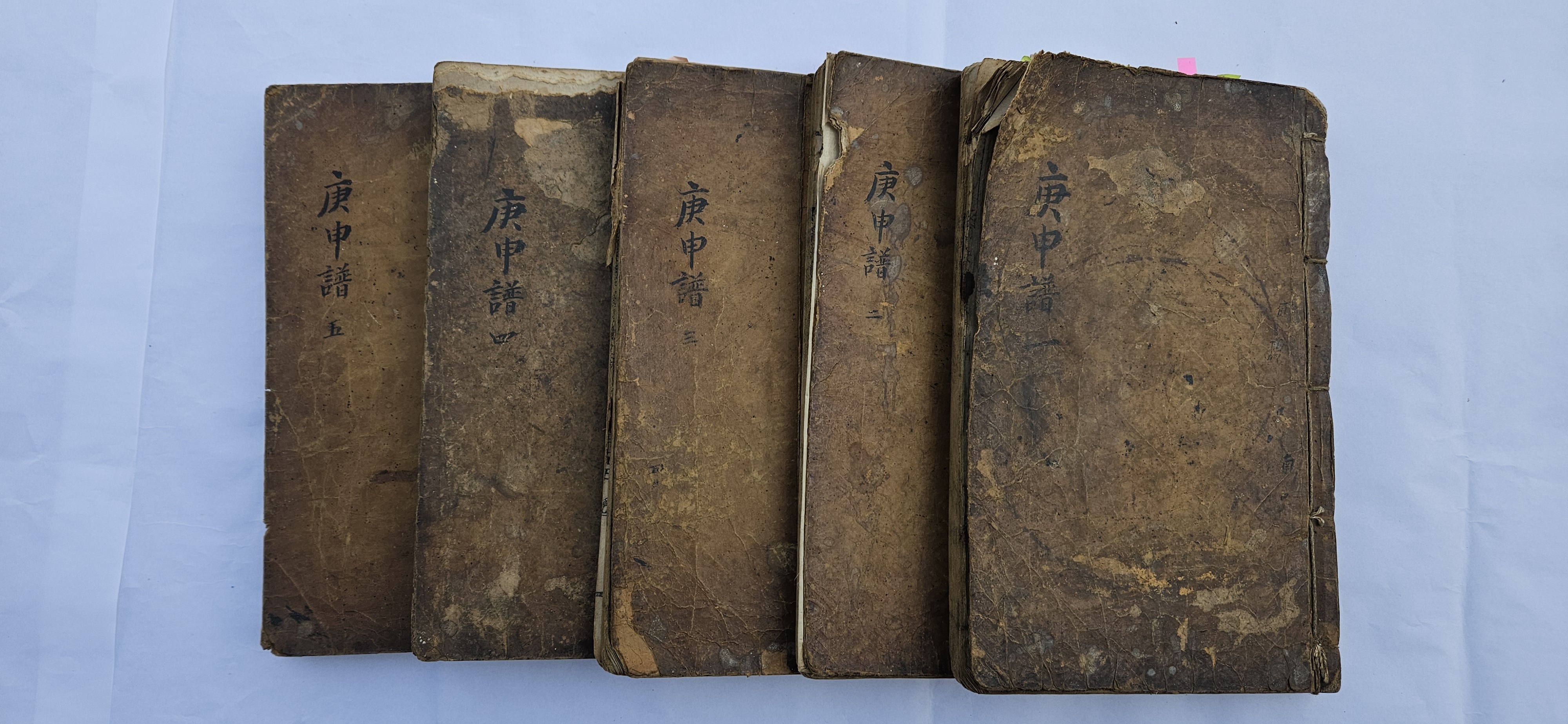
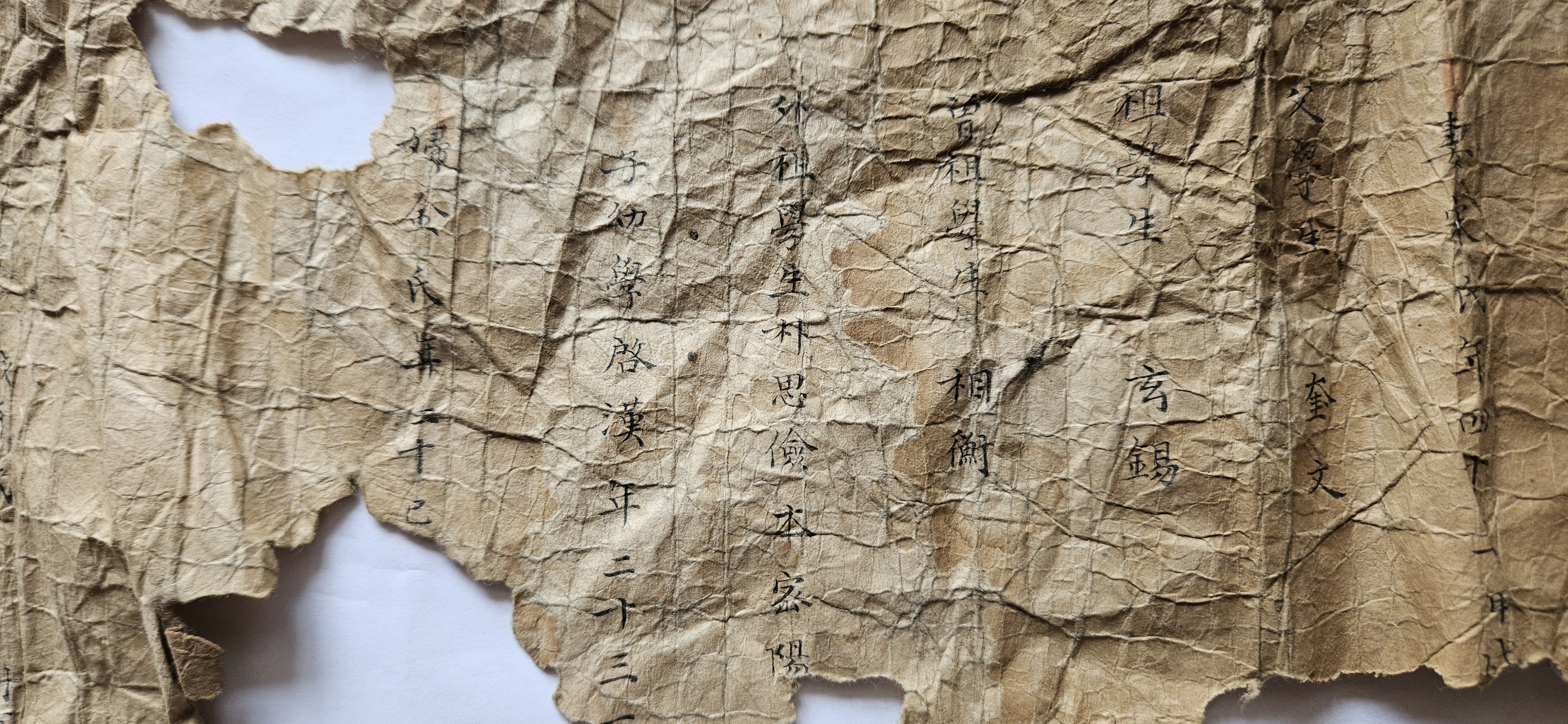
문서에는 가족과 처가 계보까지 상세히 기록되어 있다.
예를 들어 부인에 대해서는 다음과 같이 적혀 있다.
妻宋氏年四十五甲戌本籍南陽
부인 송씨
나이 45세
갑술생
본관 남양
갑술생은 1754년으로 계산된다. 따라서 남편 김각보다 두 살 정도 연상인 것으로 볼 수 있다.
이처럼 호적단자는 단순히 이름만 기록한 문서가 아니라,
혼인 관계와 가문 연결 구조까지 보여주는 중요한 자료이다.
6. 노비 기록이 보여주는 당시 사회
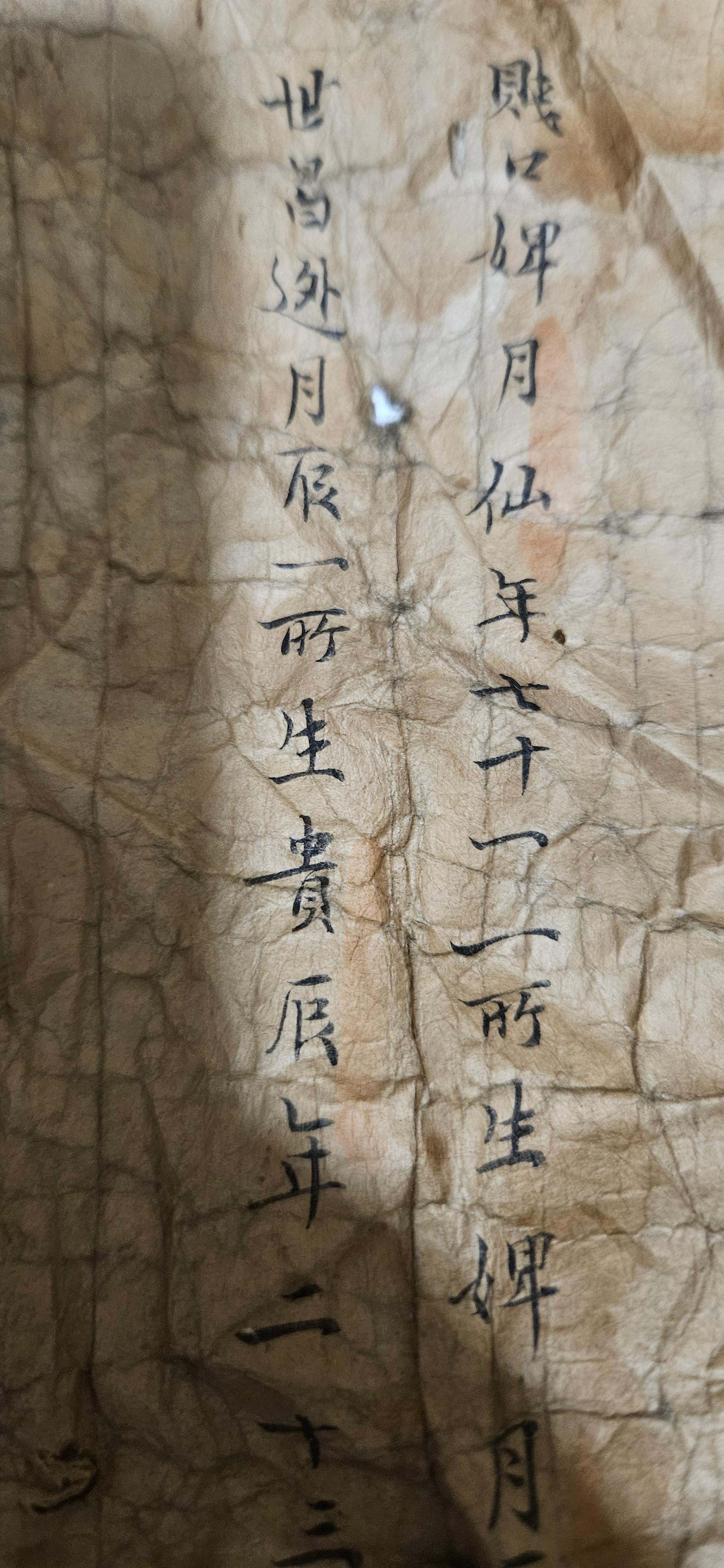
문서에는 노비에 대한 기록도 남아 있다.
원문 일부는 다음과 같다.
賤口婢月仙年七十一
一所生婢月辰年五十六
三
世昌逃
月夜一所生貴辰年二十三
이를 풀어 보면 다음과 같다.
천구(노비) 계집종 월선, 71세
노비 월진, 56세
(같은 어머니에게서 난 노비 세 명)
노비 세창은 도망 상태
월야에게서 태어난 귀진, 23세
이 기록을 통해 우리는 조선시대 호적이 단순한 인구 기록이 아니라
노비의 출생 관계와 신분 상태까지 관리하던 문서였음을 알 수 있다.
7. 아들 김계택의 기록
같은 종이 위에는 아들 김계택의 기록이 이어진다.
戶幼學金啓澤年六十二壬寅本金海
유학 김계택
나이 62세
임인생
본관 김해
김계택은 1782년 임인생으로 확인된다.
따라서 임인년(1842년) 기준으로 나이 62세가 된다.
부인에 대한 기록도 이어진다.
妻宣氏年六十一癸卯本寶城
부인 선씨
나이 61세
계묘생
본관 보성
계묘생은 1783년으로 계산되어 남편보다 한 살 어린 것으로 확인된다.
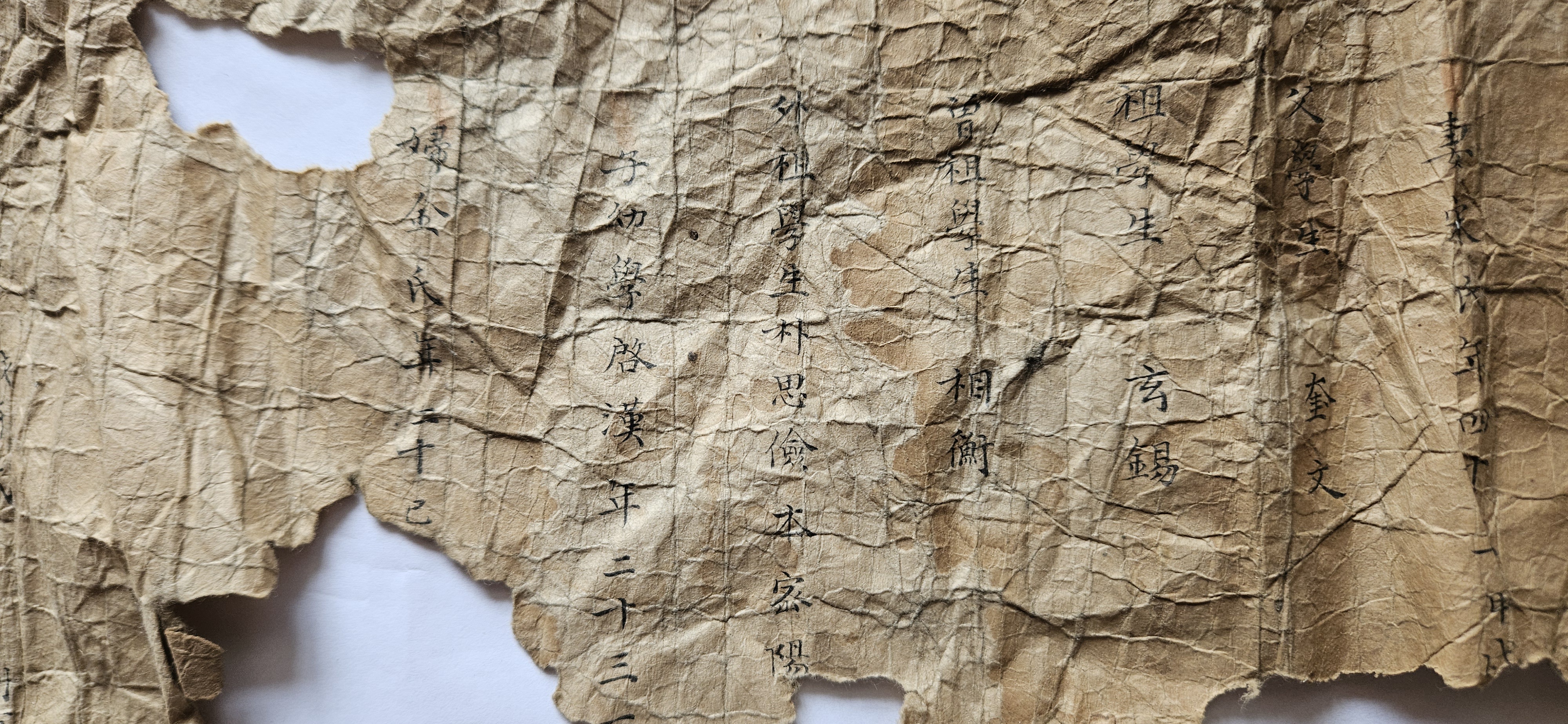
8. 한 장의 종이에 남은 시간
이 문서는 한 번 작성되고 끝난 문서가 아니다.
먼저 1798년 김각의 호적이 작성되었고,
그 후 약 50년이 지나 1842~1843년경 김계택의 기록이 이어졌다.
즉 이 한 장의 종이에는 약 반세기의 시간이 겹쳐 있다.
이는 조선시대 문서가 단순히 제출 후 폐기되는 것이 아니라, 가문 안에서 계속 보존되고 갱신되는 경우가 있었음을 보여준다.
9. 230년을 버틴 종이
이 문서를 실제로 펼쳐 보면 또 하나 놀라운 점이 있다.
종이의 재질이다.
섬유가 매우 촘촘하게 얽혀 있어 손으로 쉽게 찢어지지 않을 만큼 질기다.
무려 230년이 넘는 세월을 견뎌 왔음에도 종이의 결이 살아 있다.
물론 세월의 흔적도 남아 있다.
종이 가장자리는 일부 헤어졌고, 보관 과정에서 쥐가 뜯어 먹은 흔적도 있다.
그러나 바로 그 흔적이 이 문서가 오랜 시간을 지나 지금까지 전해졌음을 말해준다.
10. 문서를 지켜낸 사람들
이 문서는 스스로 남아 있는 것이 아니다.
누군가가 버리지 않고 보관했기 때문에 지금까지 전해질 수 있었다. 할아버지와 할머니,
그리고 부모님 세대가 이 문서를 지켜 주었기에 오늘 우리가 이 기록을 읽을 수 있다.
그 점에서 이 호적단자는 단순한 역사 자료를 넘어 가족과 마을의 기억을 담은 유산이라고 할 수 있다.
맺음말
석촌마을 김각·김계택 호적단자는 한 가문의 기록을 넘어 조선 후기 한 마을의 사회 구조와 생활상을 보여주는 귀중한 사료이다.
양반과 노비, 가족과 혼인 관계, 그리고 행정 체계까지 한 장의 종이에 담겨 있다.
무엇보다 이 문서는 우리에게 이렇게 말해준다.
“마을의 역사는 말로만 전해지는 것이 아니라,
붓으로 기록되고 종이로 남는다.”
원문(原文)
김각(金珏)=김전(金佺) 호적단자
南面石村戶籍單子
(남면 석촌 호적단자)
戶幼學金珏年四十三丙子本金海
(호 유학 김각 연 사십삼 병자 본 김해)
父學生 景洙
(부 학생 경수)
祖學生 振五
(조 학생 진오)
曾祖學生 之河
(증조 학생 지하)
外祖學生 申命相 本高靈
(외조 학생 신명상 본 고령)
母申氏 故
(모 신씨 고)
妻宋氏年四十五甲戌 本籍南陽
(처 송씨 연 사십오 갑술 본적 남양)
父學生 奎文
(부 학생 규문)
祖學生 玄錫
(조 학생 현석)
曾祖學生 相衡
(증조 학생 상형)
外祖學生 朴思儉 本密陽
(외조 학생 박사검 본 밀양)
子幼學 啓漢 (=啓斗) 年二十三 丙申
(자 유학 계한(=계두) 연 이십삼 병신)
婦金氏 年二十 己亥
(부 김씨 연 이십 기해)
賤口婢 月仙 年七十一 一所生 婢 月辰 年五十六 三
(천구 비 월선 연 칠십일) (일소생 비 월진 연 오십육) (삼)
世昌 逃 月夜 一所生 貴辰 年二十三
(세창 도) (월야 일소생) (귀진 연 이십삼)
戊午式 別有司 魏○
(무오식) (별유사 위○)
김계택(金啓澤) 호적단자
南面石村戶籍單子
(남면 석촌 호적단자)
戶幼學金啓澤年六十二壬寅本金海
(호 유학 김계택 연 육십이 임인 본 김해)
父學生 佺
(부 학생 전)
祖學生 景洙
(조 학생 경수)
曾祖學生 振五
(증조 학생 진오)
外祖學生 宋奎文 本南陽
(외조 학생 송규문 본 남양)
妻宣氏年六十一癸卯 本寶城
(처 선씨 연 육십일 계묘 본 보성)
父學生 聖奎
(부 학생 성규)
祖學生 重寶
(조 학생 중보)
曾祖學生 弼道
(증조 학생 필도)
外祖學生 徐成周 本利川
(외조 학생 서성주 본 이천)
子幼學 大基 改名 基華(=基赫) 年二十八 丙子
(자 유학 대기 개명 기화(=기혁) 연 이십팔 병자)
婦宋氏 年二十九 甲戌
(부 송씨 연 이십구 갑술)
婦寡婦宋氏 故
(부 과부 송씨 고)
賤口 奴用三 逃婢 月每 年十五
(천구 노용 삼) (도비 월매 연 십오)
行縣監
(행 현감)
●스스로 "나"를 사랑하고, 우리말과 역사를 사랑하는 모든 사람들에게 전달해 주십시오.
위 내용은 인터넷 주소창과 카톡에 아래와 같이 바로 입력하여 볼 수 있습니다.
www.다일라.한국/54
Kim Seok-Hoon
Korean Etymology Researcher
Editor of Our Korean–Sanskrit Etymological Dictionary
Genealogical & Historical Lineage Researcher
Compiler of the scroll The Genealogical History of Humanity from the Heavenly Emperor Hwan-State and Joseon
A Record of Seokchon Village 230 Years Ago
— A Household Register Revealing Life in a Late Joseon Village
1. A Single Sheet of Paper Preserved in the Family
In Seokchon Village, Gwaryeok-myeon, Goheung County, South Jeolla Province, a single sheet of paper has been preserved for generations in the Gimnyeong Kim family.
At first glance it appears to be nothing more than an old document.
However, when the text is carefully read, it reveals a vivid picture of the social structure, family relations, and daily life of a village in the late Joseon Dynasty.
The document is a household register (戶籍單子, Hojeok Danja) from the Joseon period.
Such documents functioned similarly to modern resident registration records, listing members of a household, their status, age, family relations, and servants.
What makes this document particularly remarkable is that two generations are recorded on the same sheet.
First appears the record of Kim Gak (金珏), and later the record of his son Kim Gyetaek (金啓澤).
Thus, nearly half a century of history is layered on a single sheet of paper.
2. The First Line of the Document
The document begins with the following line:
南面石村戶籍單子
“Household Register of Seokchon Village, Nam-myeon.”
This short phrase carries significant historical meaning.
During the Joseon Dynasty, Nam-myeon was an administrative district within Heungyang County, which corresponds to today's Goheung region.
The name Seokchon (石村) appears clearly in this official document, confirming that the village name was already in use in the 18th century.
This shows that Seokchon is not a modern name but a long-standing historical place name.
3. The Record of Kim Gak
The first entry in the document reads:
戶幼學金珏年四十三丙子本金海
This can be translated as:
Head of household, scholar Kim Gak,
Age 43,
Born in the year of Byeongja,
Clan origin: Gimhae.
The title Yuhak (幼學) refers to a Confucian scholar who had studied but did not yet hold official office.
At the end of the document appears the note 戊午式.
This indicates that the register was written in the year of Mu-o (1798).
Since Kim Gak was born in 1756 (Byeongja), his age of 43 in 1798 perfectly matches the record.
4. Historical Background of the Clan Origin “Gimhae”
The document records the clan origin as “Gimhae.”
However, the family today belongs to the Gimnyeong Kim clan (金寧金氏).
This difference reflects a historical change in the recording of clan origins.
Originally, the clan’s ancestral seat was Gimnyeong (an older name related to Gimhae).
Over time, administrative changes and record-keeping practices led to confusion between the Gimnyeong Kim clan and the Gimhae Kim clan, descendants of the Gaya royal lineage.
To resolve this confusion, King Gojong issued a royal decree in 1865 restoring the clan origin to Gimnyeong.
Thus the clan’s historical naming sequence can be understood as:
Gimnyeong → Gimhae (period of mixed usage) → Gimnyeong (restored in 1865)
This restoration was not merely a change of place name but an effort to clarify the distinct lineage of the Gimnyeong Kim clan.
5. Family and Marriage Records
The document records detailed information about family relations.
For example, the record of Kim Gak’s wife reads:
妻宋氏年四十五甲戌本籍南陽
Wife, Lady Song
Age 45
Born in Gap-sul year (1754)
Clan origin: Namyang.
This indicates she was about two years older than her husband.
Such records show that the household register documented not only individuals but also marriage networks and clan relationships.
6. Records of Servants
The document also records household servants.
Part of the original text reads:
賤口婢月仙年七十一
一所生婢月辰年五十六
三
世昌逃
月夜一所生貴辰年二十三
This can be interpreted as:
Female servant Wol-seon, age 71
Her daughter Wol-jin, age 56
(three servants born from the same mother)
Male servant Se-chang, recorded as having escaped
Gui-jin, age 23, born to Wol-ya.
These records demonstrate that the Joseon household register tracked not only household members but also servants’ lineage and status.
7. The Record of Kim Gyetaek
Later on the same sheet appears the record of Kim Gak’s son:
戶幼學金啓澤年六十二壬寅本金海
Scholar Kim Gyetaek
Age 62
Born in the year of Im-in (1782)
Clan origin: Gimhae.
His wife is recorded as:
妻宣氏年六十一癸卯本寶城
Lady Seon
Age 61
Born in Gyemyo year (1783)
Clan origin: Boseong.
8. Fifty Years on One Sheet of Paper
The document was not written once and discarded.
First, Kim Gak’s register was written in 1798.
About 50 years later, his son Kim Gyetaek added his own record around 1842–1843.
Thus this single sheet preserves two generations of history.
9. Paper That Survived 230 Years
Another remarkable feature is the paper itself.
The fibers are tightly woven and extremely durable.
Even after more than 230 years, the paper remains strong and resilient.
There are signs of age.
The edges are worn, and some parts show marks where mice once gnawed the paper.
Yet these traces of time also testify to how long the document has survived.
10. The People Who Preserved It
This document survived not by accident.
It remained because generations of family members carefully preserved it.
Grandparents, parents, and ancestors protected this paper for more than two centuries.
For that reason, the household register is not merely a historical artifact.
It is also a family heritage and a memory of the village itself.
Conclusion
The household registers of Kim Gak and Kim Gyetaek are more than genealogical records.
They reveal the social structure of a Joseon-period village:
scholars, servants, marriage ties, and administrative systems.
Most importantly, the document reminds us of something simple yet profound:
“The history of a village is not only told through words.
It is written with a brush and preserved on paper.”