김석훈 | 우리말 뿌리연구가, 『우리말 범어사전』 편저자
| 역사계보 족보연구가, 『천제환국조선인류역사계보 』 두루마리 편
| '다일라 운동' 주창
흩뿌리는 손에서 시작된 말, 전라도의 언어 이야기
옛날 전라도 마을의 여름 아침, 누군가가 마당에 바가지를 들고 물을 끼얹듯 뿌리면, 어른들은 이렇게 말했습니다.
“마당에 물을 찌그러부럿네.”
이 한마디 속에는 단순히 ‘물을 뿌렸다’는 뜻을 넘는, 아주 오래된 몸짓의 기억이 담겨 있습니다.
찌끌다, 찌끄러불다, 찌끄리다, 칙칙 뿌리다, 이 전라도 말들은 모두 하나의 공통된 행위를 가리킵니다.
그것은 바로 ‘흩뿌리는 일’, 더 정확히는 던지고, 쏟고, 퍼붓듯 나누는 행위입니다.
이 말들 속에는
- 흩뿌리다
- 던지다, 쏟아버리다
- 물·씨앗·비료를 퍼붓듯 뿌리다
- 씨앗을 심다
- 볍씨와 곡식 씨를 밭에 직접 뿌리는 일
이라는 의미가 한꺼번에 살아 숨 쉽니다.
신기하게도 이 전라도 말들은 우리 땅에서만 만들어진 말이 아니었습니다.
고대 언어들 속에서도 같은 뜻의 소리가
지금도 인도 카슈미르 지역 등에 광범위하게 그대로 남아 있었습니다.
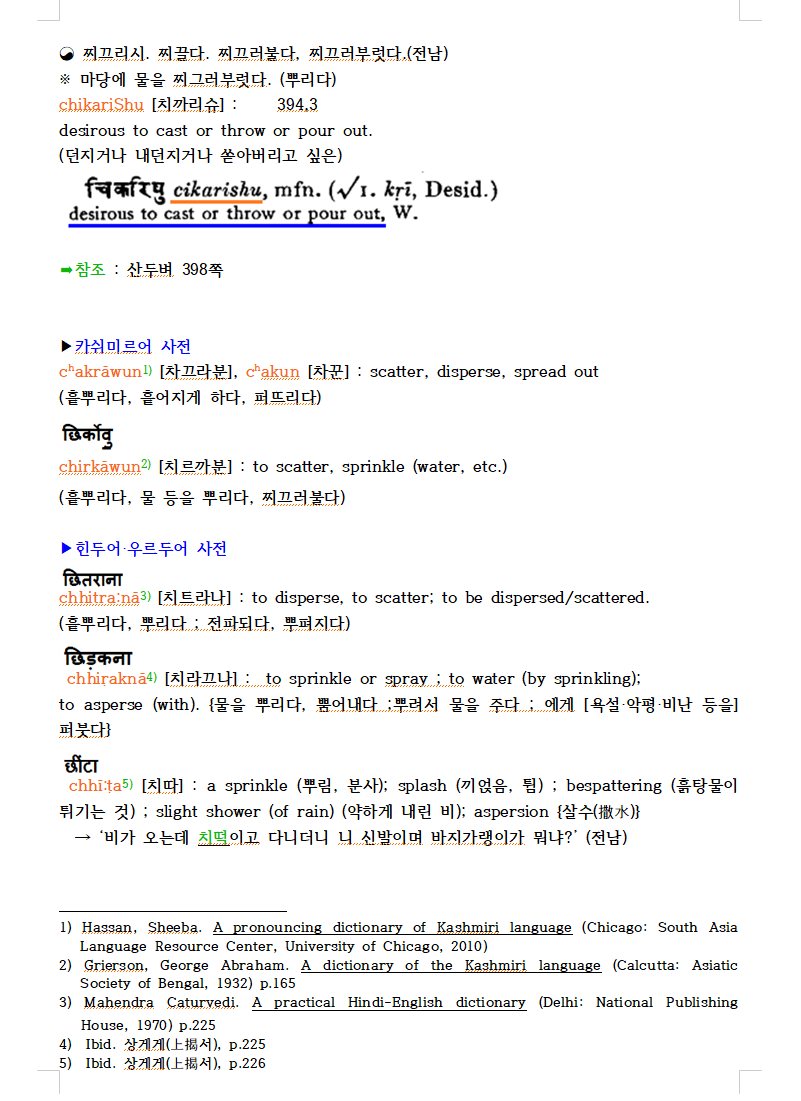
산스크리트 chikariṣu — “던지고 싶다, 쏟고 싶다”
카슈미르어 cʰakun, chirkāwun — “흩뿌리다, 퍼뜨리다”
힌두어 chhitra:nā, chhiṛaknā — “흩뿌리다, 물을 뿌리다”
힌두어 chhīṭa — “물 튀김, 뿌림”
우르두어 chhiṛak'nā — “물을 뿌리다”
전라도의 찌끄러불다, 찌끄리다, 칙칙 뿌리다는 이렇게 ‘흩뿌리다’라는
하나의 고대 공통 어근이 수천 년을 건너 살아남은 말이었습니다.
씨를 뿌리며 밭을 여는 말, ‘끌간다’
이제 한 발짝 더 들어가 보겠습니다.
전남에서는 여름 농사가 시작될 무렵, 사람들은 이렇게 말합니다.
“이제 끌가야 쓰것다.”
‘끌간다’는 단순히 씨를 뿌린다는 뜻이 아닙니다.
이 말 안에는 농사의 시작을 알리는 모든 동작이 함께 들어 있습니다.
- 콩, 팥, 옥수수 같은 씨앗을 밭에 뿌리는 일
- 그 씨를 위해 먼저 쟁기로 밭을 가는 일
그래서 전라도 사람들에게
‘끌간다’란 쟁기질을 하고, 씨를 뿌리고, 밭농사를 여는 모든 순간을 한마디로 묶는 말이었습니다.
이 말의 뿌리 또한 고대에 닿아 있습니다.
산스크리트에는
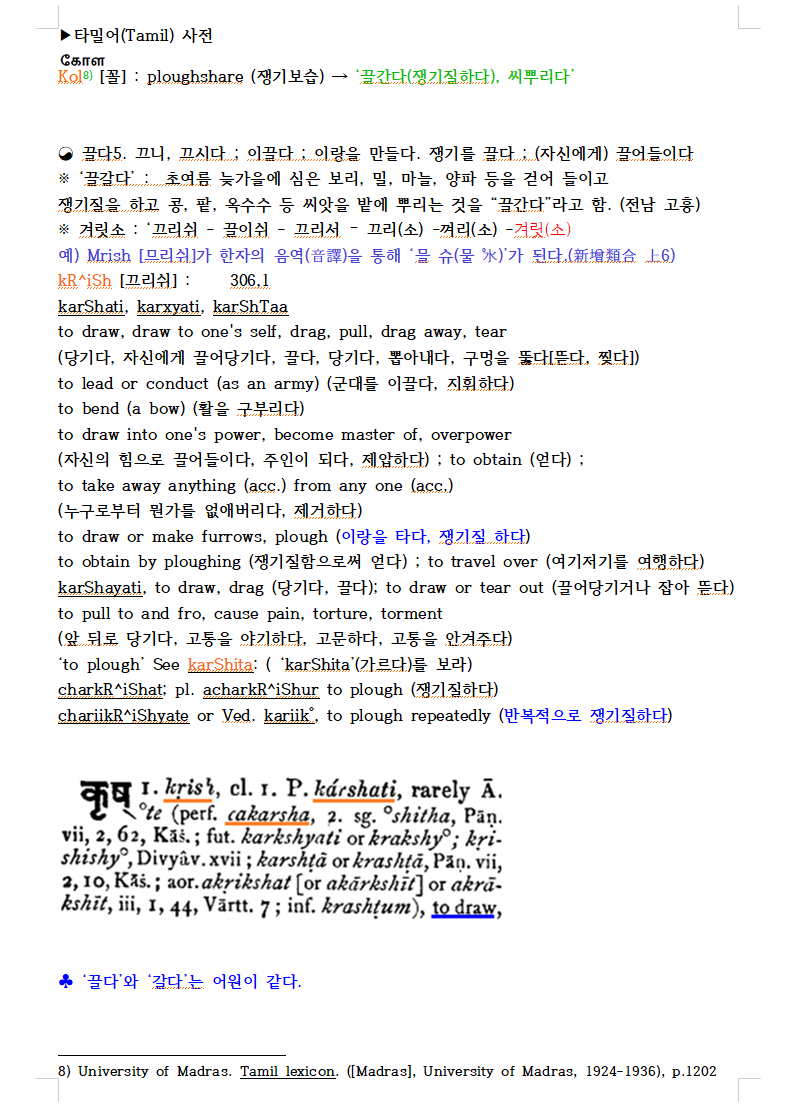
- kṛī / kṛṣ — 뿌리다, 흩뿌리다, 던지다
- karṣati — 끌다, 당기다
- karṣita — 갈다, 쟁기질하다
- chikariṣati — 뿌리고 싶다
라는 말들이 나옵니다.
전라도의 ‘끌간다’는 곧 ‘뿌리다(散)’와 ‘갈다(耕)’가 하나로 합쳐진, 고대 농경 동작의 총칭이었던 셈입니다.
끌다, 갈다, 그리고 사람을 이끄는 말
전라도 말에서 ‘끌다’는 단순히 힘으로 무엇을 당기는 행위가 아닙니다.
이 말은 농사 전체의 움직임을 통째로 품고 있습니다.
- 쟁기를 끌고
- 이랑을 만들고
- 밭을 갈고
- 씨를 심을 자리를 만들며
- 때로는 사람의 마음까지 이끕니다.
그래서 ‘끌다’와 ‘갈다’는 본래 같은 뿌리에서 나온 말로 정리됩니다.
땅을 끌어당기듯 가르고, 씨앗을 받아들일 자리를 만드는 동작,
그 모든 과정이 ‘끌다’라는 한 단어 안에 들어 있던 것입니다.
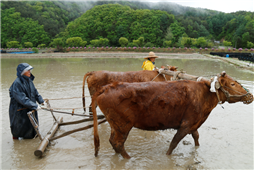
겨릿소, ‘둘’이 아니라 ‘갈게 하는 소’
우리는 흔히 겨릿소(강원도)를 ‘두 마리의 소’라고만 생각합니다.
하지만 이 말이 처음 품었던 뜻은 전혀 다릅니다.
그 뿌리는 이렇게 이어집니다.
- kṛṣ(끄리쉬) — 갈다, 쟁기질하다
- 끄리 — 갈게 하는 힘
- 끌이 — 끄는 힘
- 껴리 — 둘이 짝지음
- 겨리, 겨릿소 — 쟁기를 끄는 한 쌍의 소
※ 겨릿소 : ‘끄리쉬 (끌이쉬) - 끄리서 – 끄리(소) -껴리소 -겨릿소 (강원)
즉, 겨릿소는 숫자 ‘둘’이 먼저가 아니라, ‘밭을 갈게 하는 힘’에서 태어난 말입니다.
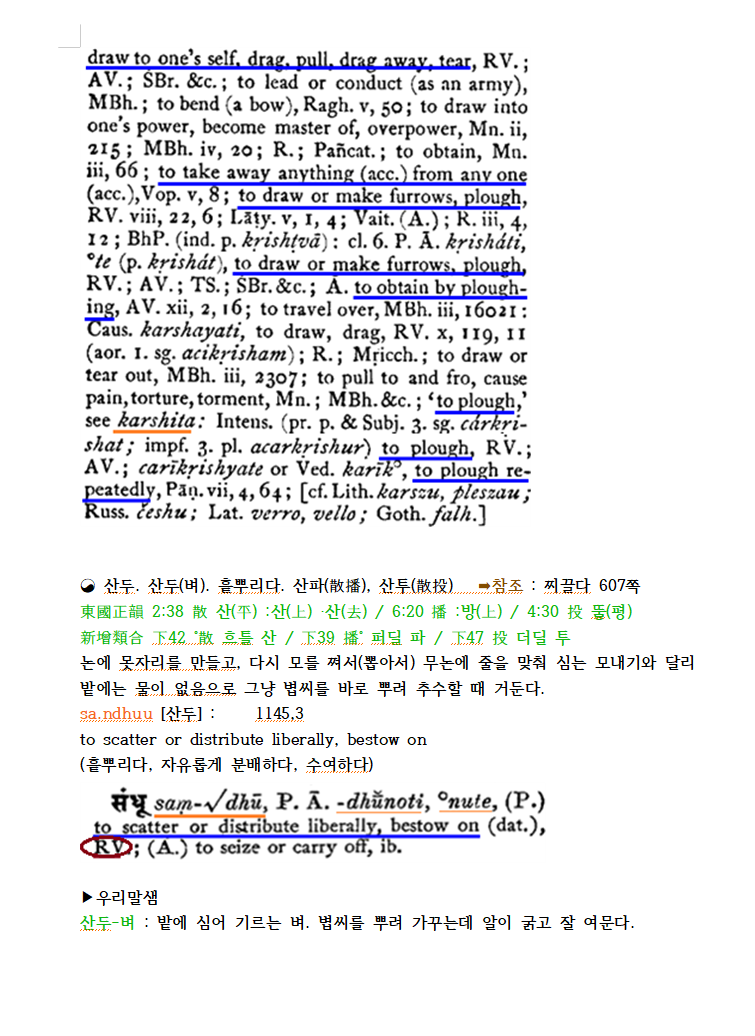
산두벼, 흩뿌려 기르는 벼
논에 모를 심는 모내기 말고도, 우리에게는 또 하나의 오래된 농법이 있었습니다.
바로 산두벼입니다. '산아래 밭에 심은 벼'라고 생각하는 경우가 있습니다만
산두벼는 모판에서 키워 옮겨 심는 벼가 아니라,
볍씨를 밭에 그대로 흩뿌려 기르는 벼입니다.
- 모내기가 아닌 산파(散播), 산투(散投) 방식
- 밭에 직접 씨를 뿌려 수확
- 알이 굵고 잘 여무는 벼
이 말의 뿌리는 saṇḍhu,
곧 **‘흩뿌리다, 널리 나누다’**라는 뜻에서 왔습니다.
그래서 산두는 그 자체로 ‘흩뿌려 기르는 벼’라는 고대 농법이 살아 있는 말입니다.
하나의 흐름으로 이어지는 말의 길
이렇게 전라도의 말들을 따라가다 보면, 어느 순간 하나의 큰 흐름이 드러납니다.
뿌리다 → 갈다 → 끌다 → 농사짓다 → 살아가다
찌끌다, 찌끄러불다, 끌간다, 산두, 겨릿소, 부럿다,
이 모든 말은 농사와 생존, 그리고 삶 그 자체를 잇는 한 줄기의 언어 체계입니다.
그리고 이 말들은
- 산스크리트
- 타밀어
- 카슈미르어
- 힌두어
- 우르두어
와 의미와 소리, 발음의 결이 놀랍도록 맞닿아 있는 ‘농경과 생존의 공통 어근 문화’이기도 합니다.

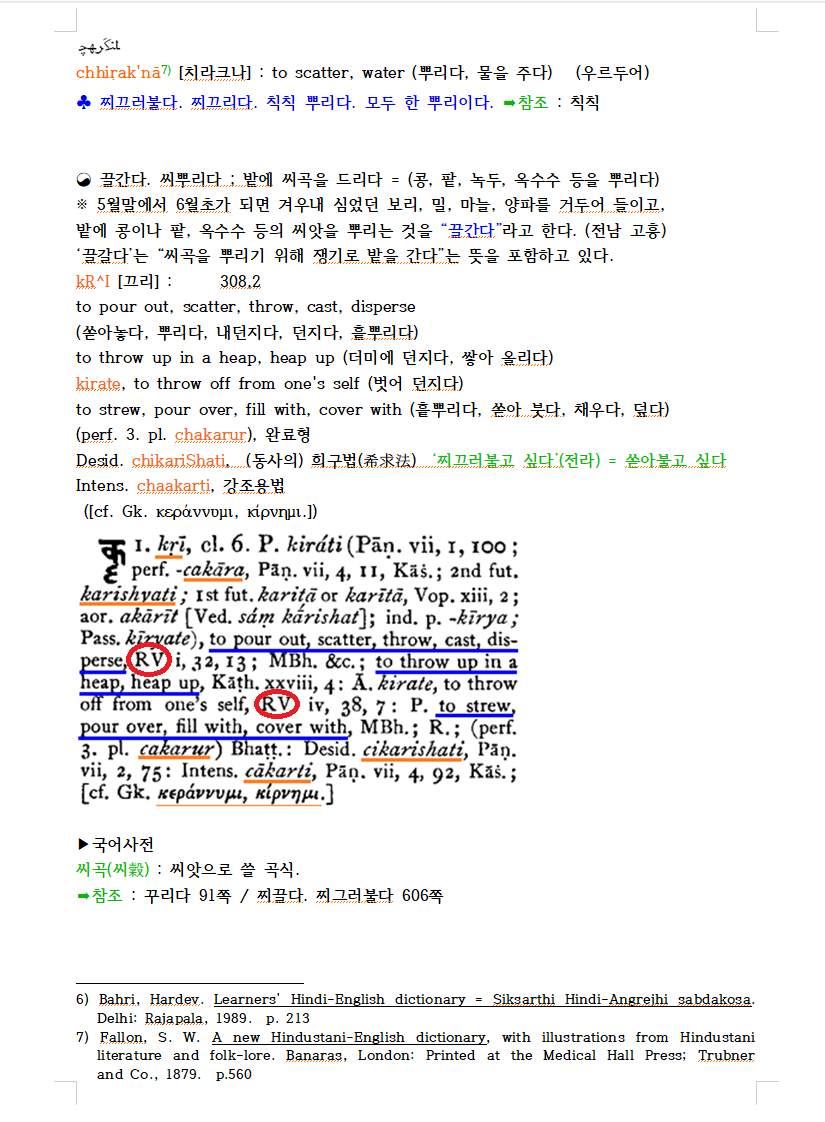
♣ 빨간원 안의 RV는 이 말이 3500년전 Rigveda(리그베다) 경전에 들어있는 말이다는 뜻.
●스스로 "나"를 사랑하고, 우리말과 역사를 사랑하는 모든 사람들에게 전달해 주십시오.
위 내용은 인터넷 주소창과 카톡에 아래와 같이 바로 입력하여 볼 수 있습니다.
www.다일라.한국/42
www.다일라.한국/2 ☆ 다 깨어 일어나라!!! 다일라!!! ☆ --대한민국 새로운 구호 제창
☆ 다 깨어 일어나라!!! 다일라!!! ☆ --대한민국 새로운 구호 제창
대한민국 새로운 구호 제창 다일라!!! 다 깨어 일어나라! 화이팅은 “투지(鬪志)”“전의(戰意)”를 뜻하는 영미권의 “파이팅 스피리트” (Fighting Spirit)를 사용하면서 생겨났다는 설(說)과 일본
www.xn--2j1b40gc5q.xn--3e0b707e
🌾 The Story of the Jeolla-do Language, Starting from the Scattering Hand
On a summer morning in an old Jeolla-do village, when someone would pour water from a bowl onto the yard, the elders would say:
“마당에 물을 찌그러부럿네.” (The water was "jjigeureobureonne" (scattered/poured) in the yard.)
This single phrase contains the memory of a very ancient gesture that goes beyond simply ‘pouring water.’
The Jeolla-do words 찌끌다 (jjikkeulda), 찌끄러불다 (jjikkeureobulda), 찌끄리다 (jjikkeurida), and 칙칙 뿌리다 (chik-chik ppurida) all point to a single common action:
- ‘The act of scattering,’ more precisely, the act of throwing, spilling, or dividing as if pouring down.
Within these words, the following meanings coexist:
- To scatter
- To throw, to spill out
- To sow/sprinkle water, seeds, or fertilizer as if pouring down
- To plant seeds
- The act of directly sowing rice seeds and grain seeds in the field
Remarkably, these Jeolla-do words were not created solely on our land.
Sounds with the same meaning in ancient languages remain extensively in regions like Kashmir, India even today:
- Sanskrit $chikariṣu$ — “to wish to throw, to wish to pour”
- Kashmiri $cʰakun$, $chirkāwun$ — “to scatter, to spread”
- Hindi $chhitra:nā$, $chhiṛaknā$ — “to scatter, to sprinkle water”
- Hindi $chhīṭa$ — “splash, sprinkling”
- Urdu $chhiṛak'nā$ — “to sprinkle water”
Jeolla-do's 찌끄러불다, 찌끄리다, 칙칙 뿌리다 are words where a single ancient common root meaning ‘to scatter’ has survived across thousands of years.
🌱 The Word That Opens the Field by Sowing Seeds: ‘Kkeul-ganda’ (끌간다)
Let us take one step further.
Around the time summer farming begins in Jeollanam-do, people say:
“이제 끌가야 쓰것다.” (Now, we must ‘kkeul-ga’ (go and cultivate/sow).
‘Kkeul-ganda’ does not simply mean sowing seeds.
This word encompasses all the actions that signal the start of farming:
- The act of sowing seeds like beans, red beans, and corn in the field
- The act of ploughing the field first for those seeds
Therefore, for the people of Jeolla-do, ‘Kkeul-ganda’ was a phrase that collectively referred to the entire process of ploughing, sowing seeds, and opening the field for farming.
The root of this word also reaches back to antiquity.
In Sanskrit, we find the following words:
- $kṛī$ / $kṛṣ$ — to sow, to scatter, to throw
- $karṣati$ — to pull, to drag
- $karṣita$ — to till, to plough
- $chikariṣati$ — to wish to sow/scatter
Jeolla-do’s ‘Kkeul-ganda’ was thus the ancient generic term for agricultural movement, combining ‘to sow ($\text{散}$)’ and ‘to till ($\text{耕}$)’ into one.
🐂 To Pull, To Till, and The Word That Leads People
In the Jeolla-do dialect, ‘Kkeul-da’ (끌다, to pull) is not merely the act of dragging something with force.
This word entirely embraces the movement of the entire farming process:
- Pulling the plough
- Making the furrows
- Tilling the field
- Creating a space for planting seeds
- And sometimes, even leading a person's heart.
Thus, it is generally accepted that ‘Kkeul-da’ (to pull) and ‘Gal-da’ (갈다, to till) originated from the same root.
The action of cutting the earth as if pulling it, and making a place to accept the seeds—all of this process was contained within the single word ‘Kkeul-da.’
🐃 Gyeoritso (겨릿소), Not ‘Two’ but ‘Oxen That Make Tilling Happen’
We commonly think of Gyeoritso as simply ‘two oxen.’
However, the original meaning this word held was completely different.
Its root continues as follows:
- $kṛṣ$ (k'reush) — to till, to plough
- Kkeuri — the force that causes tilling
- Kkeul-i — the pulling force
- Kkyeori — pairing two things
- Gyeori, Gyeoritso — a pair of oxen that pull the plough
In other words, Gyeoritso was not primarily about the number ‘two,’ but was born from the ‘force that causes the field to be tilled.’
🌾 Sandu-byeo (산두벼), Rice Grown by Scattering
Besides monaegi (transplanting rice seedlings), there was another ancient farming method in Korea: Sandu-byeo.
Sandu-byeo is not rice grown in a seedbed and transplanted, but rice where the seeds are scattered directly into the field.
- The method of Sanpa ($\text{散播}$, scattering) or Santu ($\text{散投}$, scattering/throwing) instead of transplanting.
- Harvesting by sowing seeds directly in the field.
- Rice that has thick grains and ripens well.
The root of this word is $saṇḍhu$, which means ‘to scatter, to divide widely.’
Therefore, Sandu is a word that itself preserves the ancient farming method of ‘rice grown by scattering.’
🌏 The Path of Language Connected by a Single Flow
Tracing these words of the Jeolla-do dialect reveals a single, large flow:
To Sow → To Till → To Pull/Lead → To Farm → To Live
찌끌다, 찌끄러불다, 끌간다, 산두, 겨릿소, 부럿다—all these words form a single stream of linguistic system that connects farming, survival, and life itself.
And these words represent a ‘common root culture of agriculture and survival’ that shares a striking overlap in meaning, sound, and pronunciation with:
- Sanskrit
- Tamil
- Kashmiri
- Hindi
- Urdu