쟁기와 끌다 — 농사와 관련된 우리말과 범어(梵語)의 어원 2
김석훈 | 우리말 뿌리연구가, 『우리말 범어사전』 편저자
| 역사계보 족보연구가, 『천제환국조선인류역사계보 』 두루마리 편
| '다일라 운동' 주창
■ 제2편 — 쟁기와 끌다의 언어
— 땅에 선을 긋고 생명의 길을 열다
이른 새벽,
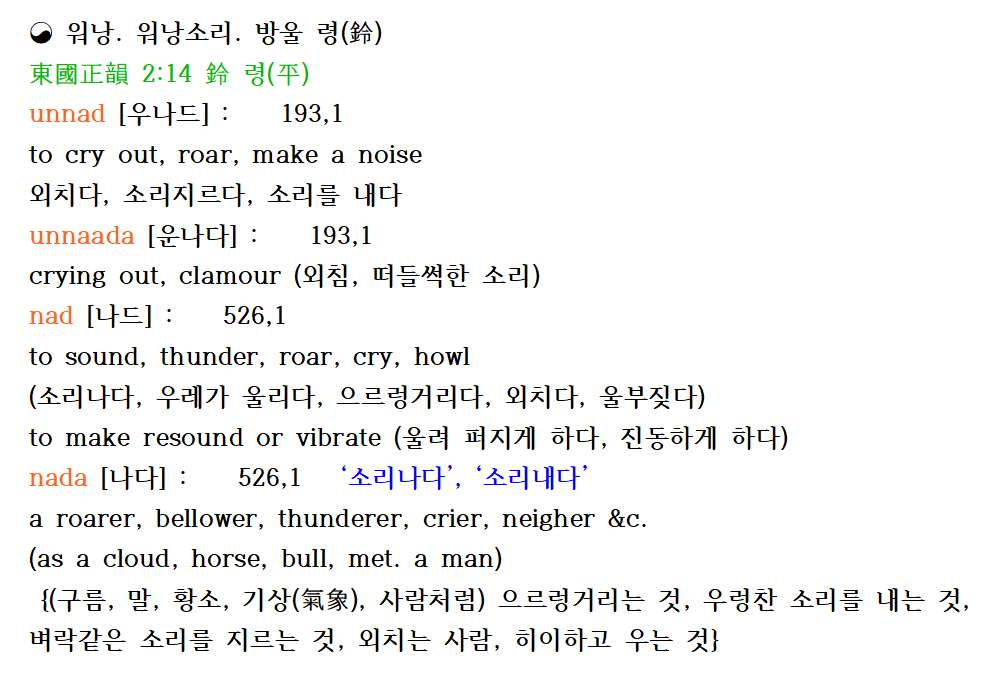
동구 밖에서 소 방울(워낭) 소리가 들려오면
마을 사람들은 하루의 시작을 알았다.
안개가 걷히지 않은 들녘 사이로
겨릿소 두 마리가 천천히 밭으로 향하고,
농부는 쟁기자루를 단단히 움켜쥔다.
쟁기질은 단순히 흙을 뒤집는 일이 아니었다.
굳은 땅을 깨우고,
고랑을 내고,
물을 흐르게 하며
생명의 길을 여는 일이었다.

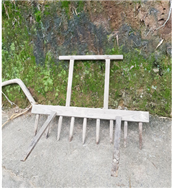
1. 써래와 쟁기 — 땅을 깨우는 도구
우리말 ‘써래’, ‘사래’, ‘쟁기질’에는
아주 오래된 농경의 숨결이 남아 있다.
산스크리트어 siira[씨라]는
쟁기(plough),
쟁기질하는 황소,
그리고 태양(the sun)의 뜻까지 함께 가진다.
씨라 → 씨래 → 쓰래 → 써래
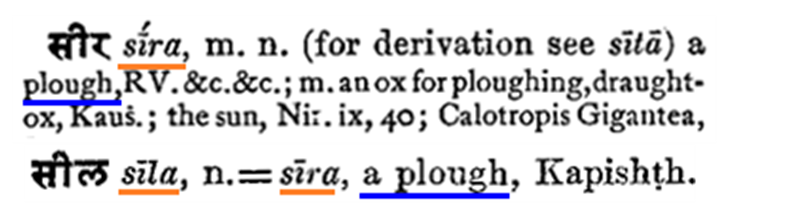
쟁기는 땅을 갈고,
소는 그것을 끌며,
태양은 그 위에 생명을 길러낸다.
농사는 결국
하늘과 땅과 짐승과 사람이
함께 만드는 일이었다.
siila[실라], siiraka[시라까] 또한
쟁기를 뜻한다.
saira[사이라]는
쟁기와 관련된 것,

곧 ‘사래 긴 밭’의 그 ‘사래’와 연결해 볼 수 있다.
남구만의 시조에 나오는:
“재 너머 사래 긴 밭을 언제 갈려 하느니”
라는 구절 속에도
끝없이 이어진 이랑과
농부의 하루가 살아 있다.
동창이 밝았느냐 노고지리 우지진다
소치는 아이는 상기 아니 일었느냐
재너머 사래 긴 밭을 언제 갈려 하느니
<남구만(南九萬)의 시조(時調)>
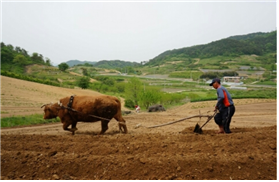
3. 끌갈다 — 땅을 끌어 생명을 열다
고흥 보성 등 남도에서는
보리와 마늘을 거두어 들인 뒤
쟁기로 밭을 갈고
콩, 팥, 옥수수 씨앗을 뿌리는 일을
“끌간다”라고 했다.
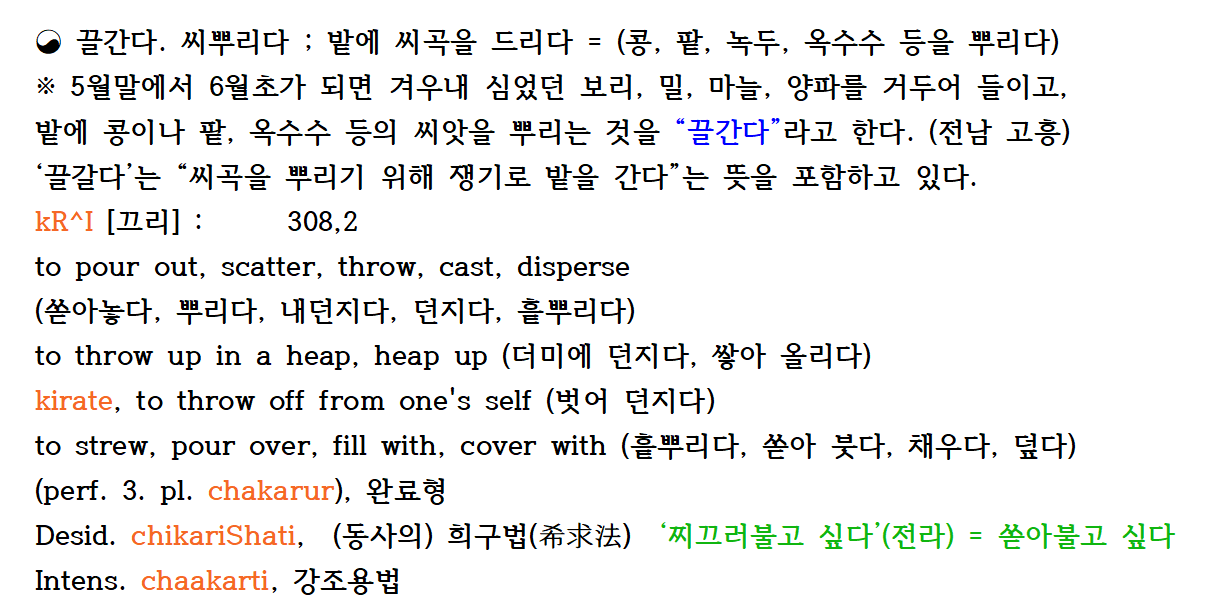
‘끌갈다’에는
‘끌다’와 ‘갈다’가 함께 들어 있다.
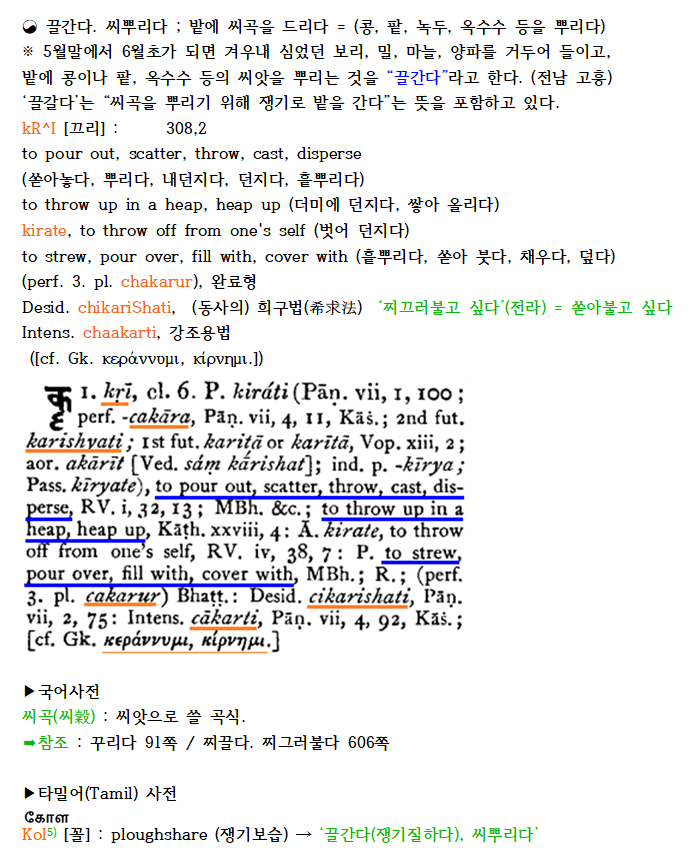
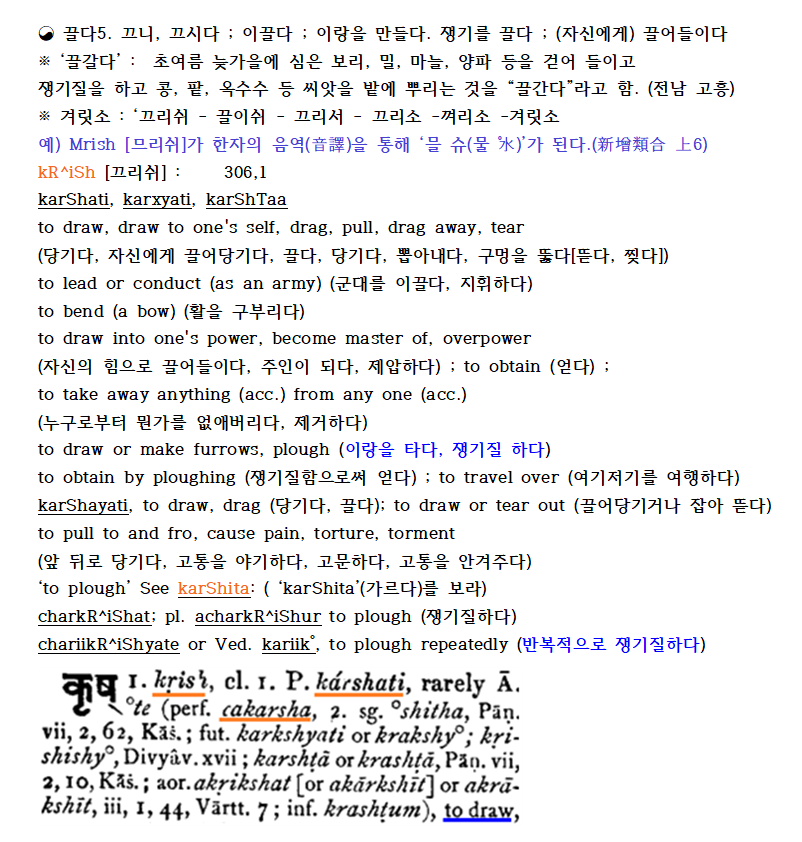
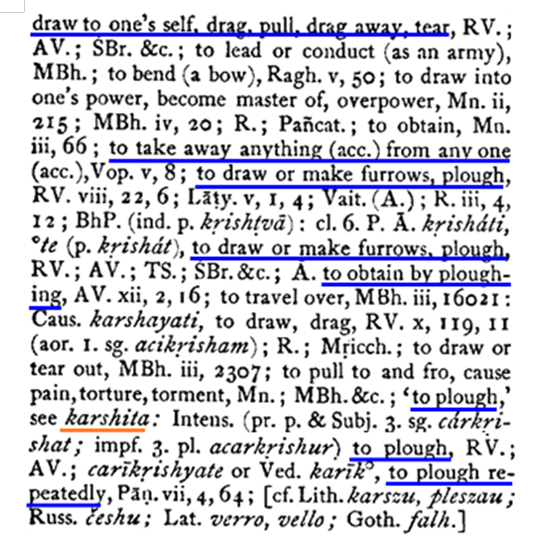
산스크리트어 kR^iSh[끄리쉬]는
끌다, 당기다, 이끌다,
이랑을 만들다, 쟁기질하다의 뜻을 가진다.
즉 ‘끌다’와 ‘갈다’는
원래 하나의 몸짓이었다.
소가 쟁기를 끌고 지나가면
땅 위에는 긴 고랑이 생기고,
죽어 있던 흙은 숨을 쉬기 시작한다.
쟁기질은
단순 노동이 아니라
땅 위에 생명의 숨길을 트는 일이었다.
'끌다'는 '찌끌다'와 어원이 같다
<참고>
www.다일라.한국/42
찌끌다, 끄리, 끌다, 갈다, 겨릿소(강원), 산두(벼)
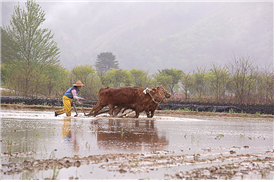
4. 겨릿소 — 함께 끄는 삶
겨릿소는
두 마리의 소가 함께 쟁기를 끄는 소이다.
한 마리 힘만으로는
굳은 땅을 갈아엎기 어려웠기 때문이다.
‘끄리쉬 → 끄리소 → 겨리소 → 겨릿소’
라는 음운 흐름 속에는
함께 끌며 살아온 농촌의 풍경이 담겨 있다.
농사는 늘
함께 하는 일이었다.
혼자서는 밭을 갈 수 없고,
혼자서는 가을을 거둘 수 없었다.
5. 보습 — 땅을 가장 먼저 가르는 쇠끝
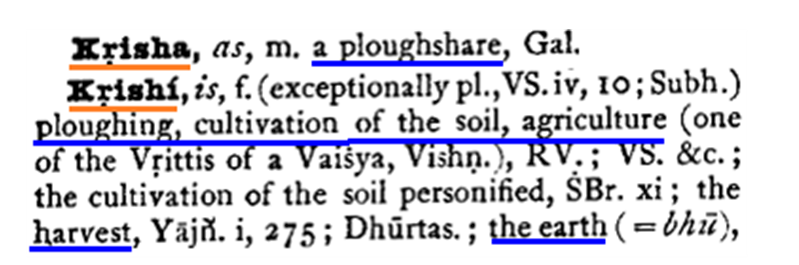
산스크리트어 kR^iSha[끄리샤]는
쟁기보습(ploughshare)을 뜻한다.
그리고 kR^iShi[끄리쉬]는
쟁기질, 경작, 농업을 뜻한다.
보습은
굳은 흙을 가장 먼저 가르는 쇠끝이다.
검은 속흙을 끌어올리고,
묵은 땅에 새 숨을 넣으며,
씨앗이 들어갈 길을 만든다.
그래서 쟁기는
단순한 농기구가 아니었다.
땅과 사람 사이에
삶의 길을 여는 도구였다.
6. 씨를 뿌리다 — 생명을 흩뿌리다
쟁기질이 끝난 뒤
농부는 밭에 씨곡을 뿌린다.
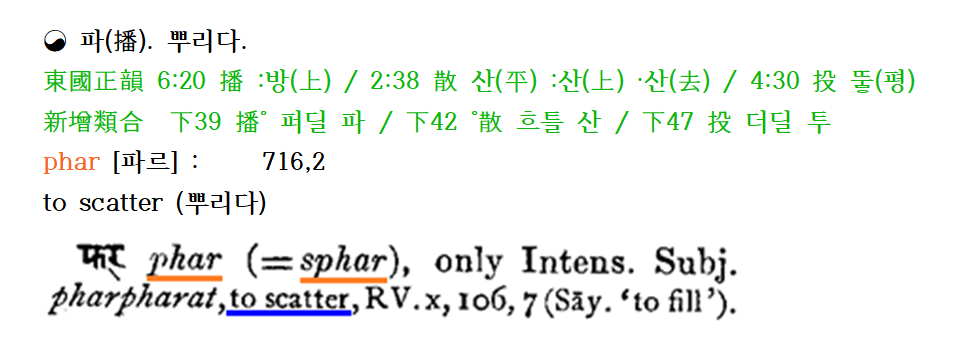
산스크리트어 phar[파르]= 파(播)는
흩뿌리다(scatter)의 뜻을 가진다.
pR^iSh[뿌리시], pruSh[뿌루쉬] 역시
물이나 씨앗을 뿌리고 적시는 뜻을 가진다.
전남에서는
비가 부슬부슬 내리는 것을
“삐린다”라고도 했다.
카쉬미르어 pʰirun,
타밀어 piḻi 역시
비가 흩뿌려지듯 내리는 뜻을 가진다.
농부는 씨앗을 뿌리지만
결국 그것을 키우는 것은
햇빛과 바람과 비였다.
쟁기질이 끝난 밭에는
긴 이랑이 햇빛 아래 반듯하게 누워 있고,
참새들은 뒤집힌 흙 속 벌레를 찾아 내려앉는다.
농부는 흙 묻은 손등으로 땀을 훔치며
하늘 한번 바라본다.
그 밭에는 아직 싹도 나지 않았지만,
이미 가을의 결실이 조용히 시작되고 있었다.
쟁기질은
땅에 선을 긋는 일이었다.
그리고 그 선은
오늘과 가을,
사람과 자연,
삶과 생명을 이어주는 길이었다.
<어원 보충>
●스스로 "나"를 사랑하고, 우리말과 역사를 사랑하는 모든 사람들에게 전달해 주십시오.
위 내용은 인터넷 주소창과 카톡에 아래와 같이 바로 입력하여 볼 수 있습니다.
www.다일라.한국/69
www.다일라.한국/61
www.다일라.한국/2
☆ 다 깨어 일어나라!!! 다일라!!! ☆ --대한민국 새로운 구호 제창
◈ ◈ ◈ ◈ ◈ ◈ ◈ ◈ ◈ ◈ ◈ ◈ ◈ ◈ ◈ ◈ ◈ ◈ ◈ ◈ ◈ ◈ ◈ ◈ ◈ ◈ ◈ ◈ ◈ ◈ ◈ ◈
Kim Seok-Hoon
Korean Etymology Researcher
Editor of Our Korean–Sanskrit Etymological Dictionary
Genealogical & Historical Lineage Researcher
Compiler of the scroll The Genealogical History of Humanity from the Heavenly Emperor Hwan-State and Joseon
■ Part 2 — The Language of the Plough and Pulling
— Drawing Lines upon the Earth and Opening the Path of Life
In the early dawn,
when the sound of cowbells echoed beyond the village road,
the people of the village knew the day had begun.
Through the mist-covered fields,
a pair of yoked oxen slowly made their way toward the farm,
while the farmer firmly grasped the handles of the plough.
Ploughing was never merely the turning of soil.
It was the act of awakening hardened earth,
cutting furrows,
guiding water,
and opening the pathways of life.
1. Harrow and Plough — Tools that Awaken the Earth
In the Korean words sseorae (harrow), sarae, and ploughing itself,
the ancient breath of agricultural civilization still remains.
The Sanskrit word siira means:
- a plough,
- an ox used for ploughing,
- and even the sun itself.
siira → ssirae → sseurae → sseorae
The plough tills the earth,
the ox pulls it forward,
and the sun nurtures life upon it.
Agriculture was ultimately something created together
by heaven, earth, animals, and human beings.
The words siila and siiraka also mean “plough.”
And saira, meaning “related to a plough,”
can be connected to the sarae (“long furrowed field”)
found in the famous sijo poem of Nam Gu-man:
“Beyond the hill,
when shall we plough those long sarae-fields?”
Within that verse still live
the endless furrows
and the long labor of the farmer’s day.
“The eastern window brightens,
the skylark cries aloud.
Has the boy tending the cattle not yet risen?
When shall we plough
the long furrowed fields beyond the hill?”
— Sijo by Nam Gu-man (1629–1711)
2. Kkeul-galda — Pulling the Earth Open
In Goheung, Jeollanam-do,
after harvesting barley, garlic, and onions,
people would plough the field and scatter beans, millet, or corn seeds.
This work was called “kkeul-ganda.”
Within that word live together
the meanings “to pull” and “to plough.”
The Sanskrit kR^iSh means:
- to pull,
- to draw,
- to lead,
- to make furrows,
- to plough the land.
Thus “pulling” and “ploughing”
were originally one single bodily movement.
As the oxen pulled the plough across the field,
long furrows appeared upon the earth,
and the sleeping soil began to breathe again.
Ploughing was not mere labor.
It was the opening of hidden pathways of life within the earth.
3. The Yoked Oxen — A Life Pulled Together
Gyeorit-so refers to a pair of oxen
pulling a plough together.
One ox alone
could not overturn hardened earth.
kR^iSh → kkeuriso → gyeoriso → gyeorit-so
Within this phonetic flow
remains the memory of rural people
who survived by pulling together.
Agriculture was always communal.
No one could plough alone,
and no one could harvest autumn alone.
4. The Ploughshare — The Blade that First Cuts the Earth
The Sanskrit kR^iSha means “ploughshare.”
And kR^iShi means:
- ploughing,
- cultivation,
- agriculture.
The ploughshare is the iron blade
that first cuts through hardened soil.
It draws up the dark inner earth,
breathes new life into exhausted land,
and opens a path for seeds to enter.
Thus the plough was never merely a tool.
It was an instrument
that opened the road between earth and human life.
5. Scattering Seeds — Sowing Life upon the Earth
After ploughing,
the farmer scatters seed grain across the field.
The Sanskrit phar — also linked with the Chinese character 播 —
means “to scatter.”
pR^iSh and pruSh likewise mean:
- to sprinkle,
- to scatter,
- to moisten,
- to wet the earth.
In Jeolla dialect,
a gentle drizzling rain is still called “ppirinda.”
The Kashmiri word pʰirun
and the Tamil word piḻi
also carry the sense of rain softly scattering across the earth.
The farmer may sow the seeds,
but it is ultimately
sunlight, wind, and rain
that raise them into life.
After ploughing,
the long furrows lie quietly beneath the sunlight,
while sparrows descend to search for insects
within the freshly turned soil.
The farmer wipes sweat from his brow with dusty hands
and gazes once toward the sky.
No sprouts have yet appeared in the field,
yet already
the harvest of autumn
has silently begun.
Ploughing was the act of drawing lines upon the earth.
And those lines became pathways
connecting today and autumn,
human beings and nature,
life and all living things.