불(火)의 언어 - 불, 아궁이, 가마솥, 부뚜막, 부지깽이, 곱돌화로, 꾸들 ......
김석훈 | 우리말 뿌리연구가, 『우리말 범어사전』 편저자
| 역사계보 족보연구가, 『천제환국조선인류역사계보 』 두루마리 편
| '다일라 운동' 주창
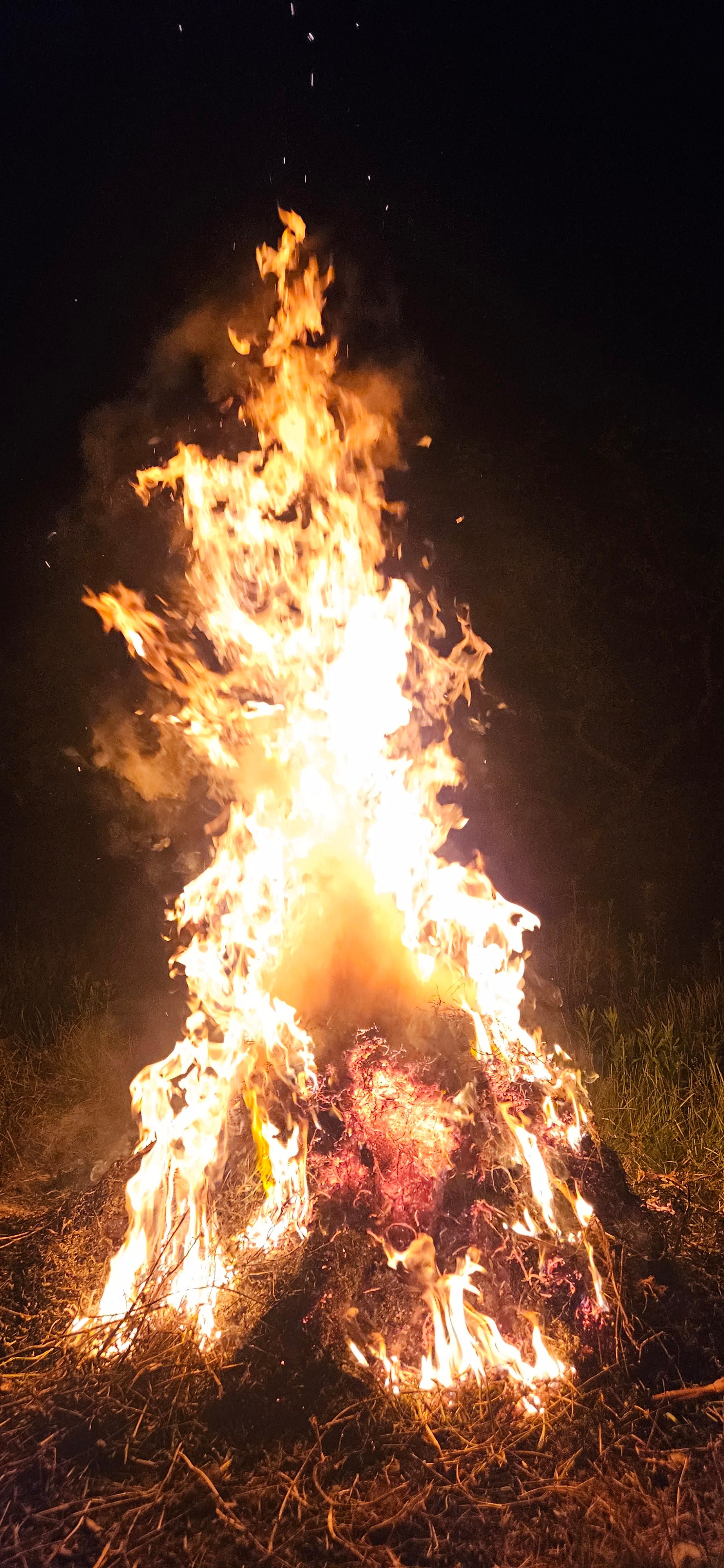
■ 불(火)의 언어
아궁이에서 가마솥, 풀무, 성냥쟁이, 해와 볕까지
아래와 같이 불(火)에 관련된 범어(산스크리트어) 어원과 우리말의 흐름을 함께 살펴보았다.
동양에서는 예로부터 세상을 이루는 근원 요소로
지수화풍(地水火風), 곧 땅·물·불·바람을 이야기해 왔다.
그 가운데 불(火)은 단순한 열기가 아니라,
생명을 유지하고 문명을 일으키는 근원적 힘이었다.
불이 없으면 음식을 익힐 수 없고,
몸을 데울 수 없으며,
쇠를 녹일 수도 없고,
어둠을 밝힐 수도 없다.
그래서 초기 인류에게 불은 단순한 물질이 아니었다.
우리 조상들은 불을 하나의 신성한 존재, 곧 神으로 바라보았다.
오늘날 우리는 과학과 이성으로 세상을 설명한다.
그러나 먼 옛날 사람들은 삼라만상 자연 전체를 살아 있는 존재로 느꼈다.
하늘과 해, 바람과 물, 산과 나무, 그리고 불까지도 모두 신성한 힘으로 여겼으며,
그 경외심 속에서 삶과 제의와 언어가 함께 형성되었다.
해와 불, 바람과 물, 숨과 혼, 빛과 소리, 마음과 기억까지도
서로 분리되지 않았으며, 모두 하나의 신성한 흐름 속에서 이해되었다.
불은 밥을 익히고, 몸을 데우고, 쇠를 녹이며, 어둠을 밝히고, 하늘에 제사를 올리는 힘이었다.
그래서 우리말 속 불 관련 낱말들은 서로 흩어진 말이 아니다.
불이 태어나고,
살아나고,
바람을 먹고,
타오르고,
밥을 익히고,
삶을 살리고,
쇠를 단련하며,
마침내 빛과 볕이 되어 생명을 키우고,
끝내 사그라지는 전 과정을 담고 있다.
불은 단순히 타는 것이 아니다.
우리말은 불을 하나의 물질이 아니라,
살아 움직이며 세상을 변화시키는 생명의 흐름으로 이해해 온 언어이다.
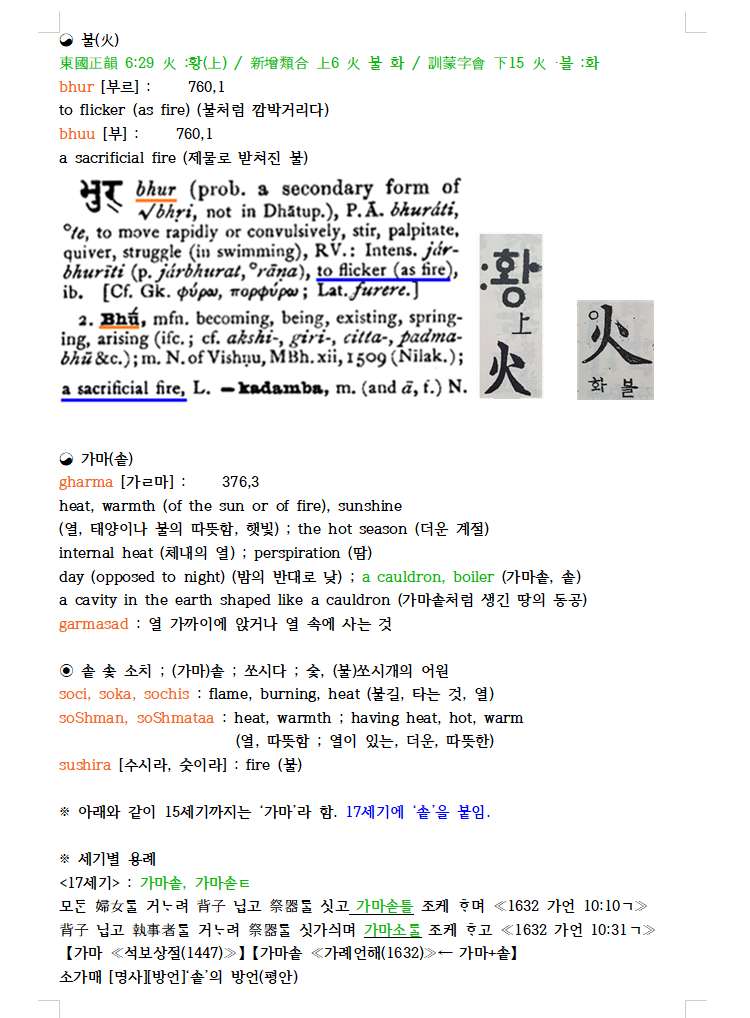
1. 불의 근원 — 불, 블, bhur, bhū
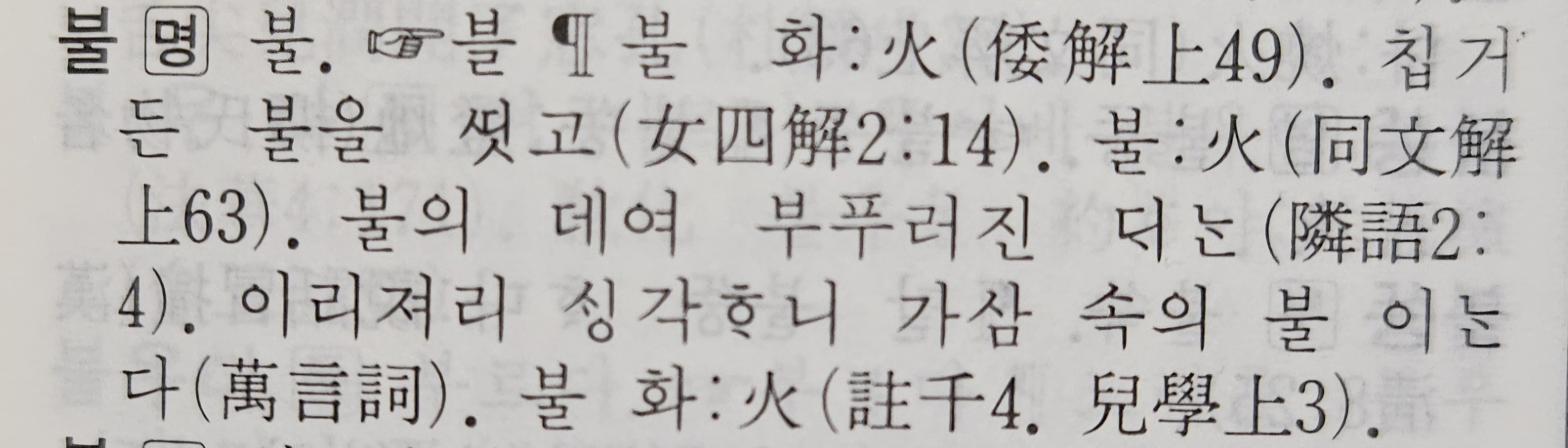
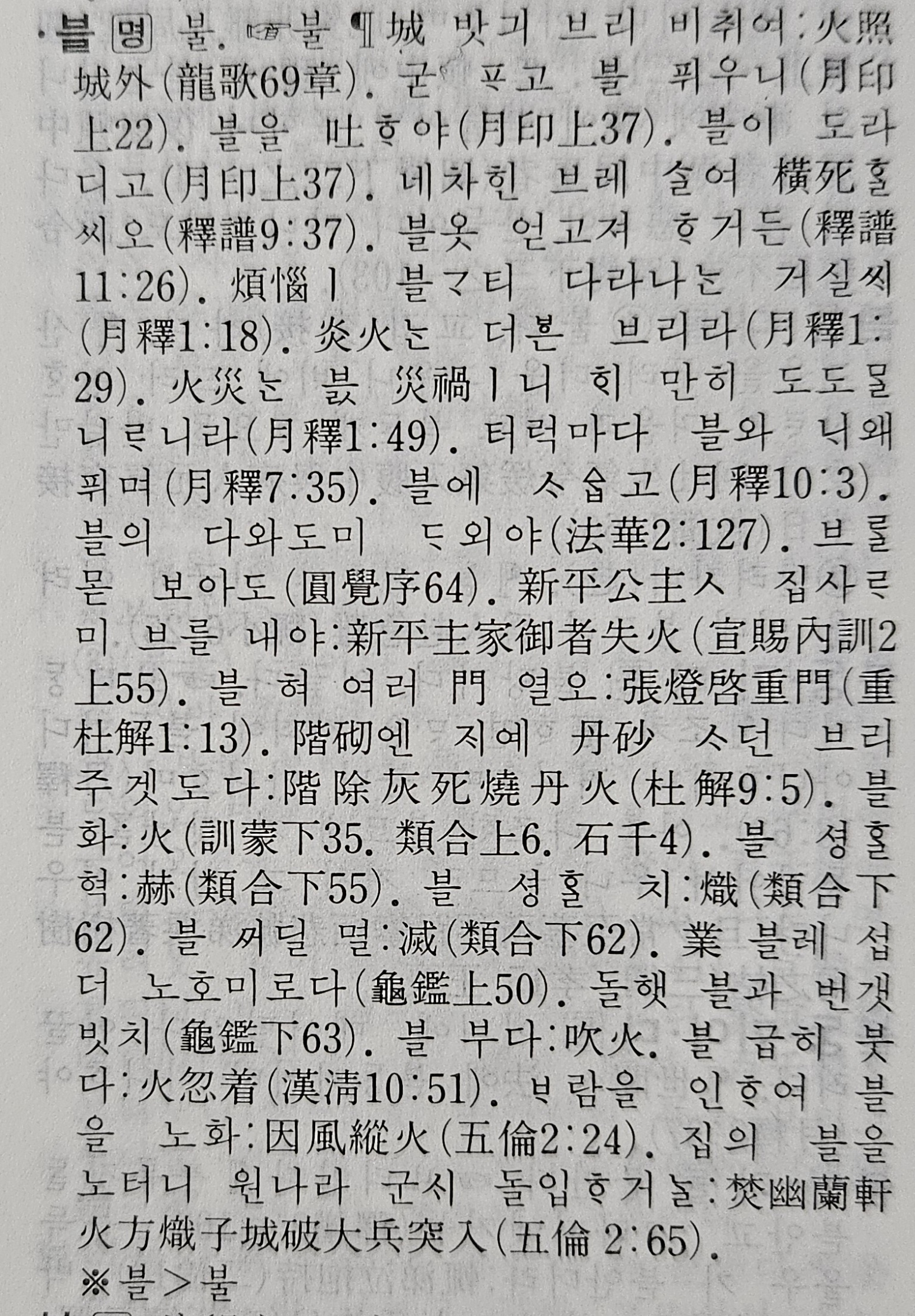
우리 옛 문헌에는 火를 불 또는 블로 적은 흔적이 있다.
『동국정운』, 『신증유합』, 『훈몽자회』에도 火와 관련된 옛 음과 풀이가 남아 있다.
범어 bhur [부르·불]은
불처럼 깜박거리다는 뜻을 가진다.
범어 bhū [부]는
제단에 바쳐진 불, 곧 제사의 불을 뜻한다.
여기서 불은 단순한 물질이 아니다.
깜박이고 살아 움직이며, 사람과 하늘을 이어 주는 신성한 힘이다.

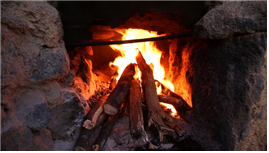
2. 아궁이 — agni, 불씨를 품은 자리
범어 agni [아그니]는
불, 제사의 불, 불의 신을 뜻한다.
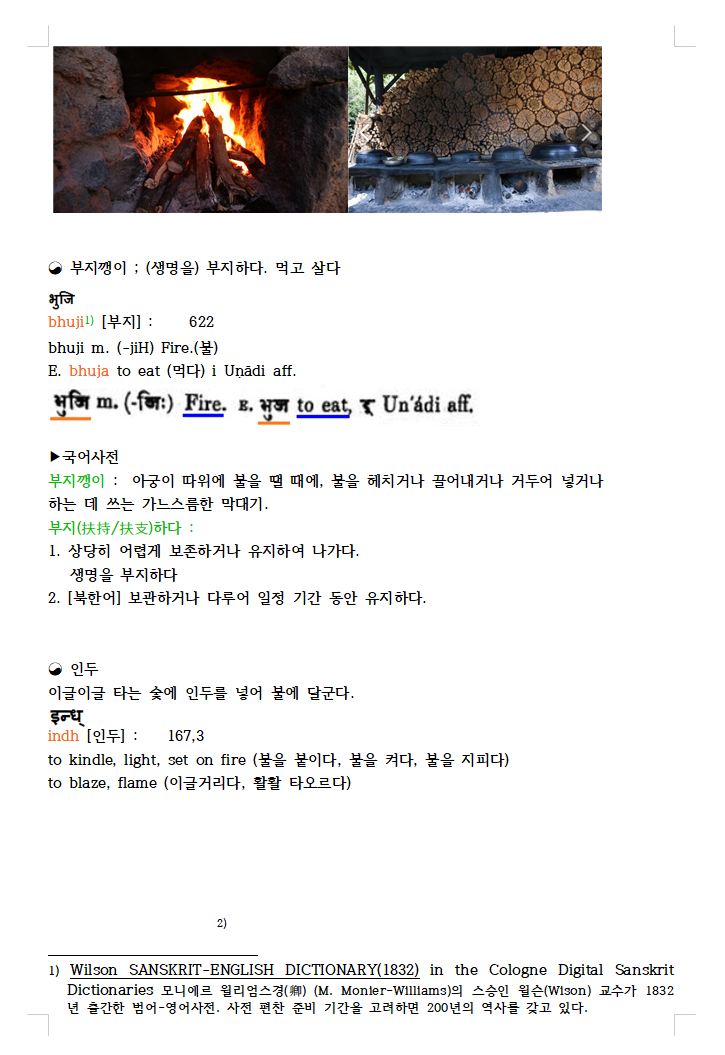
우리말 아궁이는 그 불이 머무는 자리다.
아궁이는 단순히 장작을 넣는 부엌의 구멍이 아니라,
집안의 불씨를 보존하는 자리였다.
또 agni-kaṇa [아그니-까나]는
불의 입자, 불씨, 불똥을 뜻한다.
그러므로 아궁이는 이렇게 이해할 수 있다.
“아궁이에 불 켰나?”라는 말도 그저 단순한 생활 표현이 아니다.
그 안에는 밥, 온기, 생명, 하루의 시작이 함께 들어 있다.
3. 부뚜막 — 불과 바람이 만나는 자리
우리말 부뚜막은 단순히 솥을 올려놓는 곳이 아니다.
아궁이의 불을 살리고 바람을 일으켜 열을 유지하는 집안 생명의 중심 자리였다.
범어의 흐름으로 보면 다음과 같이 이해할 수 있다.
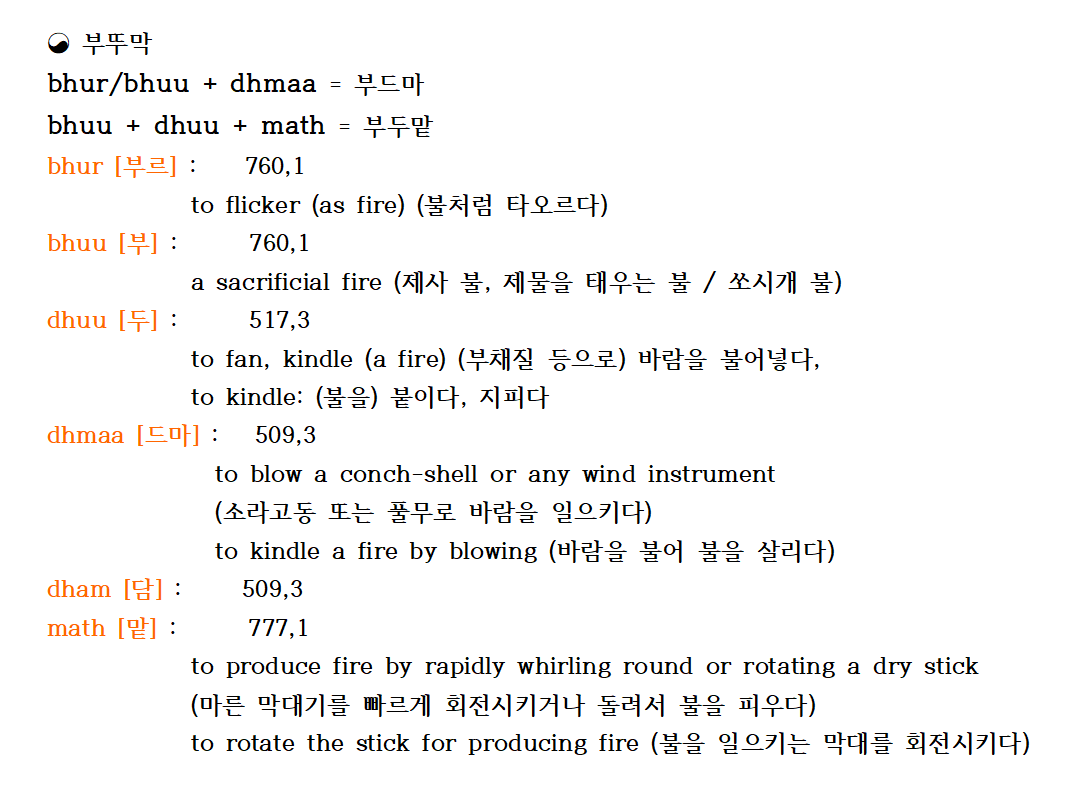
1). bhur / bhuu + dhmaa → 부드마 → 부뚜막
- bhur / bhuu [부]
→ 불처럼 타오르다, 불을 살리다 - dhmaa [드마]
→ 바람을 불다, 바람으로 불을 키우다
즉, 불을 살리기 위해 바람을 불어넣는 자리이다.
2). bhuu + dhuu + math → 부두맡 → 부뚜막
- bhuu [부]
→ 불을 살리다 - dhuu [두]
→ 부채질하다, 불을 지피다 - math [맡 / 막]
→ 회전·송풍 장치
→ 풀무처럼 바람을 일으켜 불을 살리는 기능
즉 부뚜막은 바람으로 불을 살리는 곳이다.
★ (예)산(山)을 남도에서는 범어 '까꾿맡'→ 까끄막, '까꾿민' → 까끔 이라 한다.
수천 년 시간이 흐른 동안 만들어진 음운의 변천이다.
kakud-mat [까꾿맡] : a mountain. (산, 비탈진 산, 벼랑이 있는 산)
kakud-min [까꾿민] : peaked, humped (솟아오른, 튀어나온) ; a mountain (산)
<참고> ▶ 각하(閣下), 각간(角干), 까끄막(山) — 한 뿌리의 말 www.다일라.한국/34
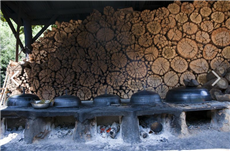
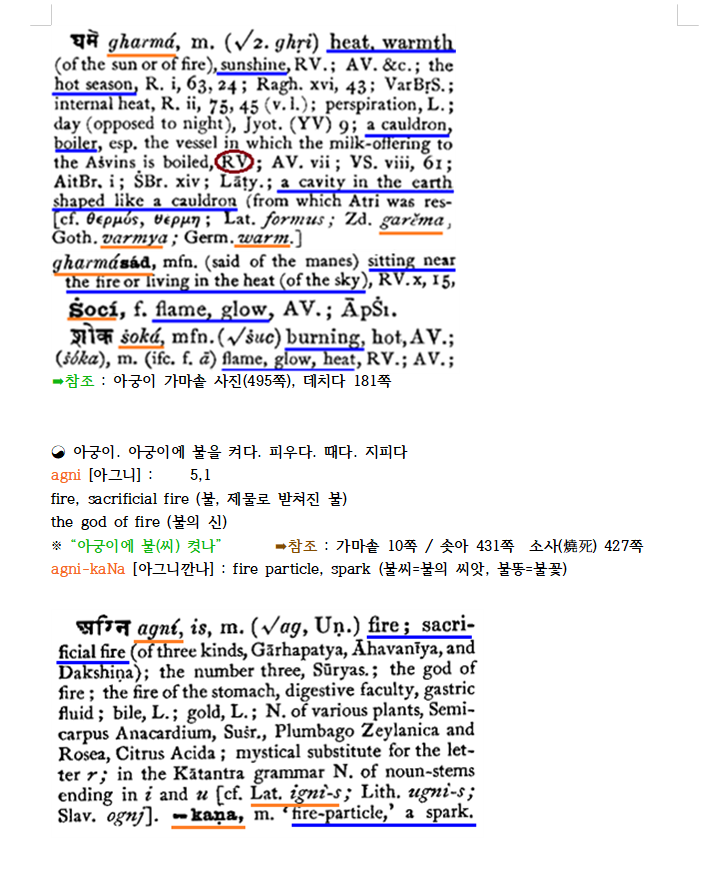
4. 가마와 가마솥 — gharma, 열을 담는 자리
범어 gharma [가-마]는 매우 중요한 말이다.
그 뜻은 다음처럼 넓다.
- 태양의 열
- 불의 따뜻함
- 햇빛
- 체내의 열과 땀
- 가마솥, 솥
- 가마솥 모양의 땅속 공간
우리말 가마는 불과 열을 담는 공간이다.
15세기에는 가마가 먼저 보이고,
17세기 이후 가마 + 솥 = 가마솥의 형태가 뚜렷해진다.
가마는 열의 자리이고,
가마솥은 그 열을 받아 밥과 국을 익히는 그릇이다.
5. 솥·숯·쏘시개 — soci, sochis, soṣman
범어 soci / sochis [소치]는
불꽃, 타오름, 열을 뜻한다.
범어 soṣman / soṣmatā는
열, 따뜻함, 뜨거움을 뜻한다.
sushira [수시라, 숫이라]는 fire (불)이자 숯이다.
여기서 우리말의 여러 낱말이 한 흐름으로 이어진다.
- 솥 ( soci / sochis )
- 솣 ( sushira )
- 쏘시다 ( soṣman / soṣmatā )
- 불쏘시개
솥은 불의 열을 받아 음식을 익히는 그릇이다.
숯은 불이 지나간 뒤 남은 뜨거운 몸이다.
쏘시개는 다시 불을 일으키는 재료다.
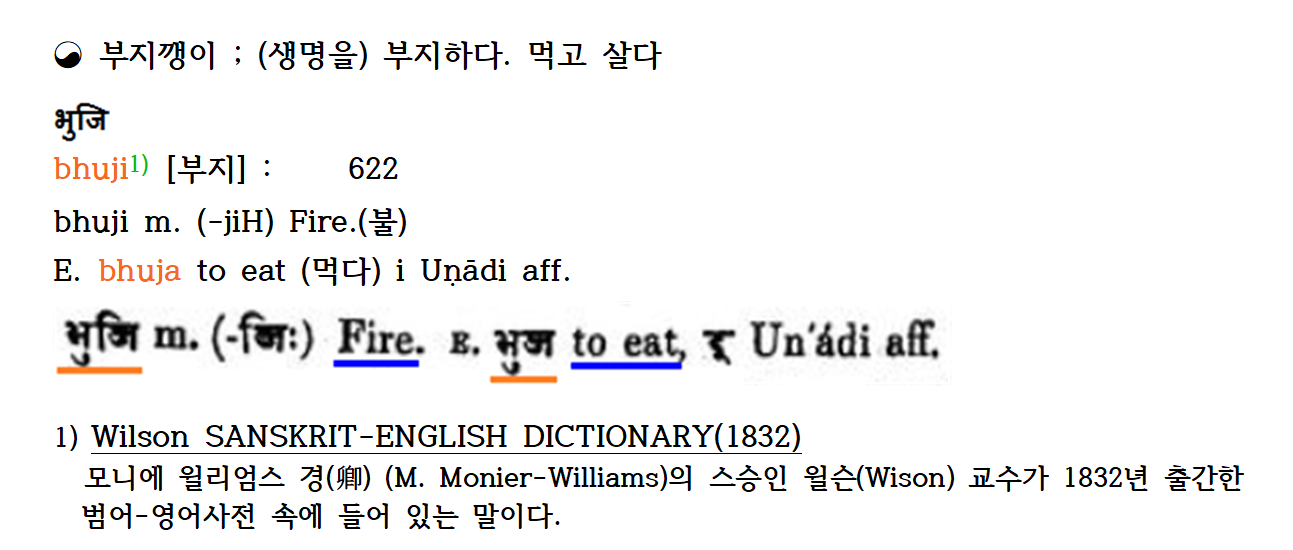
6. 부지깽이 — bhuji, 불을 먹여 살리다
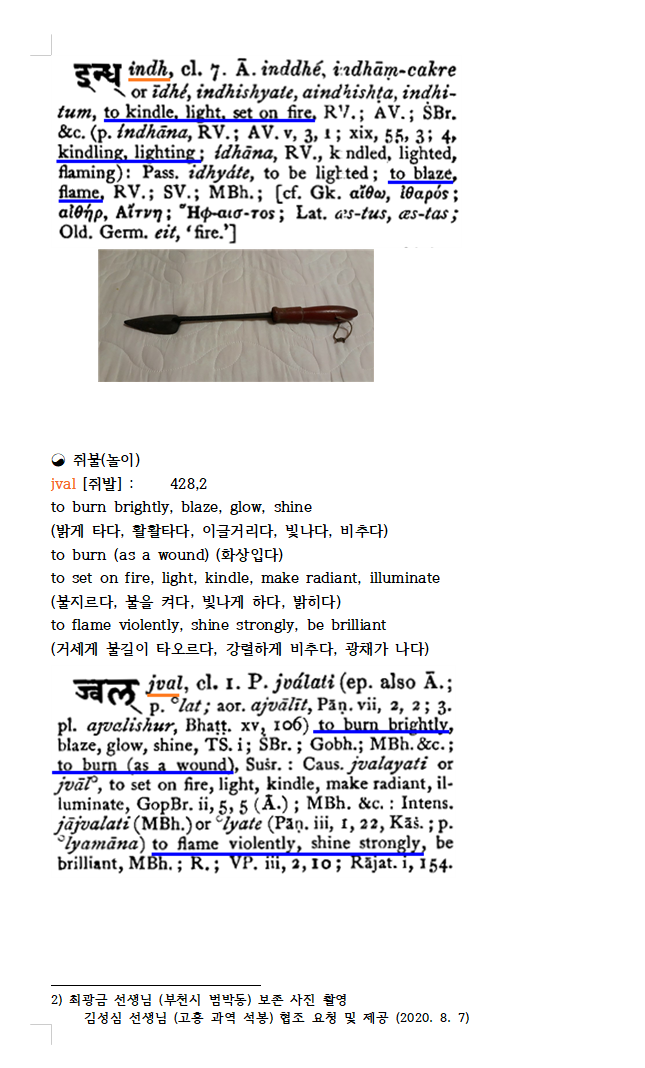
범어 bhuji [부지]는 ‘불’을 뜻하고,
또 bhuja는 ‘먹다’와 연결된다.
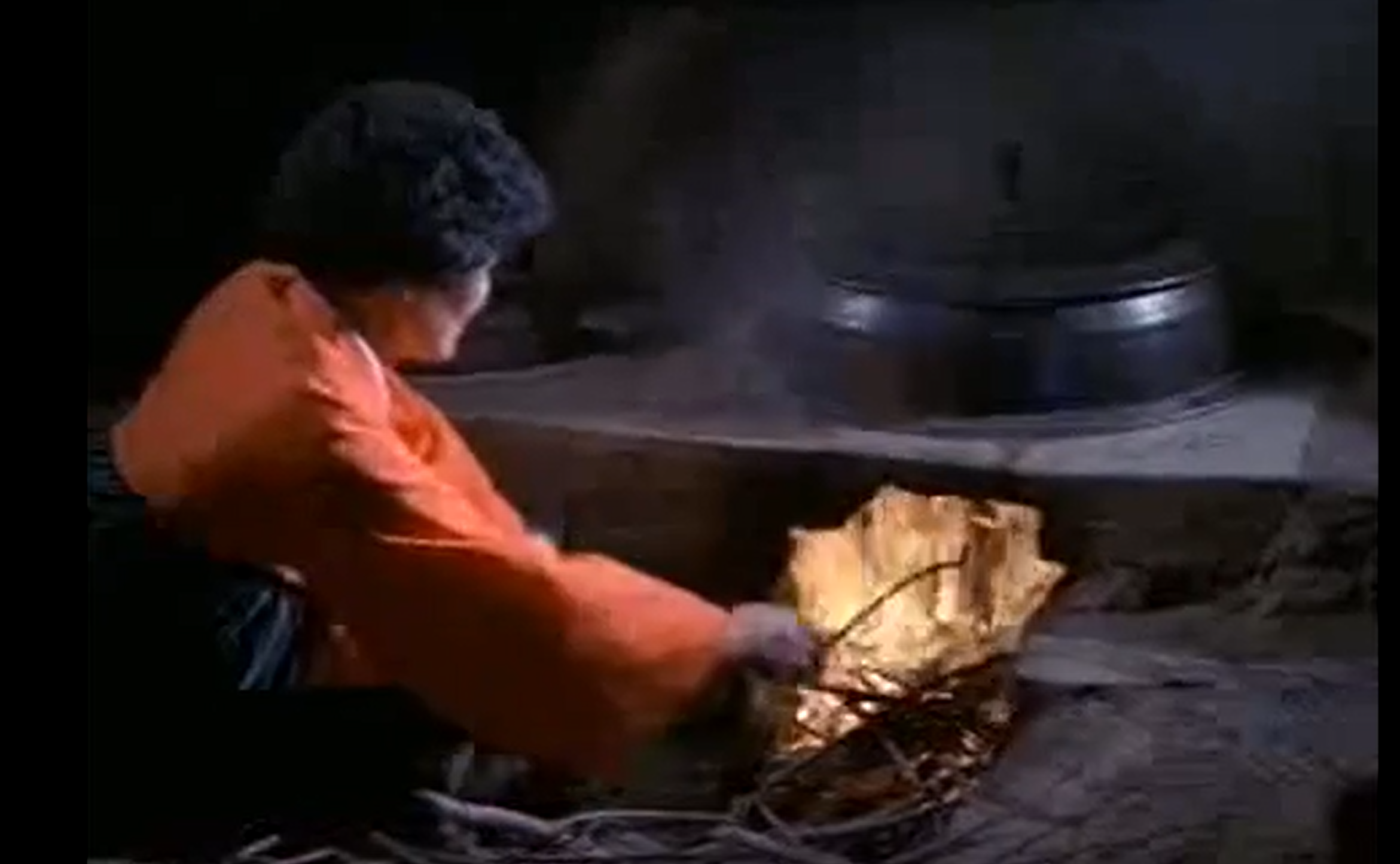
우리말 부지깽이는 아궁이의 불을 헤치고, 모으고, 살리는 막대기이다.
말 그대로 불을 먹이고 돌보는 도구이다.
또 우리는 “생명을 부지하다”라고 말한다.
간신히라도 생명을 이어 간다는 뜻이다.
여기서 불과 생명이 만난다.
7. 인두 — indh, 불에 달구는 도구
범어 indh [인두]는
불을 붙이다, 불을 켜다, 불을 지피다, 활활 타오르다는 뜻이다.
우리말 인두는 숯불 속에 넣어 달군 뒤 사용하는 도구다.
이글이글 타는 숯에 인두를 넣어 달구고, 그 열로 옷감이나 물건을 누른다.
따라서 인두라는 말에는
도구의 모양보다 먼저 불에 달구고, 열을 머금는 기능 이 담겨 있다.
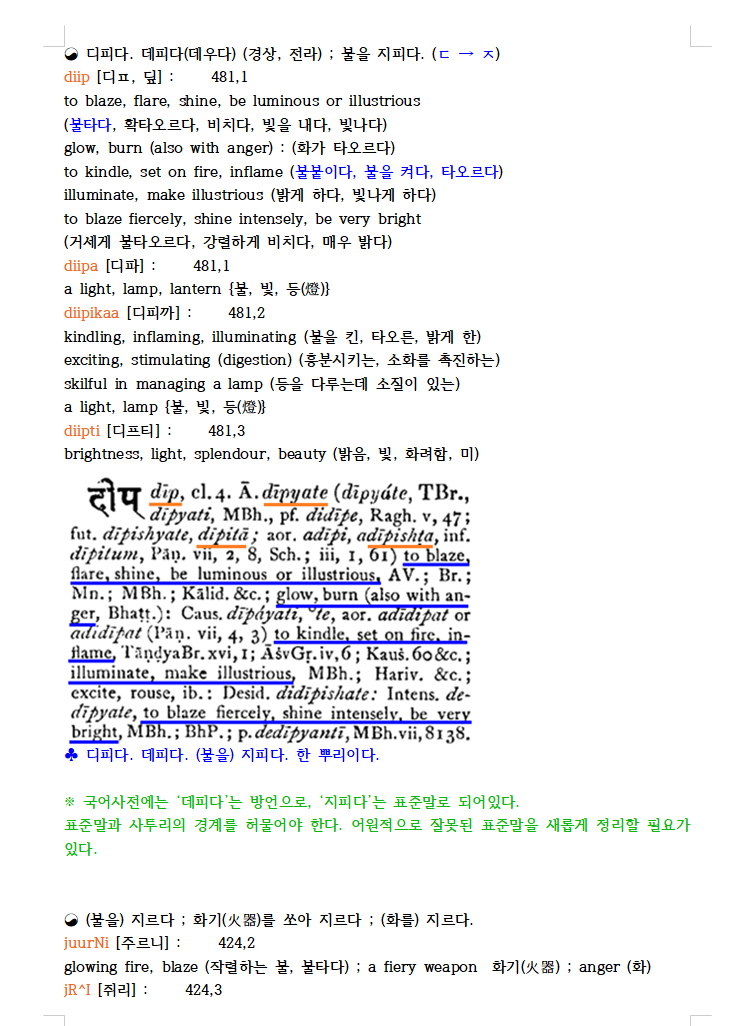
8. 불을 지피다 — diip, 디피다·데피다·지피다
범어 diip [디ㅍ]은
불타다, 타오르다, 밝히다, 불을 붙이다, 빛나게 하다는 뜻을 가진다.
여기서 우리말의 여러 표현이 이어진다.
- 디피다
- 데피다
- 지피다
- 데우다
오늘날 표준어는 지피다이고,
디피다·데피다는 방언으로 분류되지만,
어원적으로 보면 이 방언들이 오히려 오래된 소리를 더 잘 간직하고 있다.
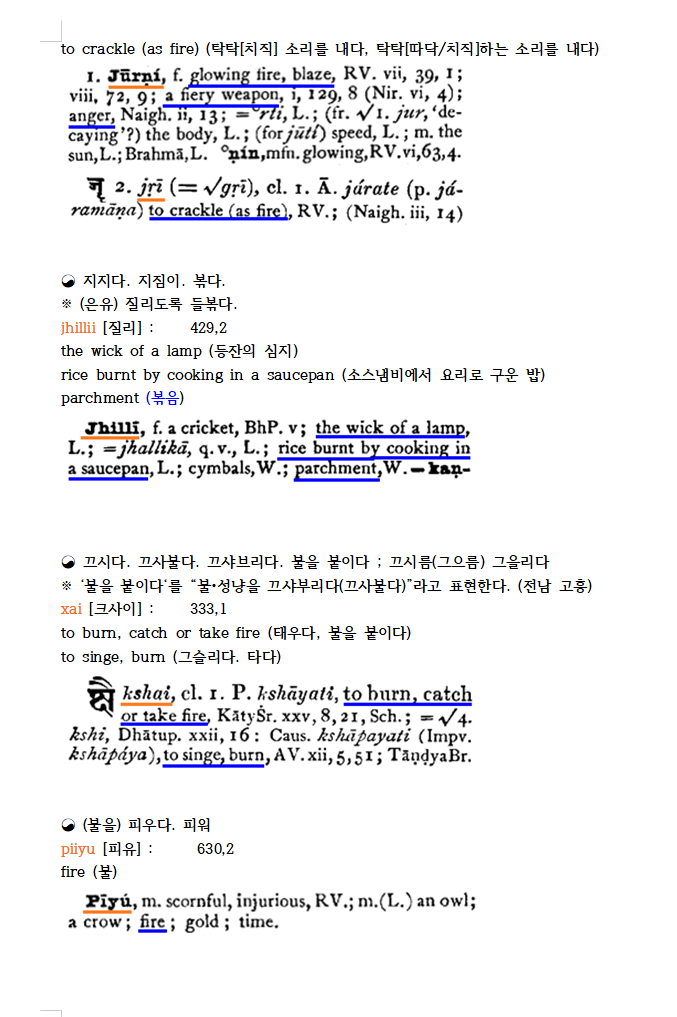
9. 불을 피우다 — piiyu, 숨어 있던 불을 살리다
범어 piiyu [피유]는
불을 뜻한다.
우리말에는 “불을 피우다”라는 표현이 있다.
피우다는 단순히 불을 켜는 말이 아니다.
꽃을 피우다, 연기를 피우다, 웃음을 피우다처럼
안에 있던 것이 밖으로 드러나 살아나는 느낌을 가진다.
그러므로 불을 피운다는 것은
숨어 있던 불씨를 살려 밖으로 일으키는 일이다.
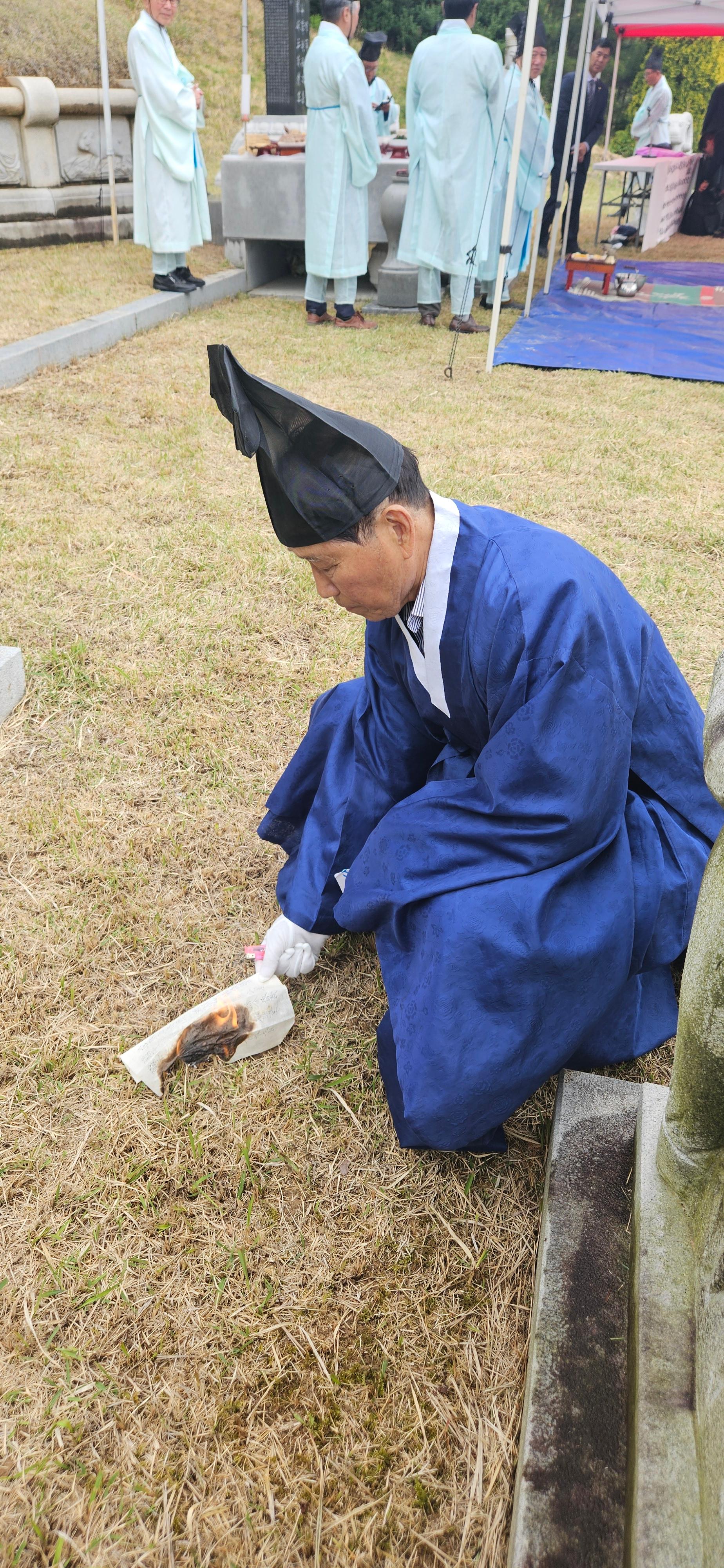
10. 불을 사르다 — sarala, 태워 변화시키다
범어 sarala [사랄라]에는
불의 뜻이 들어 있다.
우리말 사르다는
불태우다, 태워 없애다의 뜻이다.
그러나 ‘사르다’는 단순히 없애는 행위만은 아니다.
나무가 타서 재가 되고, 향이 타서 향기가 되듯이
사른다는 것은 물질을 다른 상태로 바꾸는 일이다.
11. 불의 폭발 — juurṇi, 지르다
범어 juurṇi [주르니]는
작렬하는 불, 타오르는 불, 화기, 분노를 뜻한다.
또 jṛī [쥐리]는
불이 탈 때 나는 탁탁, 치직 하는 소리와 관련된다.
우리말
- 불을 지르다
- 화를 지르다
- 소리를 지르다
와 연결하면 그 의미가 분명해진다.
불을 지른다는 것은
불의 힘을 한꺼번에 터뜨리는 일이다.
화를 지른다는 것도
마음속 불이 밖으로 터져 나오는 일이다.
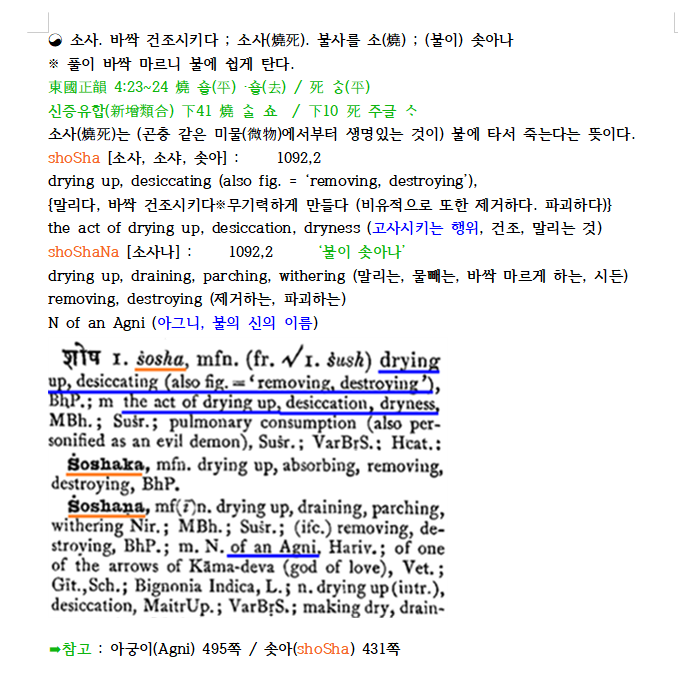
12. 소사(燒死)·솟아 — shoSha, shoShaNa
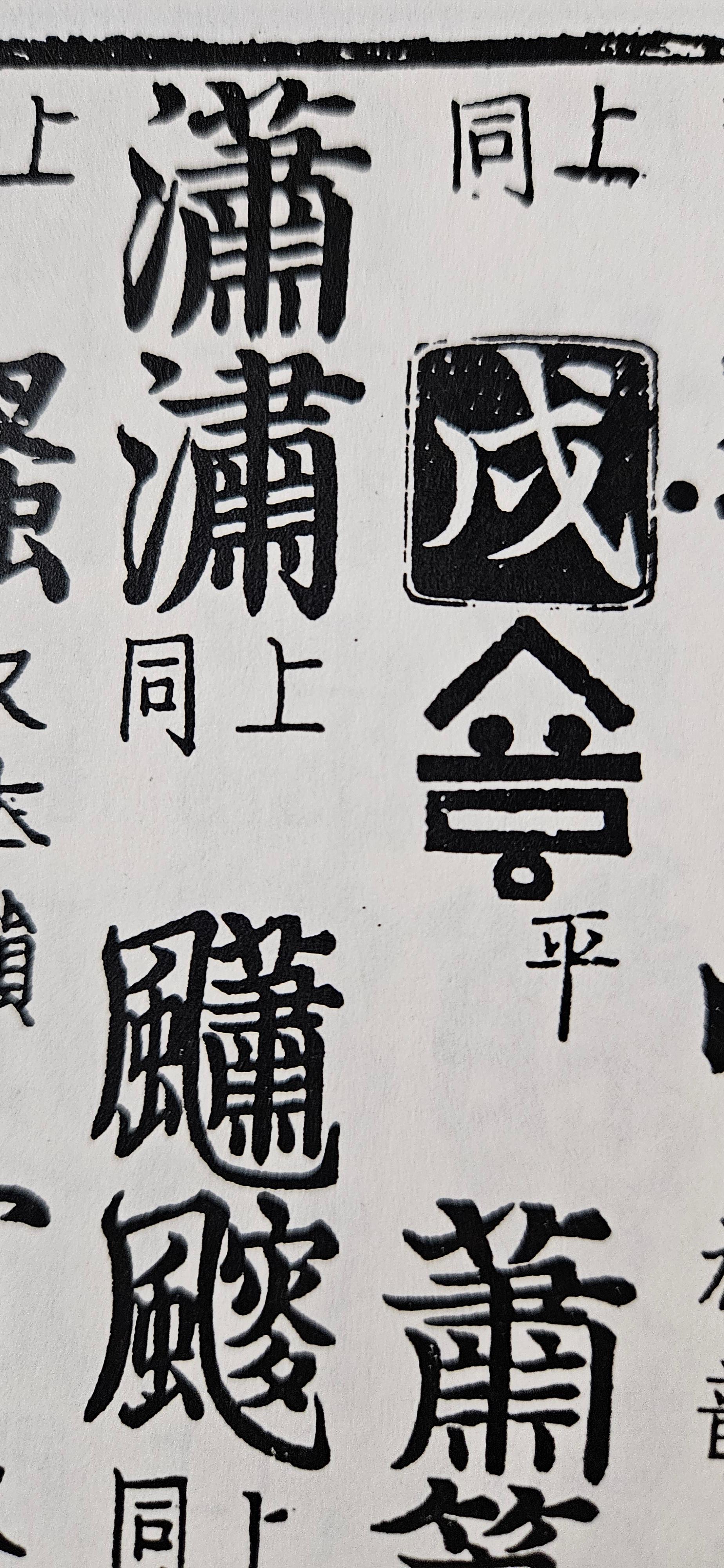
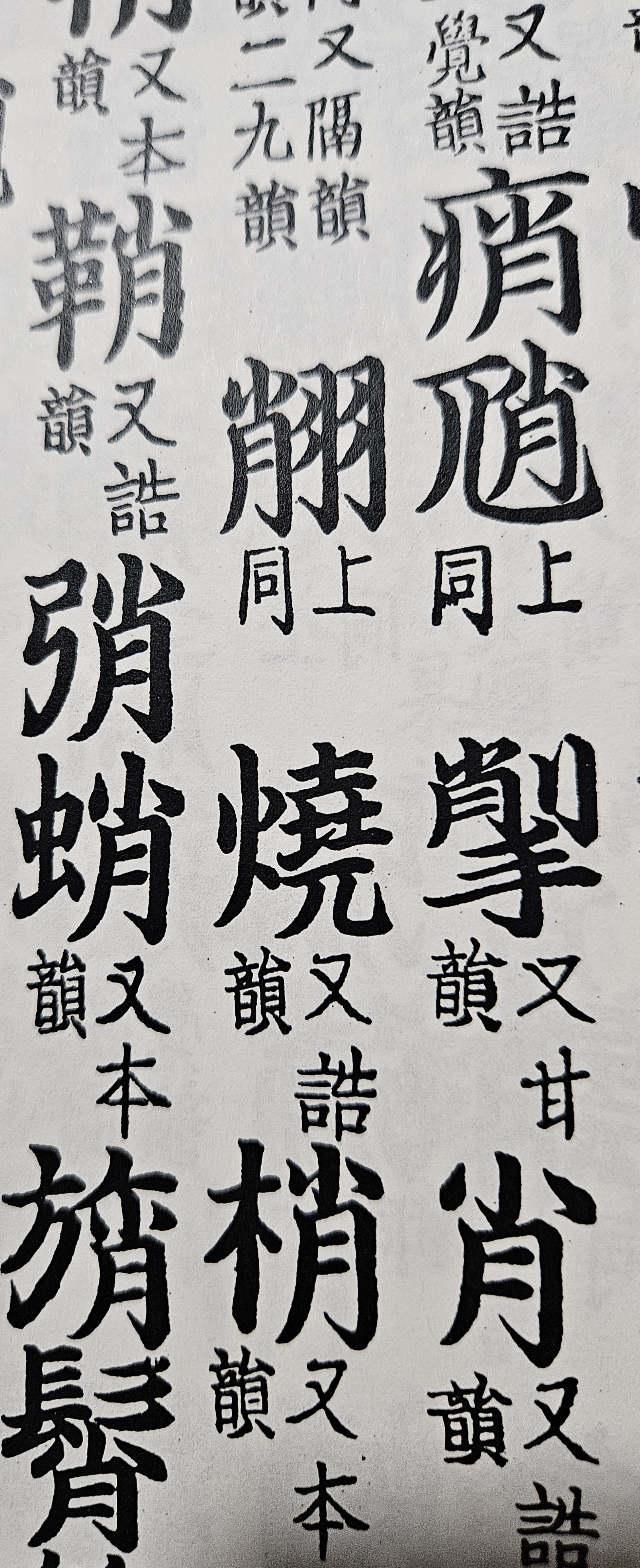
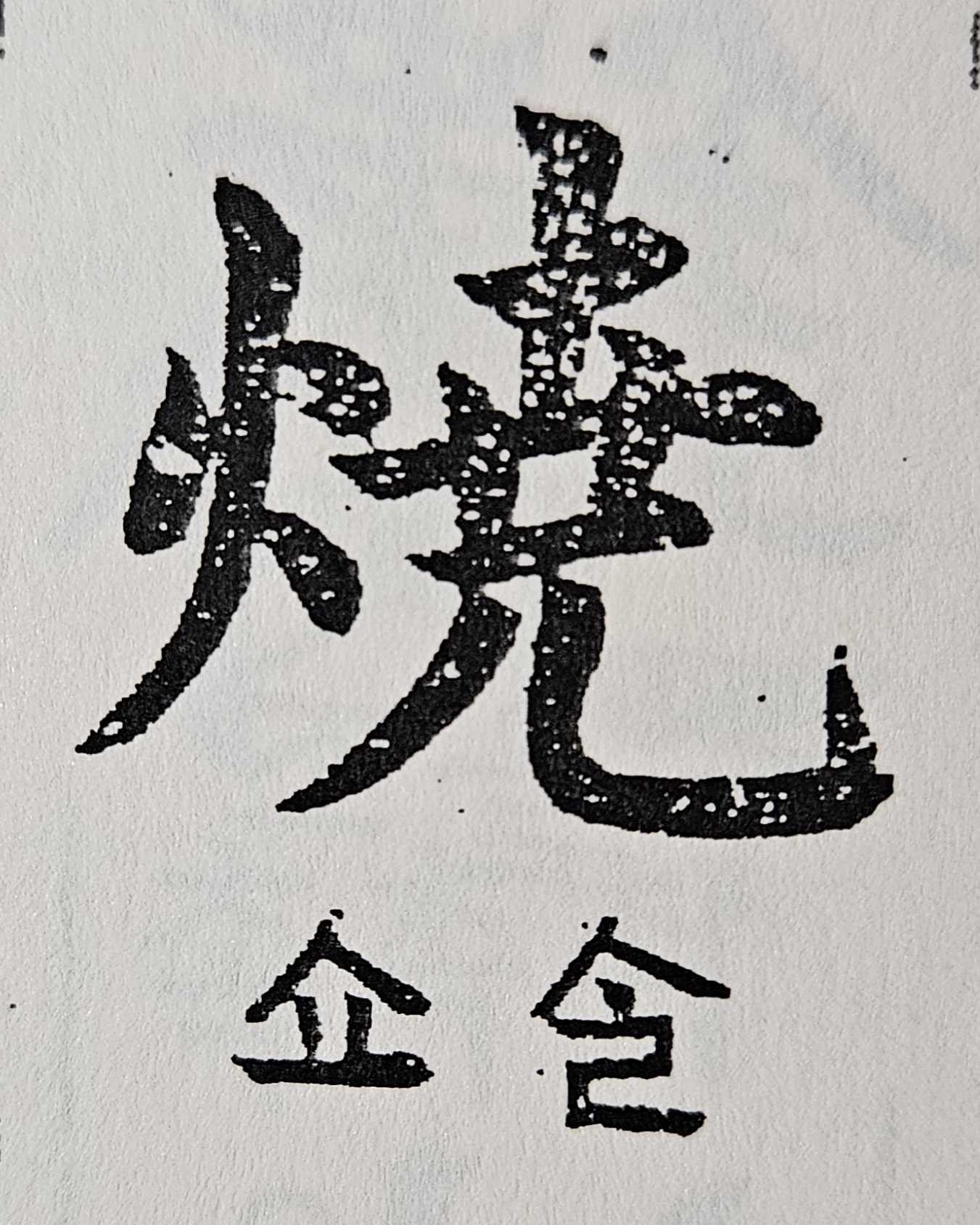
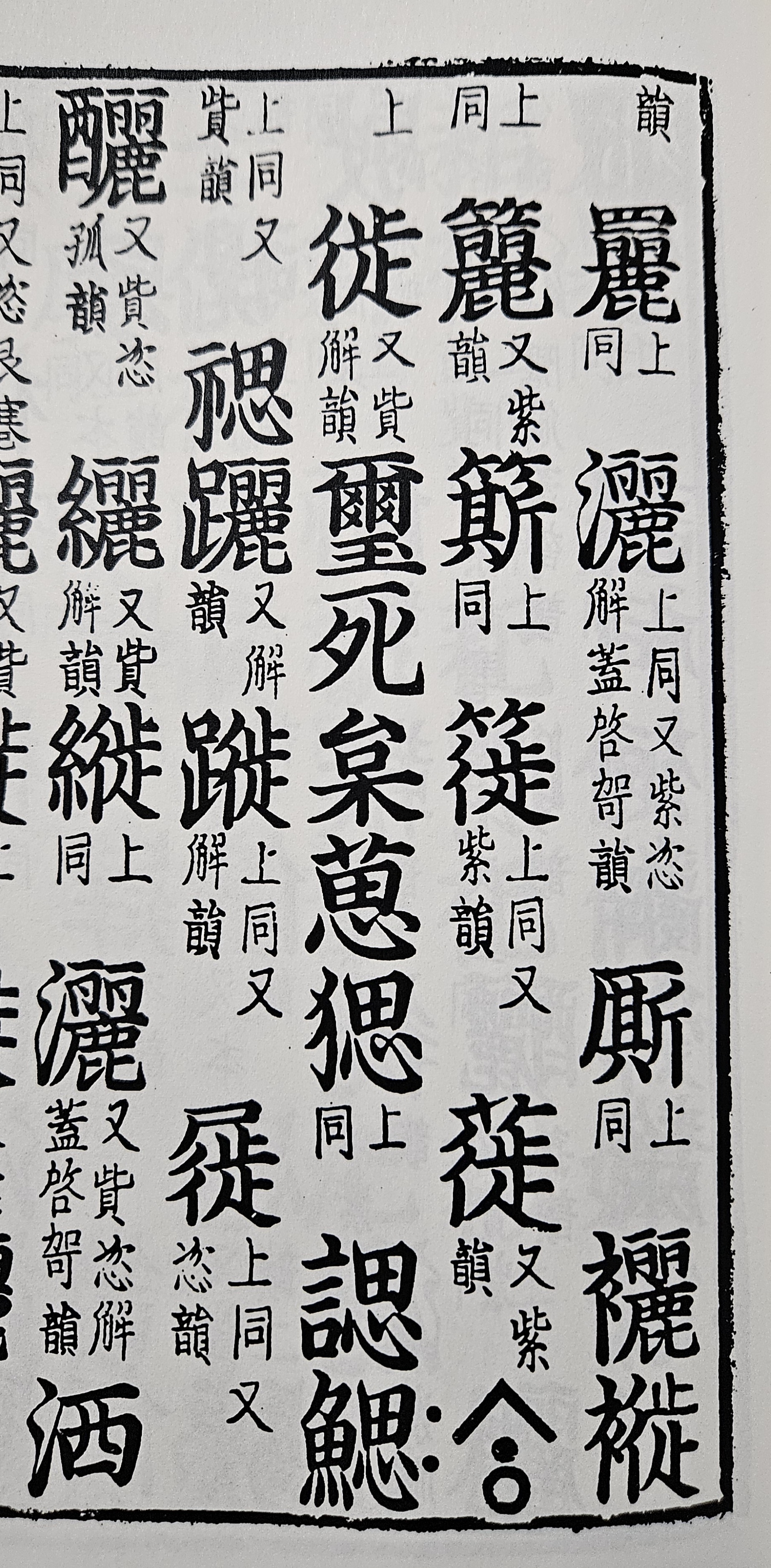
우리말 소사(燒死)는 불에 타 죽는다는 뜻이다.
『동국정운』과 『신증유합』에도 燒(불사를 소), 死(죽을 사)의 풀이가 남아 있다.
범어 shoSha [소사·소샤·솟아]는
말리다, 바싹 건조시키다, 고사시키다, 제거하다의 뜻을 가진다.
또 shoShaNa [소사나]는
바싹 마르게 하다, 시들게 하다, 제거·파괴하다의 뜻이며, 동시에 Agni(불의 신)의 이름으로도 쓰인다.
여기서 중요한 것은 불이 단순히 타오르는 힘만이 아니라,
수분을 말리고 생명을 고사시키는 힘까지 함께 가진다는 점이다.
풀이 바싹 마르면 쉽게 불이 붙듯이,
불은 태우기 전에 먼저 말리고 수분을 빼앗는다.
우리말의
- 소사(燒死)
- 바싹 마르다
- 불이 솟아나다
같은 표현 속에는
불이 치솟고, 열이 사물을 말리며, 끝내 재로 돌리는 과정이 함께 담겨 있다.
13. 불이 타다 — tara, 불 중심의 ‘타다’
범어 tara [타라]에는
건너감, 통과, 넘어감, 불 등의 뜻이 들어 있다.
우리말 타다도 넓은 뜻을 가지지만,
여기서는 불과 관련된 뜻만 살펴본다.
불이 탄다는 것은
나무나 물질이 불을 만나
본래 상태를 넘어 다른 상태로 바뀌는 일이다.
나무는 불을 타고 재가 되고,
쇠는 불을 타고 물러졌다가 다시 단단해지고,
음식은 불을 타고 익는다.
14. 굽다·꾸다·굳다 — kuṭ, kūḍ
불은 사물을 굽는다.
그런데 우리말 굽다에는 두 가지 느낌이 있다.
- 불에 굽다
- 모양이 굽다
범어 kuṭ [꾸트]는
굽다, 구부러지다, 휘다, 따뜻하게 하다, 불에 굽다의 뜻을 가진다.
범어 kūḍ [꾸드]는
먹다, 단단해지다, 굳다, 불에 굽다, 그을리다의 뜻을 가진다.
우리말의 여러 말들이 이와 이어진다.
- 굽다
- 꾸다 - 생선을 불에 꾼다
- 꾸워
- 꾸들꾸들
- 구들
- 굳다
불에 구우면
생것이 익고, 물렁한 것이 단단해지며, 때로는 휘어지거나 오그라든다.
15. 꾸들(구들) — 불의 열을 머금은 바닥
구들은 우리 주거문화에서 매우 중요한 불의 장치다.
아궁이에서 피운 불길과 연기가 방 밑을 지나가며 바닥을 데운다.
위에서 본 kūḍ [꾸드]의
굽다, 굳다, 단단해지다, 타다의 뜻과 연결하면
구들은 단순한 바닥이 아니라
불의 열을 오래 머금은 자리다.
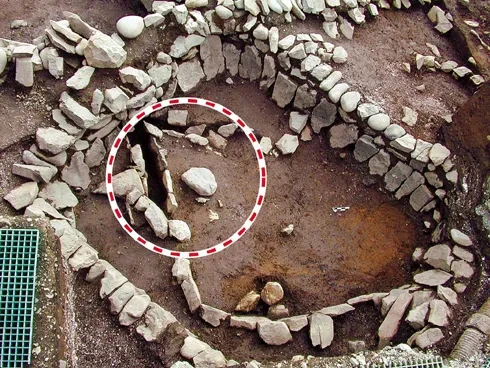
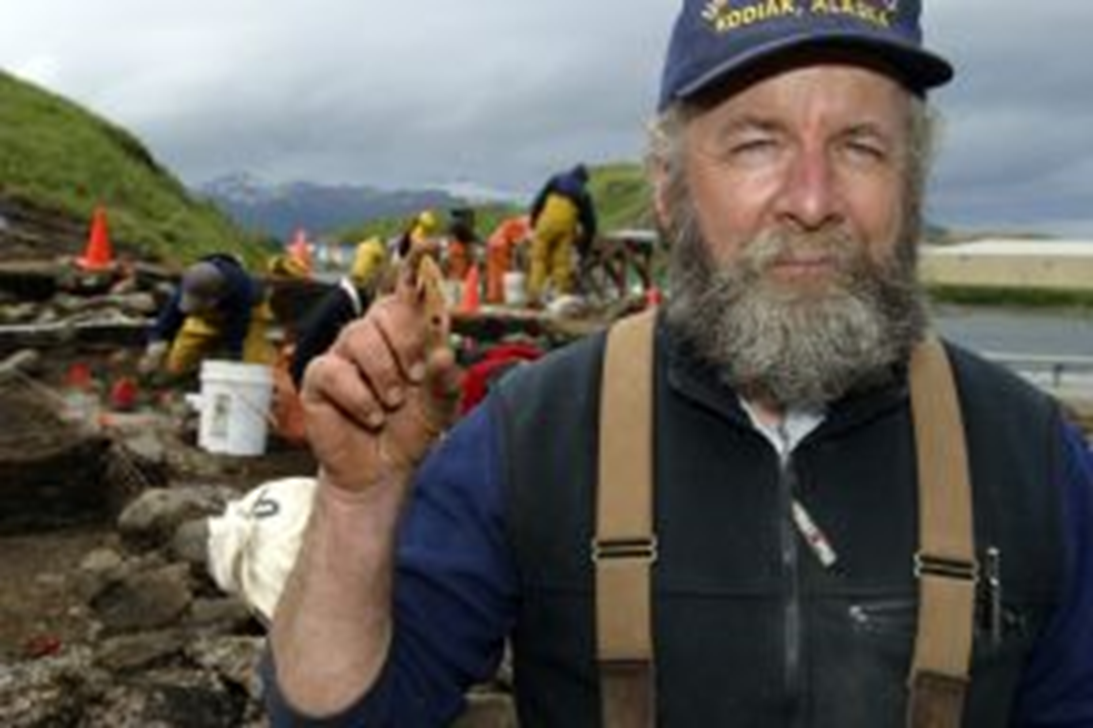
★ 미국의 고고학자 릭 크넥(Rick Knecht) 교수는 2007년 아막낙(알래스카 알류산 열도)에서 온돌 발견했다. 방사성 탄소 연대 측정 결과, 약 기원전 1000년 ~ 서기 1000년 사이의 것으로 추정되며, 특히 약 3,000년 전(기원전 1000년경)의 유적으로 보고되어 학계를 놀라게 했다. 한반도의 초기 온돌 형태인 '고래(구들장 밑의 고랑)'와 매우 유사한 구조를 갖추고 있다. 방 전체를 데우는 방식이 아니라 벽면을 따라 길게 설치된 '쪽구들' 형태를 띠고 있다. 이는 고구려나 옥저의 초기 온돌 양식과 흡사하다. 고대 한반도와 만주 지역의 예맥족 또는 그 이전의 고대인들이 해안선을 따라 이동하며 알래스카까지 이르렀을 가능성을 뒷받침한다.
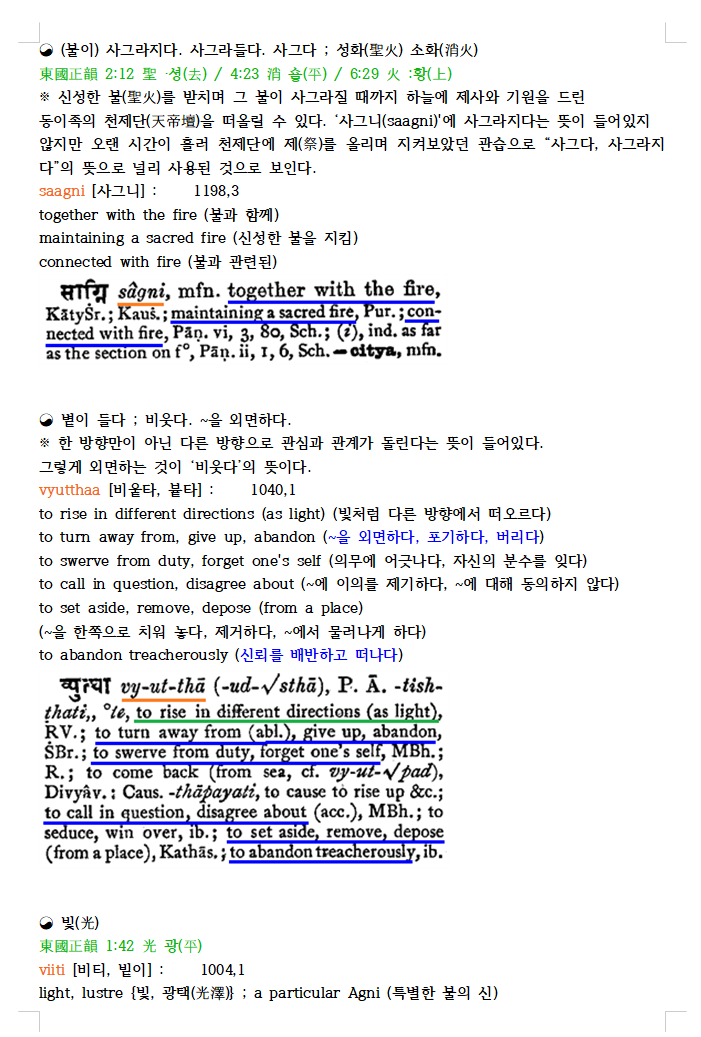
16. 사그라지다 — saagni, 불과 함께 머물다
범어 saagni [사그니]는
불과 함께, 신성한 불을 지킴, 불과 관련됨을 뜻한다.
우리말
- 사그다
- 사그라지다
- 사그라들다
는 불이 서서히 약해져 가는 모습을 말한다.
saagni 자체가 곧바로 ‘사그라지다’라는 뜻은 아니다.
다만 불과 함께 머물며 신성한 불을 지킨다는 제의적 감각이
불이 다할 때까지 바라보는 경험과 만나
우리말의 ‘사그라지다’와 의미상 연결될 수 있다.
17. 쥐불놀이 — jval, 활활 타오르는 불
범어 jval [쥐발]은
밝게 타다, 활활 타다, 이글거리다, 빛나다, 불을 붙이다의 뜻을 가진다.
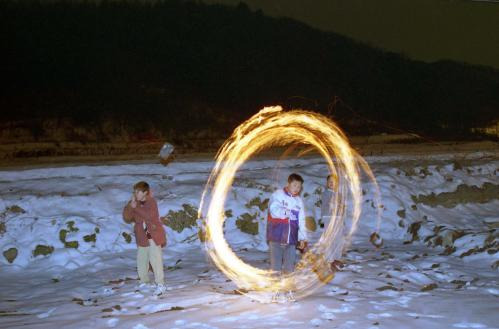
우리말 쥐불놀이는 정월 대보름 무렵 들판에서 불을 돌리며
한 해의 액을 물리치고 새 생명을 기원하는 민속놀이이다.
여기서 불은 단순한 놀이가 아니다.
묵은 것을 태우고, 해충을 없애고, 새봄의 생명력을 부르는 불이다.
18. 지지다·지짐이·볶다 — jhillī
범어 jhillī [질리]는
등잔의 심지, 눌어붙은 밥, 볶음의 뜻을 가진다.
우리말
- 지지다
- 지짐이
- 볶다
- 들볶다
와 이어진다.
지짐이는 기름과 열을 이용해 지져낸 음식이다.
볶는 것도 불 위에서 재료를 이리저리 움직이며 익히는 일이다.
“들볶다”는 말은 이 불의 작용이 사람의 마음이나 생활로 확장된 표현이다.
19. 끄사불다 — xai, 불붙이다와 그슬리다
남도에서는
불을 붙인다는 뜻으로 끄사불다, 끄샤브리다 같은 말을 쓴다.
범어 xai [크사이]는
타다, 불붙다, 그슬리다라는 뜻이다.
이 말은 특히 중요하다.
표준어에는 잘 보이지 않는 오래된 소리가
지역 방언 속에 살아 있을 가능성을 보여주기 때문이다.
20. 곱돌화로 — kuptu, 불을 모셔 두는 작은 자리
곱돌화로는 곱돌로 만든 작은 화로다.
방 안이나 가까운 생활공간에서 불씨를 담아 두는 도구였다.
범어 kuptu [꿉투]는
fire-place, hearth, 곧 화로·난로·불자리의 뜻을 가진다.
화로는 큰 아궁이와 달리
작은 불을 가까이 두는 자리다.
곱돌화로는 단순한 난방 도구가 아니라
불씨를 품고 온기를 나누는 생활의 중심이었다.
21. 불은 바람을 먹는다 — dham, 담금질의 깊은 뜻
불은 장작만으로 살아나지 않는다.
불은 바람을 먹고 커진다.
범어 dham [담]은 다음과 같은 뜻을 가진다.
- 바람이 불다
- 숨을 내쉬다
- 불어넣다
- 바람을 불어 불을 켜다
- 바람을 일으켜 금속을 녹이거나 제조하다
이 말은 우리말 담금질과 깊이 이어진다.
오늘날 담금질은
달군 쇠를 물에 담가 단단하게 만드는 일로 이해된다.
하지만 대장간의 전체 과정을 보면 더 넓다.
- 풀무로 바람을 넣는다.
- 불이 살아난다.
- 쇠가 달궈진다.
- 달군 쇠를 두드린다.
- 물에 담가 단련한다.
따라서 담금질의 ‘담’은
단순히 물에 담그는 뜻만이 아니라,
본래 바람을 불어 불을 살리고 쇠를 다루는 일까지 품고 있다고 볼 수 있다.
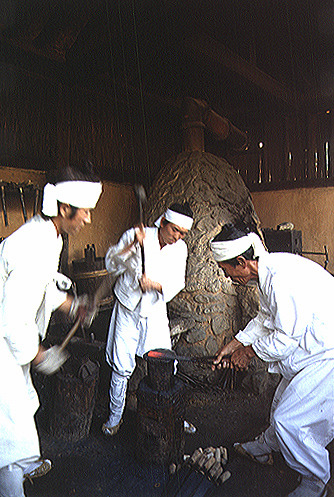
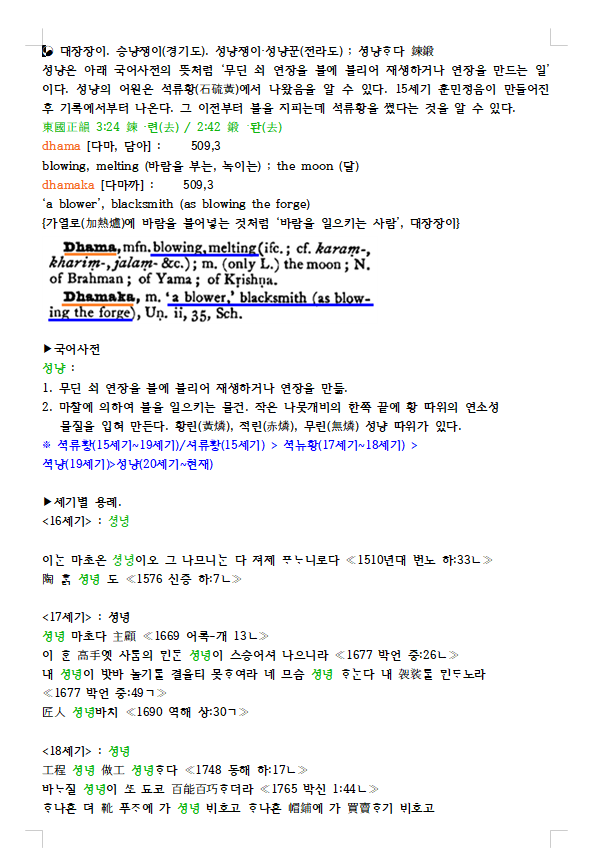
22. 대장장이·성냥쟁이 — dhamaka, 불과 쇠를 다루는 사람
범어 dhama [다마/담아]는 dam 담금질 달구다
바람을 붊, 녹임을 뜻한다.
범어 dhamaka [다마까]는
바람을 불어넣는 사람, 곧 대장장이를 뜻한다.
대장장이는 쇠만 두드리는 사람이 아니다.
풀무로 바람을 넣고, 불을 키우고, 쇠를 달구고, 연장을 만드는 사람이다.
우리말에는 이와 관련된 표현이 여럿 있다.
- 대장장이
- 대장쟁이
- 승냥쟁이
- 성냥쟁이
- 성냥꾼
특히 성냥쟁이는 오늘날의 성냥개비만 떠올리면 이해하기 어렵다.
옛말의 성냥은 본래 불과 쇠를 다루는 기술과 연결된다.
23. 풀무 — plu, 불의 허파
범어 plu [풀루]에는
떠다니다, 흔들리다, 날다, 바람처럼 불다의 뜻이 있다.
우리말 풀무는
불을 피울 때 바람을 일으키는 기구다.
풀무는 불을 직접 만드는 물건이 아니다.
불이 살아나도록 숨을 불어넣는 도구다.
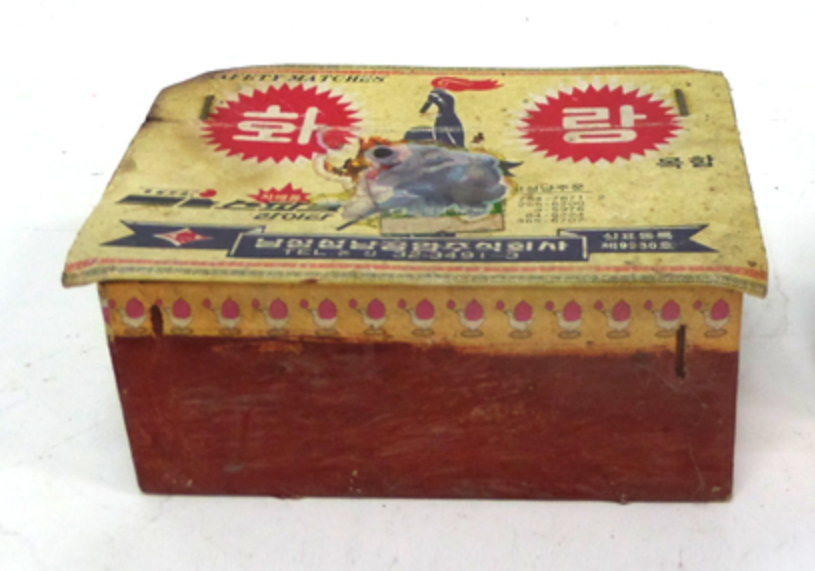
24. 성냥의 변천 — 셕류황에서 성냥까지
오늘날 성냥은 마찰로 불을 붙이는 작은 나뭇개비를 뜻한다.
그러나 옛 문헌에서 성냥은 처음부터 이 뜻만 가진 말이 아니었다.
성냥의 흐름은 다음처럼 정리된다.
셕류황 / 셔류황 → 셕뉴황 → 셕냥 → 성냥
즉, 불을 일으키는 데 쓰였던 석류황·석뉴황 계열의 말이
시간이 지나면서 셕냥, 그리고 오늘날의 성냥으로 변화한 것으로 볼 수 있다.
문헌상 흐름도 중요하다.
- 16세기: 셩녕
- 17세기: 셩녕, 셩녕바치
- 18세기: 셩녕, 성녕하다
- 19세기: 셩냥, 성냥, 성냥하다 鍊鍛
여기서 성냥하다 鍊鍛(연단)은
단순히 성냥개비로 불을 붙인다는 뜻이 아니다.
鍊鍛(연단)은
쇠를 불에 달구고 두드려 연장을 만들거나 단련하는 일이다.
따라서 성냥의 본뜻은
작은 불붙이개 이전에
불로 쇠를 다루는 일, 곧 대장간의 기술과 맞닿아 있다.
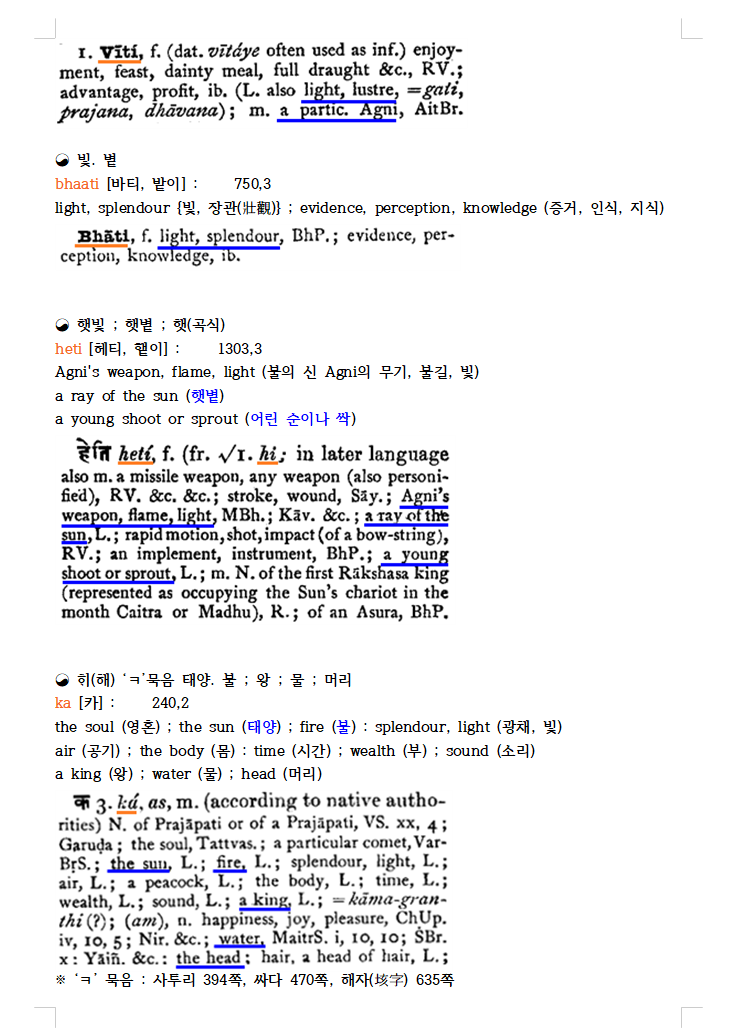
25. 빛과 볕 — viiti, bhaati, heti
불은 땅에서는 아궁이의 불이고,
하늘에서는 태양의 빛이다.
범어 viiti [비티]는
빛, 광택을 뜻한다.
범어 bhaati [바티]는
빛, 광채, 인식, 지식을 뜻한다.
범어 heti [헤티]는
아그니의 무기, 불길, 햇살, 어린 싹을 뜻한다.
우리말
- 빛
- 볕
- 햇빛
- 햇볕
- 햇곡식
과 함께 볼 수 있다.
특히 heti가 햇살과 어린 싹을 함께 뜻한다는 점은 중요하다.
햇볕은 단순히 비치는 빛이 아니라
씨앗과 새순을 깨우는 생명의 불이다.
26. 볕이 들다와 비웃다 — vyutthā
범어 vyutthā [비웉타]는
빛처럼 여러 방향으로 떠오르다,
돌아서다, 외면하다, 포기하다라는 뜻을 가진다.
여기서 두 가지 흐름을 생각할 수 있다.
첫째, 빛이 한쪽에서 들어오거나 여러 방향으로 퍼지는 모습이고,
둘째, 마음이나 시선이 다른 방향으로 돌아서는 모습이다.
우리말의
- 볕이 들다
- 비웃다
- 외면하다
라는 감각을 함께 생각해 볼 수 있다.
27. 그을리다·그슬리다 — ghṛ, ghṛṇa
범어 ghṛ [그리]는
빛나다, 타다의 뜻이다.
범어 ghṛṇa [그리나]는
열, 열정, 햇빛을 뜻한다.
우리말
- 그을리다
- 그슬리다
- 구리내
- 구릿빛
은 불이나 열이 닿아 색과 냄새가 변한 상태와 관련된다.
나무가 그을리고, 살갗이 그을리고, 음식이 그슬린다.
그 결과 색은 검거나 붉게 변하고, 냄새가 남는다.
28. 해 — ka, 태양·불·빛의 근원
범어 ka [카]에는
태양, 불, 빛, 영혼, 왕, 머리 등의 뜻이 들어 있다.
우리말 해는 태양이다.
태양은 가장 큰 불이며, 만물을 살리는 근원이다.
카 → 하 → 해
‘ㅋ’ 소리가 약해지거나 묵음화되는 흐름에 이어
ㅏ→ ㅐ로 모음변화이다.
햇빛, 햇볕, 햇곡식이라는 말에는
모두 해가 생명을 키운다는 인식이 들어 있다.
■ 불의 전체 흐름
이제 모든 말을 하나의 흐름으로 묶으면 다음과 같다.
불은 아궁이에 깃든다.
인두처럼 달아오른다.
디피고, 데피고, 지피고, 피워 살아난다.
풀무의 바람을 먹고 커진다.
담금질 속에서 쇠를 단련한다.
성냥쟁이의 손에서 연장이 된다.
가마솥에서 밥과 국을 익힌다.
곱돌화로에 담겨 사람 곁을 데운다.
솥·숯·쏘시개로 불씨를 이어 간다.
굽고, 지지고, 볶고, 그을리며 사물을 바꾼다.
때로는 쥐불처럼 활활 타오르고,
때로는 불을 지르듯 폭발한다.
그리고 마침내 사그라진다.
그러나 끝이 아니다.
불은 하늘에서 해와 빛과 볕으로 다시 생명을 키운다.

●스스로 "나"를 사랑하고, 우리말과 역사를 사랑하는 모든 사람들에게 전달해 주십시오.
위 내용은 인터넷 주소창과 카톡에 아래와 같이 바로 입력하여 볼 수 있습니다.
www.다일라.한국/66
www.다일라.한국/61
www.다일라.한국/2
☆ 다 깨어 일어나라!!! 다일라!!! ☆ --대한민국 새로운 구호 제창
◈ ◈ ◈ ◈ ◈ ◈ ◈ ◈ ◈ ◈ ◈ ◈ ◈ ◈ ◈ ◈ ◈ ◈ ◈ ◈ ◈ ◈ ◈ ◈ ◈ ◈ ◈ ◈ ◈ ◈ ◈ ◈
Kim Seok-Hoon
Korean Etymology Researcher
Editor of Our Korean–Sanskrit Etymological Dictionary
Genealogical & Historical Lineage Researcher
Compiler of the scroll The Genealogical History of Humanity from the Heavenly Emperor Hwan-State and Joseon
■ The Language of Fire
From the Hearth to the Cauldron, Bellows, Blacksmiths, Matches, the Sun, and Sunlight
Below is an exploration of Sanskrit-related etymologies connected to fire and the flow of corresponding Korean words.
In the East, the world has long been understood through the four elemental forces:
Earth, Water, Fire, and Wind
(地水火風).
Among them, fire was not merely heat.
It was the primal force that sustained life and gave birth to civilization.
Without fire:
- food cannot be cooked,
- the body cannot be warmed,
- metal cannot be melted,
- darkness cannot be illuminated.
For early humanity, therefore, fire was never just a material substance.
Our ancestors regarded fire as a sacred being — a divine presence.
Today, we explain the world through science and reason.
Yet ancient people perceived the whole universe as alive.
The sky and the sun, wind and water, mountains and trees, and even fire itself were all seen as sacred forces.
Within that deep reverence, life, ritual, and language were formed together.
The sun and fire, wind and water, breath and soul, light and sound, mind and memory were not understood as separate things, but as parts of one sacred flow.
Fire cooked food, warmed the body, melted metal, illuminated darkness, and carried prayers toward heaven.
Thus, fire-related words in Korean are not isolated fragments.
They contain the entire process:
Fire is born,
comes alive,
feeds on wind,
blazes,
cooks food,
sustains life,
tempers metal,
becomes light and sunlight that nourish life,
and finally fades away.
Fire is not merely something that burns.
In Korean thought, fire has been understood not simply as matter, but as a living flow of life itself — a force that moves, transforms, and sustains the world.
1. The Root of Fire — Bul (불), Bhur, Bhū
In ancient Korean texts, Fire (火) was recorded as Bul (불) or Beul (블).
- Sanskrit bhur: Means to flicker or quiver like a flame.
- Sanskrit bhū: Refers to the sacrificial fire offered on an altar. Fire here is a divine force connecting humans to the heavens.
2. Agung-i (Hearth) — Agni: The Place that Cradles the Ember
- Sanskrit agni: Means fire, the sacrificial fire, or the God of Fire. The Korean word Agung-i is the place where that fire dwells. It wasn't just a hole for firewood; it was a sacred spot for preserving the family's "ember" (bul-ssi).
- Sanskrit agni-kaṇa: Means particles of fire or sparks (bul-ttong). The phrase "Did you light the Agung-i?" implies the start of a day, warmth, and the nurturing of life.
3. Buttumak — The Place Where Fire and Wind Meet
The Korean buttumak is not merely a place to set a cooking pot.
It was the central space of household life where fire was sustained and heat was maintained through moving air.
From a Sanskrit perspective, it may be understood through the following etymological flows:
1). bhur / bhuu + dhmaa → budeuma → buttumak
- bhur / bhuu
→ to blaze like fire, to keep fire alive - dhmaa
→ to blow air, to strengthen fire by blowing
Thus, the word may carry the sense of:
“a place where air is blown
to keep fire alive.”
2). bhuu + dhuu + math → budumat → buttumak
- bhuu
→ to sustain fire - dhuu
→ to fan, to kindle fire - math
→ a rotating or air-moving device
→ a bellows-like function that revives fire through wind
In this sense, buttumak can be understood as:
“a place that holds fire,
revives it through wind,
and connects it to the cooking pot.”
If the bellows was the breath of fire,
the buttumak was the space where that fire and breath remained together.
4. Gama and Gamasot (Cauldron) — Gharma: The Space Containing Heat
- Sanskrit gharma: A vital word encompassing the heat of the sun, the warmth of fire, sunlight, body heat, and the cauldron itself. The Korean Gama is a space for fire and heat. The Gamasot (Cauldron) is the vessel that receives that heat to cook life-sustaining food.
5. Sot, Sut, Sosigae (Pot, Charcoal, Kindling) — Soci, Sochis, Soṣman
- Sanskrit soci / sochis: Flame, blaze, or heat.
- Sanskrit soṣman: Heat, warmth, or fervor. From this flow, several Korean words emerge:
- Sot (솥): The pot that cooks food through heat.
- Sut (숯): Charcoal; the glowing "body" left after the fire passes.
- Sosigae (쏘시개): Kindling; the material used to rouse the fire again.
6. Bujiggaengi (Poker) — Bhuji: Feeding the Fire
- Sanskrit bhuji: Fire.
- Sanskrit bhuja: To eat or consume. A Bujiggaengi (fire poker) is a tool used to stir, gather, and "feed" the fire in the hearth. We also use the phrase "to sustain life" (saeng-myeong-eul buji-hada), linking the act of keeping a fire alive with the act of staying alive.
7. Indu (Iron) — Indh: The Tool Heated by Fire
- Sanskrit indh: To kindle, light, or burn brightly. The Korean Indu is a traditional iron heated in charcoal. The name carries the function of "absorbing heat" and "kindling" rather than just its shape as a tool.
8. Jipida (To Build a Fire) — Diip: To Kindle and Warm
- Sanskrit diip: To burn, shine, or illuminate. This connects to Korean words like dipida, depida, jipida (to kindle/warm). While jipida is the standard modern term, regional dialects (depida) often preserve the ancient phonetics more accurately.
9. Piuda (To Light/Bloom a Fire) — Piiyu: Awakening the Hidden Fire
- Sanskrit piiyu: Fire. In Korean, we "bloom" (piuda) a fire, much like one blooms a flower or a smile. It describes the act of bringing something hidden inside to the outside to live.
10. Sareuda (To Burn/Consume) — Sarala: Transforming through Burning
- Sanskrit sarala: Contains the meaning of fire. To Sareuda is not just to destroy. As wood becomes ash and incense becomes fragrance, "burning" is the act of transforming matter into a different state.
11. The Explosion of Fire — Juurṇi: Jireuda
- Sanskrit juurṇi: Blazing fire, heat, or wrath/fury. This connects to the Korean Jireuda:
- Bul-eul jireuda: To set fire (ignite a sudden blaze).
- Hwa-reul jireuda: To erupt in anger (fire of the mind).
- Sori-reul jireuda: To shout (erupting voice).
12. Sosa (燒死) and Sosa-na — shoSha, shoShaNa
- shoSha [소사/소샤]: To dry out, parch, or cause to wither.
- shoShaNa [소사나]: To make bone-dry or destroy; also one of the names for Agni (the God of Fire).
- Sosa (燒死) refers to perishing by fire, but its root reveals that fire first "parches" and strips away moisture before it consumes. This connects to our expression "Sosa-nada" (to soar/spring up), capturing the transformation from bone-dry heat to rising flames.
13. Tada (To Burn) — Tara: Crossing Over
- Sanskrit tara: To cross over, pass through, or fire. When something burns (tada) in Korean, it means the substance meets fire and "crosses over" to a new state. Wood becomes ash; iron becomes soft then hard; food becomes cooked.11. Tada (To Burn) — Tara: Crossing Over
14. Gupda, Guda (To Roast/Harden) — Kuṭ, Kūḍ
- Sanskrit kuṭ: To bend, curve, warm, or roast.
- Sanskrit kūḍ: To harden, roast, or singe. When we roast (gupda) or harden (gud-da), the fire transforms the soft/raw into the firm/cooked, often causing it to bend or shrink.
15. Gudeul (Underfloor Heating) — The Place Holding Fire's Heat
The Gudeul is Korea's unique heating system. Connected to the root kūḍ, it is not just a floor, but a "hardened" space designed to store the thermal energy of the fire long after the flames have died.
16. Sageurajida (To Die Down) — Saagni: Staying with the Fire
- Sanskrit saagni: Together with fire, or guarding the sacred fire. In Korean, Sageurajida means the fire is slowly weakening. It evokes the ritualistic sense of staying with the fire until its very last breath.
17. Jwibul-nori (Fire Can Spinning) — Jval: Blazing Brightly
- Sanskrit jval: To burn brightly, glow, or ignite. Jwibul-nori is a folk ritual where fire is spun in fields to ward off evil and pray for new life. It is the "bright fire" that cleanses the old to invite the new.
18. Jijida, Bokda (To Sear, To Stir-fry) — Jhillī
- Sanskrit jhillī: Wick of a lamp, scorched rice, or frying. This leads to the Korean words Jijida (to sear/griddle) and Bokda (to stir-fry). The metaphor extends to the mind: deul-bokda (to harass/fret) is to "fry" someone’s spirit over a fire.
19. Keusabulda (To Ignite - Dialect) — Xai
In the Goheung region (Jeonnam), the word keusabulda is used to mean "to light a fire."
- Sanskrit xai: To burn, ignite, or singe. This shows how ancient sounds often survive in regional dialects even when they disappear from the standard language.
20. Gopdol-Hwaro (Stone Brazier) — Kuptu: The Small Fire-Place
- Sanskrit kuptu: Fire-place, hearth, or fire-seat. A Hwaro (brazier) is a tool to bring the fire close to the people, acting as the center of warmth and conversation in a living space.
21. Fire Eats the Wind — Dham: The Depth of Damgeum-jil (Tempering)
- Sanskrit dham: To blow, breathe into, or melt metal by fanning fire. This is the root of Damgeum-jil (tempering). It suggests that tempering isn't just about dipping iron in water; it's the entire process of "feeding" the fire with wind (bellows) to forge the metal.
22. Blacksmith and Seongnyang-jaengi — Dhamaka
- Sanskrit dhama / dam: Blowing wind, tempering, or heating.
- Sanskrit dhamaka: The one who blows the wind—the Blacksmith. In old Korean, Seongnyang (now meaning "matchstick") originally referred to the skill of working with fire and iron (blacksmithing/refining).
23. Pulmu (Bellows) — Plu: The Lungs of the Fire
- Sanskrit plu: To float, shake, or blow like the wind. The Pulmu (bellows) provides the "breath" that allows the fire to live and grow.
24. Evolution of Seongnyang (Matches)
The word evolved from Seok-ryuhwang (sulfur) → Seok-nyang → Seongnyang. In the 19th century, Seongnyang-hada meant to refine or forge (鍊鍛). This proves that "Seongnyang" was originally a word about the grand technology of the forge, not just a small matchstick.
25. Bit and Byeot (Light and Sun-warmth) — Viiti, Bhaati, Heti
Fire on earth is the hearth; fire in the sky is the sun.
- Sanskrit viiti / bhaati: Light, luster, or knowledge.
- Sanskrit heti: Agni’s weapon, flame, sunbeam, or "young sprout." The fact that heti means both "sunlight" and "sprout" is crucial. In Korean, Byeot (sunlight) is the "life-fire" that wakes up the seeds and sprouts.
26. Byeot-i Deulda (Sunlight Entering) — Vyutthā
- Sanskrit vyutthā: To rise up in many directions (like light), or to turn away. This captures the dual sense of sunlight spreading and the shifting of one’s gaze or heart (bi-utda - to scoff/look askance).
27. Geu-eullida (To Soot/Tan) — Ghṛ, Ghṛṇa
- Sanskrit ghṛ / ghṛṇa: To shine, burn, or heat. This relates to the Korean Geu-eullida (to be scorched/tanned/sooted). It describes the change in color and scent after fire or heat has touched a surface.
28. Hae (The Sun) — Ka: The Source of Light
- Sanskrit ka: Sun, fire, light, soul, king, or head. The Korean word Hae (Sun) is the ultimate fire. The phonetic shift from Ka → Ha → Hae marks the evolution of the word for the primordial source of life.
■ The Summary Flow of Fire
When we weave these words together: Fire dwells in the Agung-i. It glows hot like the Indu. It is kindled, warmed, and bloomed into life. It eats the wind of the Pulmu. It forges iron through tempering. In the hands of the Blacksmith, it becomes a tool. In the Gamasot, it cooks our food. In the Hwaro, it sits beside us. Through Sot, Sut, and Sosigae, its embers are passed down. By roasting, searing, stir-frying, and scorching, it transforms the world. Sometimes it blazes like Jwibul, and sometimes it explodes as if "set" (jireuda). Finally, it fades away (sageurajida).
But it does not end. In the heavens, it returns as the Sun (Hae), Light (Bit), and Warmth (Byeot) to nurture new life.