꽃은 단지 피어있는 花(flower)가 아니다 — ‘꽃·곳·kośa’의 숨겨진 구조
김석훈 | 우리말 뿌리연구가, 『우리말 범어사전』 편저자
| 역사계보 족보연구가, 『천제환국조선인류역사계보 』 두루마리 편
| '다일라 운동' 주창
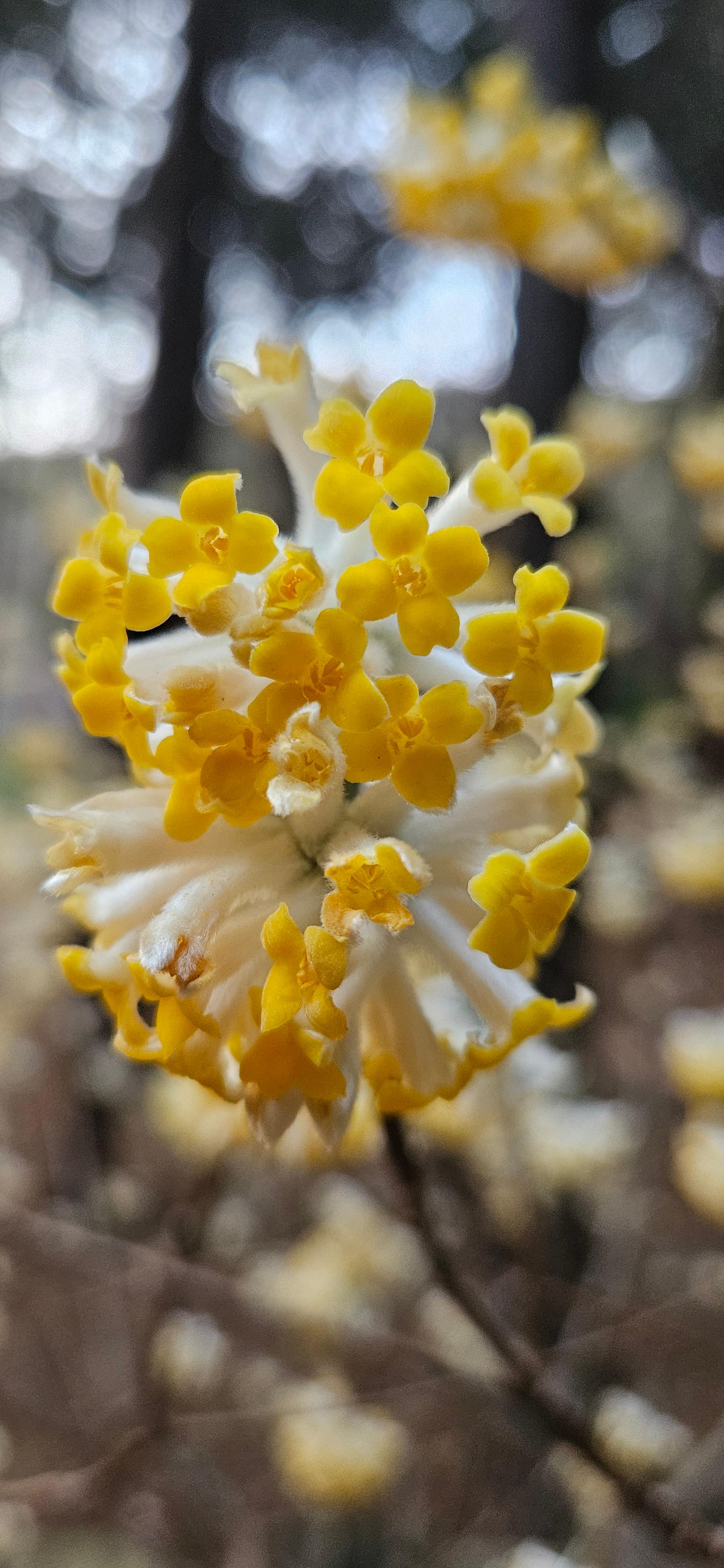
고흥 팔영산(八影山) 편백숲 삼지(三枝)닥나무꽃 — 한지(韓紙)를 낳은 나무, 선조들의 숨결을 역사로 남긴다
■ 꽃·곳·kośa — 언어는 무엇을 담고 있는가
우리는 꽃을 보이는 그대로
피어 있는 꽃(花, flower)로 바라본다.
그러나
꽃은 단순한 꽃이 아니다.
꽃은 씨앗을 품고 있는 구조다.
꽃은 피는 것이 아니라 —
생명을 품고 드러나는 것이다.
그래서 우리는 꽃을 볼 때마다
단순히 ‘아름답다’고 말하면서도,
어딘가 설명하기 어려운 생명의 감동을 함께 느낀다.
꽃은 씨앗을 품고 있고,
씨앗은 생명의 뿌리이다.
우리는 꽃의 아름다움만을 좋아하는 것일까.
아니면
우리 자신이 이미 하나의 꽃이기에,
꽃을 보는 순간
내 안에 잠들어 있던 생명의 기억이
깨어나는 것일까.
시인 김춘수는
「꽃」이라는 시에서
이름을 불러 줄 때 비로소 존재가 된다고 말했다.
이름과 존재,
그리고 꽃.
이 세 가지는 이미 오래전부터
우리 마음속에서 하나로 이어져 있었다.
■ 1. 꽃은 ‘곳’이었다
◈ 아래 단어들이 모두 한 어원이라면?
꽃, 고추, (누에)고치, 꼬치(전남 방언),
곳간, 곶감, 꽂다,
꼬시다(유혹하다), 꼬시다(고소하다),
고깔모자(곳갈모자),
곶(串)-갑(岬), 호미곶, 섭지코지, 곶자왈,
곳(비녀), 꼿꼿이, 꽂꽂이, 송곳
고드름(곳어름), 곳(處), 곳집,
꼬투리(古語 고토리)…
그리고
구름, 양동이, 컵, 서랍, 상자, 금고,
사전(辭典), 공(球), 칼집, 쟁기,
맹세(서약), 씨방, 옥수수 수염, 향수,
쟁기의 보습, 남녀 생식 구조까지
—
이 모든 단어들이
범어(산스크리트어) kośa와 하나의 어원이라면?
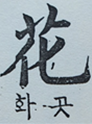

조선 중기 어학서
훈몽자회(訓蒙字會),
신증유합(新增類合)에는
꽃이 ‘곳’으로 기록되어 있다.
그리고 『용비어천가』 1장에는
“곶됴코 여름하나니 …”
— 꽃이 좋고 열매 맺는다는 뜻의 고어 표현이다.
참조 ▶ www.다일라.한국/40
이 구절에서 ‘곶’은
오늘날의 ‘꽃’을 의미한다.
즉,
‘꽃 = 곶 = 곳 ’
이라는 언어적 연속성은
문헌 속에서 분명하게 확인된다.
‘곳’(處)은 단순한 장소가 아니다.
무언가를 담는 자리다.

■ 2. 자연 — 담고, 모이고, 드러난다
꽃은 씨를 품고,
고추는 씨를 품은 채 길게 드러나며,
고드름은 물이 응결되어 아래로 뾰족해진다.
구름은 물방울을 담고 있다.
자연은 하나의 질서를 반복한다.
담는다 — 응축된다 — 드러난다.
우리는 오래전부터 알고 있었다.
“꽃 안 핀 삼월 없단다.”
봄이 오면
어김없이 생명이 솟아오른다는 사실을
어른들은 한마디로 말해 주었다.
그 말 속에는
자연의 구조를 꿰뚫는 직관이 들어 있었다.
꽃 → 씨방 → 그릇 → 저장 → 칼집 → 돌출 → 끌림
■ 3. 사물 — 그릇과 꽂힘의 구조
칼집은 칼을 감싼다.
칼은 그 안에 꽂힌다.
꽂다는 단순한 동작이 아니다.
— 안으로 들어가 자리 잡는 행위다.
서랍은 물건을 담고,
컵은 물을 담고,
객실은 사람을 담는다.
사전은 단어를 담는다.
— 단어라는 씨앗을 담는 그릇이다.
사전도 꽃이다.
■ 4. 형상 — 안에서 밖으로 드러난다
곶은 바다로 뻗은 땅이다.
섭지코지
호미곶
고깔모자는 위로 솟고,
쟁기의 보습은 뾰족하게 땅을 가른다.
꼬치, 곶(串), 고깔모자, 보습은
모두
안에서 형성된 것이 — 밖으로 드러난 형상이다.
※ ‘곶자왈’ 역시
곶(串) + 자(雌) + 벌(발·불)→'왈' = 곶자왈
올록볼록 숲지형이 곶자왈로 불린다.
■ 5. 생명 — 씨앗과 그릇
씨방은 생명을 품고,
고치는 생명을 감싼다.
남도에서는 어린아이의 생식기를
‘꼬추’ 또는 ‘꼬치’라고 부른다.
— 씨앗과 그릇 구조를 드러내는 말이다.
고추는 씨를 품고 있으며,
그 형상 또한 길고 뾰족하다.
생명은 같은 흐름을 따른다.
품는다 — 감싼다 — 드러난다.
■ 6. 감각 — 끌어당기는 힘
남도에서는
“참기름이 꼬시다(고소하다)”라고 말한다.
고소한 향은 퍼지며 사람을 끌어당기고,
꼬시다(유혹하다)는 남녀 마음을 안으로 끌어들인다.
— 안으로 향하는 힘이다.
■ 7. kośa — 사전 속에 남아 있는 구조
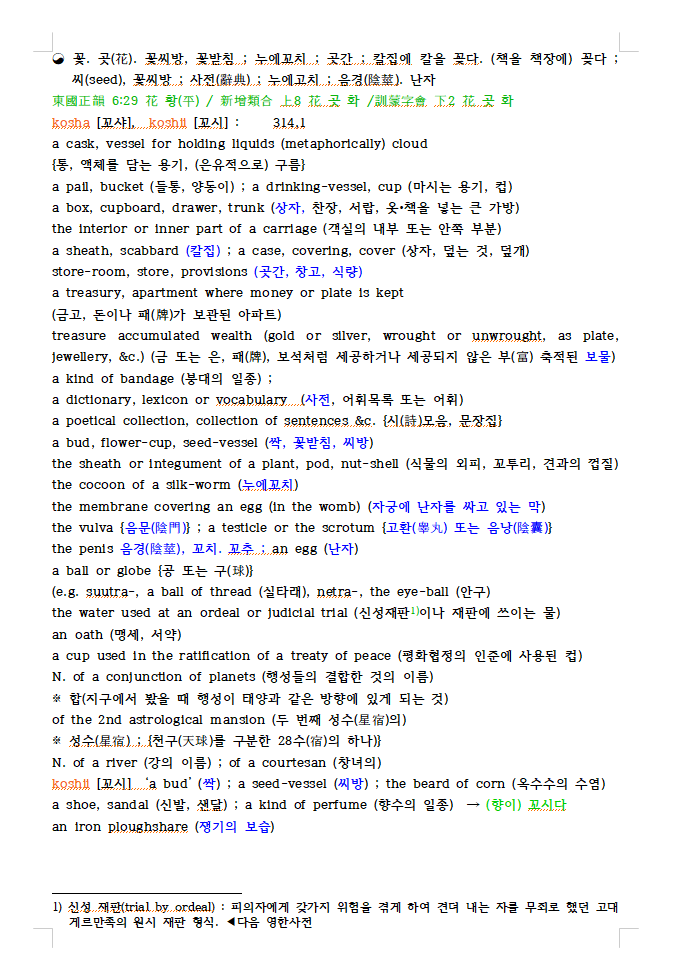
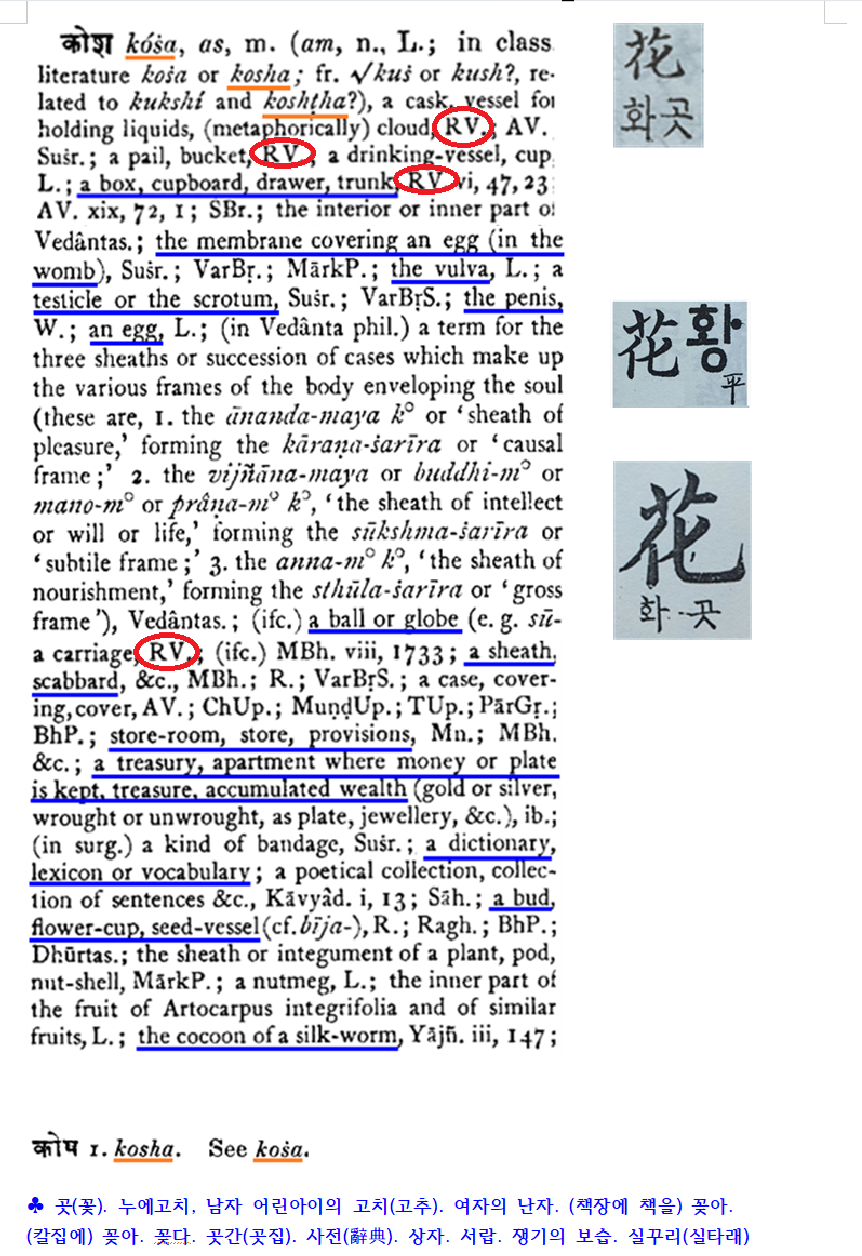
모니에 윌리엄스 경(卿), A Sanskrit-English Dictionary(범영사전), 314쪽
kośa / kośī의 의미는 다음과 같다.
a vessel — 그릇
a box — 상자
a sheath — 칼집
a store-room — 곳간
a dictionary — 사전
a seed-vessel — 씨방
a cocoon — 고치
the membrane of an egg — 난자를 싸는 막
the penis / egg — 생식 구조
a cup — 컵
cloud — 구름
kośī
a kind of perfume — 향수
a seed-vessel — 씨방
an iron ploughshare — 쟁기 보습
이 의미들은 서로 떨어져 있지 않다.
■ 7-1. 서양 언어와 범어 — Cognate Indo-European Languages
모니에 윌리엄스 경(卿)의 사전의 서문에는
**“Cognate Indo-European Languages”**라는 표현이 분명히 등장한다.
이는
산스크리트가
라틴어, 그리스어, 영어 등
서양 주요 언어들과 동족어 관계에 있다는 선언이다.
즉
범어는 단순한 인도의 고전어가 아니라
— 서양 언어의 뿌리와 연결된 언어다.
그렇다면 질문은 더 깊어진다.
그 범어와 구조적으로 맞닿아 있는
이 ‘꽃·곳’ 의미망은
왜
— 한국어 속에서 이렇게 살아 있는가
■ 8. 고대 문헌과 시간
범어(梵語 산스크리트어)는
리그베다(Rigveda)와 같은
고대 문헌에서 이미 사용된 언어다.
기원전 1500년,
많게는 기원전 4000년 전후까지 거슬러 올라간다.
적어도 3500년의 역사이다.
■ 9. 산스크리트어 현실
오늘 인도에서
산스크리트어를 모국어로 쓰는 사람은 약 2만 4천 명 수준이다.
— 생활 언어가 아니라 전통 언어로 남아 있다.
■ 10. 그러나 한국어에는 남아 있다
꽃, 고드름, 곶자왈, 곳간, 곶감,
꼬시다, 고소하다, 섭지코지, 호미곶, 곳집,
꼬깔모자, 꽂다, 꽂꽂이, 꼬치구이,
곳게(꽃게), 곧다, 꼿꼿이,
곳(處), 곳(비녀), 누에고치
고추·꼬치(pepper, penis), 꼬시다
이 어휘들은 흩어진 것이 아니다.
— 하나의 구조를 공유한다.
■ 11. 질문
이 구조는 어디에서 살아남았는가.
이 언어의 실제 사용자들은 누구였는가.
왜 어떤 언어에서는 희미해지고
어떤 언어에서는 살아 남았는가.
그들은 어디로 갔는가.
■ 12. 전승과 증언 — 시바와 동방의 기억
다음과 같은 기록이 전해진다.
“Guru가 1979년 8월 16일부터 8월 28일 사이에 대만에서 13회 강연한 일이 있다.
그 때 그가 ‘SHIVA is Mongolian’이라 말한 사실은
1980년대 초 한국에 드나들던 아난다마르가 교사들로부터 자주 들은 이야기이다.”
宇耕 장경석, 나를 찾은 그 세월 (서울 : FKI미디어, 2009), p.102
또한 같은 책에는 다음과 같은 증언이 실려 있다.
“7000년 전의 SHIVA신은 몽골계 인물입니다. 한국인은 몽골계 사람입니다.
석가모니는 히말라야 부근에서 출현하였습니다.
여러분이 요가에 관심이 많은 것은 SHIVA와 같은 피 때문입니다.”
(Ibid., p.102)
또 다른 기록에서는 다음과 같이 전한다.
“당신의 민족은 과거에 동서양을 망라한 거대한 나라를 가졌었죠.
당신의 조상들이 인도에 문화를 전했습니다… 머지않아 중심국가가 됩니다. 준비되어 있나요?”
宇耕 장경석, 100년을 살면서 (서울 : GSwork, 2019), p.233
이러한 기록들은 역사적 사실로 단정할 수는 없지만,
하나의 방향을 가리킨다.
— 언어와 문화의 뿌리가 단일 지역이 아니라
넓은 이동과 교류 속에서 형성되었을 가능성을 시사한다.
■ 13. 추가적 단서 — ‘강가’라는 이름
인도에서는 갠지스강을
지금도 ‘강가(Gaṅgā)’라 부른다.
(김석훈, 우리말범어사전, 25쪽)
영어식 표기는 Ganges지만,
소리 내어 읽으면 ‘강에스(강에서)’와 가깝다.
이는 단순한 음의 우연이 아니라
— 오래된 언어 층위의 흔적일 가능성을 생각하게 한다.
■ 14. 학술적 정리
꽃·곳·고치·곶·고드름·고추·꼬시다로 이어지는 어휘군과
범어 kośa 계열의 의미 결속은
매우 오래된 공통 의미층을 공유할 가능성을 강하게 시사한다.
■ 15. 결론 — 언어와 다일라
이 글이 보여 주는 것은 하나다.
언어는 단어의 집합일까.
아니면 흐름일까.
우리는 오래전부터
사람을 꽃에 비유해 왔다.
“사람이 꽃보다 아름답다”는 노래처럼,
사람 또한
무언가를 품고 있는 존재이기 때문이다.
이 문제는 단순한 어원의 문제가 아니다.
언어의 기억이며,
문화의 흐름이며,
인간의 뿌리에 대한 질문이다.
내 안에 잠들어 있던 감각을 깨워
스스로를 다시 발견하는 일이다.
■ 마지막 문장
꽃 하나는 — 언어사의 대지진일지도 모른다.
그 흔들림은
우리가 알고 있던 언어와 역사를
다시 보게 만들고,
마침내
잊혀진 언어의 기억을 깨운다.
※ 주(註)
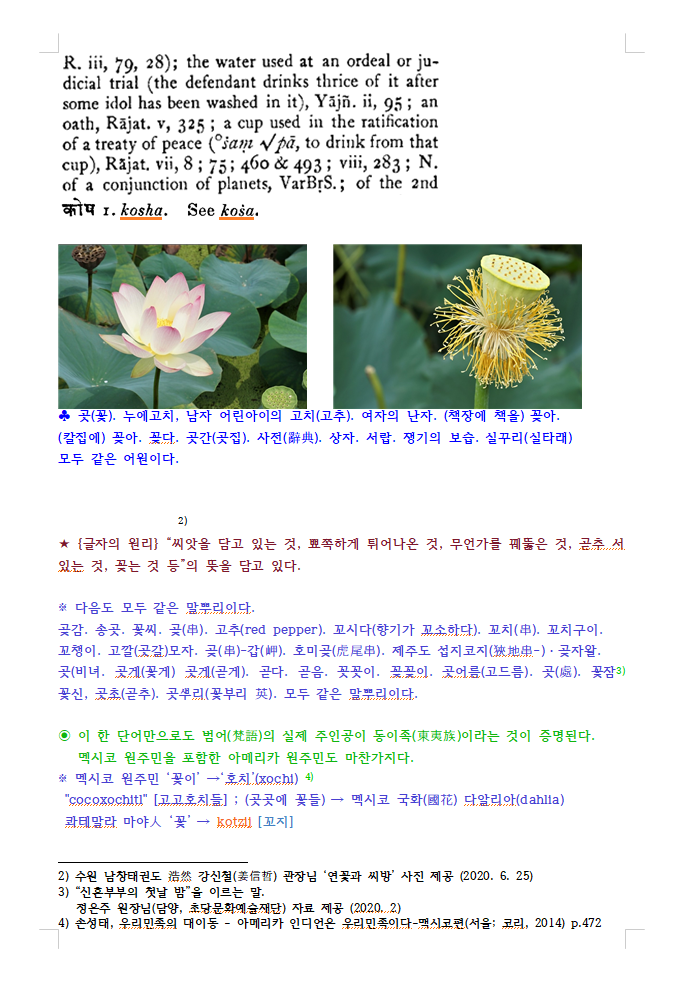
빨간 원(圓)안 에 표시된 RV는 약 3,500년 전의 인류 최고(最古) 문헌인
리그베다(Rigveda)에 기록된 용례를 의미한다.
www.다일라.한국/40
‘불휘(뿌리)’의 어원과 인간 존재의 근원
김석훈 | 우리말 뿌리연구가, 『우리말 범어사전』 편저자 | 역사계보 족보연구가, 『천제환국조선인류역사계보 』 두루마리 편 모튼 베이 피그(Moreton Bay Fig, 학명: Ficus macrophylla) : 미국 캘리포
www.xn--2j1b40gc5q.xn--3e0b707e
www.다일라.한국/2
☆ 다 깨어 일어나라!!! 다일라!!! ☆ --대한민국 새로운 구호 제창
☆ 다 깨어 일어나라!!! 다일라!!! ☆ --대한민국 새로운 구호 제창
대한민국 새로운 구호 제창 다일라!!! 다 깨어 일어나라! 화이팅은 “투지(鬪志)”“전의(戰意)”를 뜻하는 영미권의 “파이팅 스피리트” (Fighting Spirit)를 사용하면서 생겨났다는 설(說)과 일본
www.xn--2j1b40gc5q.xn--3e0b707e
●스스로 "나"를 사랑하고, 우리말과 역사를 사랑하는 모든 사람들에게 전달해 주십시오.
위 내용은 인터넷 주소창과 카톡에 아래와 같이 바로 입력하여 볼 수 있습니다.
www.다일라.한국/59
◈ ◈ ◈ ◈ ◈ ◈ ◈ ◈ ◈ ◈ ◈ ◈ ◈ ◈ ◈ ◈ ◈ ◈ ◈ ◈ ◈ ◈ ◈ ◈ ◈ ◈ ◈ ◈ ◈ ◈ ◈ ◈
Kim Seok-Hoon
Korean Etymology Researcher
Editor of Our Korean–Sanskrit Etymological Dictionary
Genealogical & Historical Lineage Researcher
Compiler of the scroll The Genealogical History of Humanity from the Heavenly Emperor Hwan-State and Joseon
■ Flower · Got · Kośa — What Does Language Hold?
We usually look at a flower just as it appears—
a blooming flower (花, flower).
But—
a flower is not merely a flower.
A flower is a structure that holds seeds.
A flower does not simply bloom—
it reveals life that it has been holding within.
And so, whenever we see a flower,
we say it is “beautiful,”
yet at the same time,
we feel a certain indescribable emotion—
a deep resonance of life itself.
A flower holds seeds,
and seeds are the root of life.
Do we simply admire the beauty of flowers?
Or—
because we ourselves are already flowers,
when we see one,
does something within us awaken—
a memory of life that has long been asleep?
The poet Kim Chun-soo wrote in his poem “Flower”
that a being comes into existence
only when it is called by its name.
Name, existence, and flower—
these three have long been connected
deep within our hearts.
■ 1. Flower Was Once “Got”
What if the following words all share the same origin?
Flower, chili pepper, cocoon, skewer (regional dialect),
granary, dried persimmon, to insert or stick,
to entice (emotionally / sensorially),
cone-shaped hat,
cape (landform), Homigot, Seopjikoji, Gotjawal,
hairpin, upright posture, arrangement of flowers, awl,
icicle, place, storage house,
pod…
And beyond these:
cloud, bucket, cup, drawer, box, safe,
dictionary, sphere, sheath, plough,
oath, seed vessel, corn silk, perfume,
ploughshare, even reproductive organs—
—
What if all these words
share a common root
with the Sanskrit word kośa?
In Joseon-era linguistic texts
such as Hunmongjahoe and Sinjeung Yuhap,
the word for flower appears as “got.”
And in Chapter 1 of the Yongbieocheonga, the following line appears:
“Got-dyoko yeoreum-hanani …”
— an old expression meaning that flowers are beautiful and bear fruit.
In this line, “got”
refers to what we now call “flower.”
That is,
“flower = got = place (got)”
This linguistic continuity
is clearly confirmed in historical texts.
“Got” does not simply mean a place.
It means a space that holds something within.
■ 2. Nature — Holding, Gathering, Revealing
A flower holds seeds.
A chili pepper holds seeds and extends outward.
An icicle forms as water gathers and solidifies downward.
Clouds hold droplets of water.
Nature repeats a single pattern:
Holding — condensing — revealing.
We have always known this.
“There is no March without blooming flowers.”
With spring, life rises again without fail—
and our ancestors expressed this truth
in a single sentence.
Within that sentence
was an intuitive grasp of nature’s structure.
Flower → seed vessel → container → storage → sheath → protrusion → attraction
■ 3. Objects — The Structure of Containment and Insertion
A sheath holds a blade.
The blade is inserted into it.
“To insert” is not merely an action—
it is the act of entering and taking position within.
Drawers hold objects.
Cups hold water.
Rooms hold people.
A dictionary holds words—
seeds of meaning.
A dictionary, too, is a flower.
■ 4. Form — From Inside to Outside
A cape is land extending outward into the sea.
Seopjikoji.
Homigot.
Cone-shaped hats rise upward.
Ploughshares pierce the earth.
Skewers, capes, hats, ploughs—
all share one form:
what is formed inside
emerges outward.
■ 5. Life — Seed and Vessel
The seed vessel holds life.
The cocoon encloses life.
In southern dialects of Korea,
a child’s genitalia is called “kkochu” or “kkochi.”
This is not mere slang—
it is a direct expression
of the structure of seed and vessel.
A chili pepper holds seeds,
and its form is elongated and pointed.
Life follows the same pattern:
to hold — to enclose — to reveal.
■ 6. Sensation — The Force of Attraction
In southern dialects, people say:
“Sesame oil smells kosi-da (rich and enticing).”
A fragrant aroma spreads and draws people in.
“Kkosida (to entice) draws the hearts of men and women inward.” —
a force that attracts into the structure.
■ 7. Kośa — The Structure Preserved in a Dictionary
In A Sanskrit-English Dictionary by Monier-Williams,
kośa / kośī carries the following meanings:
a vessel — container
a box — chest
a sheath — scabbard
a store-room — storage
a dictionary — lexicon
a seed-vessel — ovary
a cocoon — cocoon
the membrane of an egg — enclosing membrane
the penis / egg — reproductive structure
a cup — cup
cloud — cloud
kośī:
a kind of perfume — fragrance
a seed-vessel — ovary
an iron ploughshare — plough blade
These meanings are not separate.
They converge into one:
holding — enclosing — containing — storing — inserting — protruding — attracting
■ 7-1. Sanskrit and the West — Cognate Indo-European Languages
In the preface of the same dictionary appears the phrase:
“Cognate Indo-European Languages.”
This indicates that Sanskrit is related to
Latin, Greek, English, and other Western languages.
Thus, Sanskrit is not merely an ancient Indian language—
it is connected to the roots of Western linguistic systems.
Then a deeper question arises:
Why does this “flower–got” semantic structure
remain so vividly alive in Korean?
■ 8. Time and Ancient Texts
Sanskrit appears in ancient texts
such as the Rigveda.
It dates back to around 1500 BCE,
possibly even earlier.
A linguistic history spanning over 3,500 years.
■ 9. The Reality of Sanskrit Today
Today, only about 24,000 people in India
use Sanskrit as a native language.
It is no longer a living daily language—
but a preserved classical one.
■ 10. Yet It Lives in Korean
Flower, icicle, Gotjawal, granary, dried persimmon,
to entice, fragrance, Seopjikoji, Homigot, storage house,
cone-shaped hat, insertion, arrangement, skewers,
crab (flower crab), straightness, uprightness,
place, hairpin,
chili pepper (both food and anatomical term)—
These words are not random.
They share one underlying pattern.
■ 11. A Question
Where did this structure survive?
Who were its true speakers?
Why did it fade in some languages
but remain alive in others?
Where did those people go?
■ 12. Transmission and Testimony — Shiva and Memory
Some records convey the following:
“SHIVA is Mongolian.”
(The Years I Found Myself, p.102)
Another account states:
“Shiva of 7,000 years ago was of Mongolian origin…”
These testimonies cannot be taken as definitive history—
but they point toward a possibility:
that language and culture were shaped
not in isolation,
but through wide movements and exchanges.
■ 13. Another Clue — “Ganga”
In India, the Ganges River
is still called “Ganga.”
Though written as Ganges in English,
its sound resembles “gang-a.”
This may not be coincidence—
but a trace of deeper linguistic layers.
■ 14. Academic Summary
The semantic linkage between
flower–got–cocoon–cape–icicle–chili–enticing
and Sanskrit kośa
strongly suggests
the possibility of a shared ancient semantic layer.
■ 15. Conclusion — Language and Daila
This text reveals one thing:
Is language a collection of words?
Or is it a flow?
We have long compared humans to flowers.
As the song says,
“People are more beautiful than flowers,”
because humans too
are beings that hold something within.
This is not merely a question of etymology.
It is a question of memory,
of culture,
and of human origins.
Da·illa, therefore,
is not about creating something new—
but about rediscovering
the unseen flow alive within our language,
awakening the dormant senses within us,
and rediscovering ourselves.
■ Final Line
A single flower—
may be a seismic event in the history of language.
And that tremor
forces us to see language and history anew—
until, at last,
it awakens
the forgotten memory of language.