주후(혀)- 주둥이 - 주걱 - 주먹 - 주전부리 , 닭 모이 주는 소리
김석훈 | 우리말 뿌리연구가, 『우리말 범어사전』 편저자
| 역사계보 족보연구가, 『천제환국조선인류역사계보 』 두루마리 편
| '다일라 운동' 주창
광양경제신문 (2026.1.21)
http://m.genews.co.kr/news/articleView.html?idxno=493464
닭을 부르던 소리에서 시작된 언어의 기억
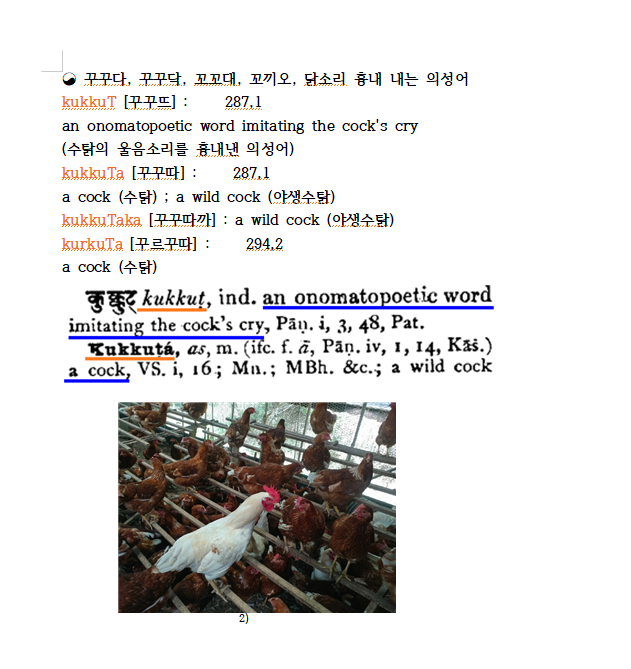
고흥에서 닭에게 모이를 줄 때 어른들은 닭을 향해 이렇게 불렀다.“주후~~~~ 쥬주주주주~~~~~~.” 어린 시절에는 그저 닭을 부르는 소리쯤으로 여겼다. 의미 없는 흉내말, 동물을 다루기 위한 관
m.genews.co.kr
고흥의 먹이는 말이 되고, 말은 다시 먹이가 되었다
1. 닭을 부르던 소리 속의 뜻
고흥에서는 닭에게 모이를 줄 때 이렇게 불렀다.
“주후~~~~ 쥬주주주주~~~~~~”
“주후~~~~ 쥬주주주주~~~~~~”
이 소리는 단순한 흉내말이 아니다.
그 안에는
“주둥이를 벌려라,
혀를 내밀어 받아먹어라
라는 뜻이 담겨 있다.
사람에게 “어서 밥 먹어라” 하듯,
닭에게도 몸의 언어로 먹음을 가르치던 말이었다.
2. 남도 말에서 ‘주둥이’는 얼굴이 아니라 혀다
남도 사투리에서
- 쎄빠닥 : 혀
- 주둥이·주뎅이 : 입 전체가 아니라,
혀를 중심으로 한 먹는 자리
주둥이는 말을 꾸미는 입이 아니라,
먹고·핥고·받아들이는 기관이다.
그래서 닭을 부를 때도
“이리 와라”가 아니라
“혀를 내밀어 먹어라” 뜻의 소리가 먼저 나온다.
3. 주둥이·주뎅이의 뿌리 ― 주후
- 주둥이 = 주후 + 둥이
- 주뎅이 = 주후 + 덩이
이 주후는 단순한 감탄사나 의성어가 아니라,
고대 언어에서 분명한 의미를 가진 어근이다.
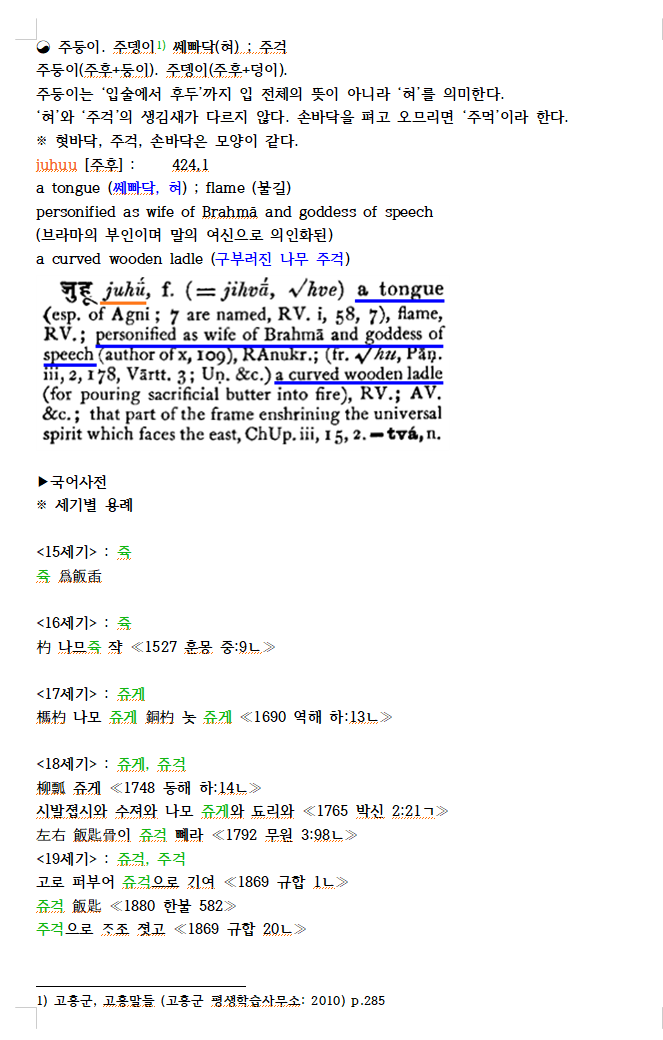
📘 Sir Monier Monier-Williams 『A Sanskrit–English Dictionary』 표기
juhuu [주후] : 424,1
- a tongue (쎄빠닥, 혀)
- flame (불길)
- personified as the wife of Brahmā and goddess of speech
(브라마의 부인이며 말의 여신으로 의인화됨) - a curved wooden ladle
(구부러진 나무 주걱)
혀 · 불 · 말 · 주걱
이 네 가지가 하나의 말로 묶여 있다.
옛사람들은
형태와 기능이 같으면 이름도 하나로 보았다.
4. 혀 · 주걱 · 손바닥(주먹)은 같은 계열이다
우리 선조들 동이족의 말의 직관은 매우 분명하다.
- 혓바닥
- 주걱
- 손바닥
이 셋은 모두
- 평평하고
- 오므릴 수 있으며
- 퍼 올리고
- 받아 전달하는 도구다.
그래서
- 손바닥을 오므리면 주먹이 되고
- 혀를 내밀면 말과 먹음이 되고
- 주걱을 움직이면 밥을 퍼 올리는 행위가 된다
이 모두는
‘바닥’과 ‘퍼 올림’의 세계에 속한다.
5. 여기서 ‘주전부리’가 이어진다
주전부리는
- 정식 밥상이 아니라
- 입에 조금씩 넣어 먹는 것
- 손이나 주걱으로 집어 먹는 것
- 혀로 바로 받아먹는 음식
을 가리킨다.
즉,
배를 채우는 식사가 아니라
혀가 먼저 반응하는 먹이다.
그래서 ‘부리’는 여기서
새처럼 콕콕 집어 먹는 행위에서 나온 말이며,
주전부리는 혀가 먼저 먹는 음식이다.
맺음말
고흥에서 닭에게 모이를 던지며 부르던
그 평범한 소리 속에는,
- 주후 (혀)
- 주둥이 (먹는 자리)
- 주걱 (퍼 올림)
- 주먹 (쥠과 결속)
- 주전부리 (혀가 먼저 먹는 음식)
그리고
생명을 부르는 소리가
모두 함께 들어 있다.
고흥말은
사람과 짐승과 불과 말이
아직 나뉘지 않았던 시절의
몸의 기억을 오늘까지 전하고 있는 언어다.
🔹 한 줄 요약
주후(혀)는 먹고, 퍼 올리고, 말을 만들던 몸의 중심이었고
남도의 말은 그 몸의 기억을 지금까지 간직하고 있다.

●스스로 "나"를 사랑하고, 우리말과 역사를 사랑하는 모든 사람들에게 전달해 주십시오.
위 내용은 인터넷 주소창과 카톡에 아래와 같이 바로 입력하여 볼 수 있습니다.
www.다일라.한국/46
www.다일라.한국/2 ☆ 다 깨어 일어나라!!! 다일라!!! ☆ --대한민국 새로운 구호 제창
☆ 다 깨어 일어나라!!! 다일라!!! ☆ --대한민국 새로운 구호 제창
대한민국 새로운 구호 제창 다일라!!! 다 깨어 일어나라! 화이팅은 “투지(鬪志)”“전의(戰意)”를 뜻하는 영미권의 “파이팅 스피리트” (Fighting Spirit)를 사용하면서 생겨났다는 설(說)과 일본
www.xn--2j1b40gc5q.xn--3e0b707e
Kim Seok-Hoon
Korean Etymology Researcher
Editor of Our Korean–Sanskrit Etymological Dictionary
Genealogical & Historical Lineage Researcher
Compiler of the scroll The Genealogical History of Humanity from the Heavenly Emperor Hwan-State and Joseon
Food Became Language in Goheung,
and Language Became Food Again
1. The Meaning Hidden in the Call to Chickens
In Goheung, when people fed chickens, they called out like this:
“Juhu~~~~ jujjujujuju~~~~~~”
“Juhu~~~~ jujjujujuju~~~~~~”
This was not a simple imitation sound.
Within it was the message:
“Open your mouth,
stretch out your tongue,
and receive the food.”
Just as people say “Come and eat” to one another,
this was a bodily language used to teach animals how to eat.
2. In Southern Dialects, Judungi Is Not the Face, but the Tongue
In southern Korean dialects:
- sse-ppadak: tongue
- judungi / judengi: not the whole mouth,
but the place of eating centered on the tongue
Judungi is not an organ for decorating speech.
It is an organ for eating, licking, and receiving.
That is why, when calling chickens,
people did not say “Come here,”
but instead used a sound meaning
“Stretch out your tongue and eat.”
3. The Root of Judungi and Judengi — Juhu
- judungi = juhu + -dungi
- judengi = juhu + -dengi
Juhu is not a mere exclamation or onomatopoeia.
It is a root with a clear meaning in ancient languages.
📘 Entry from Monier-Williams, A Sanskrit–English Dictionary
juhuu [주후] : 424,1
- a tongue (sse-ppadak, tongue)
- flame
- personified as the wife of Brahmā and goddess of speech
- a curved wooden ladle (used for pouring offerings)
Tongue · flame · speech · ladle —
these four meanings are united in a single word.
For ancient people,
things that shared form and function also shared a name.
4. Tongue, Ladle, Palm, and Fist Belong to the Same System
The intuition of Goheung speech is very clear.
- tongue
- ladle
- palm of the hand
All of these are:
- flat,
- able to close,
- able to scoop up,
- able to receive and pass on.
Thus:
- when the palm closes, it becomes a fist,
- when the tongue extends, it becomes speech and eating,
- when the ladle moves, it becomes the act of serving food.
All belong to the world of “the base” and “scooping upward.”
5. From Here Comes Jujeonburi (Snacks)
Jujeonburi refers to:
- not a formal meal, but
- eating small amounts,
- picking food up with the hand or a ladle,
- food taken directly onto the tongue.
In other words,
it is not food meant to fill the stomach,
but food to which the tongue responds first.
Thus, buri here simply refers to
the act of picking and eating in small bites,
like a bird pecking at food.
Closing Words
In the ordinary call used when feeding chickens in Goheung were contained:
- juhu (tongue)
- judungi (the place of eating)
- jugak (ladle, scooping up)
- jumeok (fist, grasping and binding)
- jujeonburi (food eaten first by the tongue)
and
the sound that calls life itself.
The speech of Goheung preserves, even today,
the bodily memory of a time when humans, animals, fire, and language were not yet separated.
🔹 One-Line Summary
Juhu (the tongue) was the bodily center of eating, lifting, and speech,
and the language of southern Korea still carries that bodily memory today.
● Please share this with everyone who loves themselves,
loves the Korean language, and loves history.
You can view this text directly by entering the following address
into your web browser or KakaoTalk: