쌧다 , 쌔부럿다, 라틴어 Centum , 영어 Century
김석훈 | 우리말 뿌리연구가, 『우리말 범어사전』 편저자
| 역사계보 족보연구가, 『천제환국조선인류역사계보 』 두루마리 편
| '다일라 운동' 주창
쌧다 , 쌔부럿다, 라틴어 Centum , 영어 Century
■ 1. 남도말 ‘쌔따·쌧다·쌔부럿다’의 맛
쌔따 / 쌧다
→ “엄청 많다, 수두룩하다”는 뜻.
쌔부럿다
→ “아주 많이 나다, 엄청나게 쌓이다, 넘쳐 나다” 는 남도말 '부럿다' 첨가로 의미 강조.
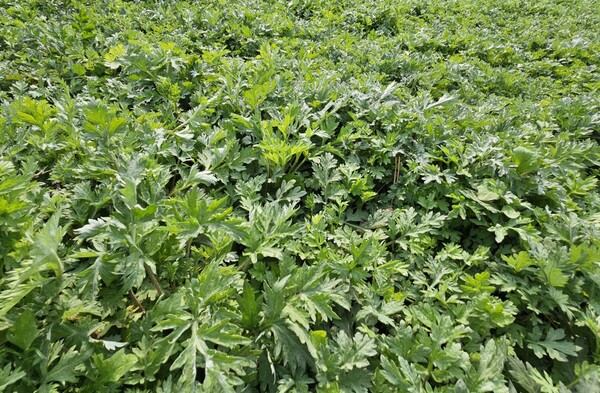
와~~~ 여기 쑥이 쌔부럿네!
→ “와, 여기 쑥이 정말 끝도 없이 수두룩하게 났네!”
일상에서는
- “사람이 쌔부럿다” → 사람이 바글바글 많다.
- "군산에 짬뽕집 쌔부렀다…근디 겁나게 다 맛있다"
너무 많아서 더는 셀 수 없을 때 쓰이는 말이다.
■ 2. 사투리 ‘쌔-’와 범어 sata의 연결
사투리의 어간 ‘쌔-’를 범어(Sanskrit) sata [싸타]와 함께 보면 의미가 놀라울 만큼 정확히 겹친다.
sata [싸타]
- a hundred
- exceeding 100
- any very large number
뜻풀이:
→ ‘백, 백을 넘는 수, 아주 많은 수’
즉, 단순한 100이라는 기수(基數)가 아니라,
→ “백을 훨씬 넘어 셀 수 없이 많은 수”라는 확장된 개념을 포함하는 말이다.
이 sata가
- 소리상으로는: 사타 → 싸타 → 쌔-
- 의미상으로는: ‘백’ → ‘백을 훨씬 넘는 엄청 많은 수’
로 변화·확장되면서,
전라도 방언의 **“쌔따, 쌧다, 쌔부럿다(엄청 많다)”**와 만난 것으로 볼 수 있습니다.
■ 3. 라틴어 centum, 영어 century와의 계보
같은 뿌리에서 나온 다른 가지로는 다음이 있다.
- 라틴어 centum [쎈툼]
→ “a hundred(기수 백); 100, 대단히 많은 수” - 영어 century
→ 100년
이처럼
sata – centum – century
는 모두 ‘100’이라는 공통된 수 개념을 공유하며,
우리말 전라도 사투리의 쌔- 또한 같은 의미권,
즉 **“백, 그리고 백을 넘는 엄청 많은 수”**라는 세계에 서 있는 셈이다.
■ 4. 숫자 ‘백’에서 ‘아주 많다’로의 의미 확장
우리도 일상에서
- “백 번도 넘게 말했어.”
- “백만 번 부탁해도 모자라.”
라고 할 때, 실제로 100번·백만 번을 세어 본 것이 아니라,
→ “정말 수없이 많이”라는 과장 표현으로 쓴다.
- “쌧다”
- “쌔부럿다”
를 세련된 사투리로 올려놓은 것이다. 그래서,
“여 여기 쑥이 쌔부럿네.”
라는 말 속에는,
단순한 수량 보고를 넘어,
- 눈앞이 녹색으로 꽉 찰 만큼
- 세는 것조차 포기할 만큼
- 보고 있는 사람의 감탄이 절로 터져 나올 만큼
풍요와 충만함의 감각이 함께 실려 있다.
■ 5. 한국어의 모음 ㅏ → ㅐ 음운 변화와 ‘쌔-’의 성립
범어 **sata → 쌔-**의 연결을 가능하게 하는 핵심 언어 내부 장치는
바로 한국어의 대표적인 음운 이동인 ‘ㅏ → ㅐ’ 변화입니다.
실제로 한국어에는 다음과 같은 변화 사례가 다수 존재한다.
- 사키 → 새끼
- 아기 → 애기
- 삔다 → 삔대·빈대(떡)
- 갈라 → 가래
- 아리다 → 애리다
- 사다리 → 새다리
- 사립문 → 새랍문
이와 같은 규칙을 적용하면,
사타 → 싸타 → 쌔타(따) → 쌧다
라는 음운 변이는 충분히 자연스러운 한국어 내부 변화로 설명된다.
■ 6. 한 줄 정리
쌔따·쌧다·쌔부럿다는
범어 sata(싸타), 라틴어 centum, 영어 century와 같은 계열의
‘백(100)’에서 출발한 수 개념이
한국어의 ㅏ → ㅐ 음운 변화와
‘백 → 셀 수 없을 만큼 많다’는 의미 확장을 거쳐,
오늘 전라도 땅에서
“백을 훨씬 넘어서는 엄청난 풍요”를 표현하는 살아 있는 우리말로 남은 표현이다.
그래서 고흥 들녘에서 “쑥이 쌔부럿다”는 말은
단순한 양의 보고가 아니라,
수천 년 수(數) 개념의 이동과 음운의 흔적이 살아 숨 쉬는
한 줄짜리 역사·문화의 메아리라고 할 수 있다.
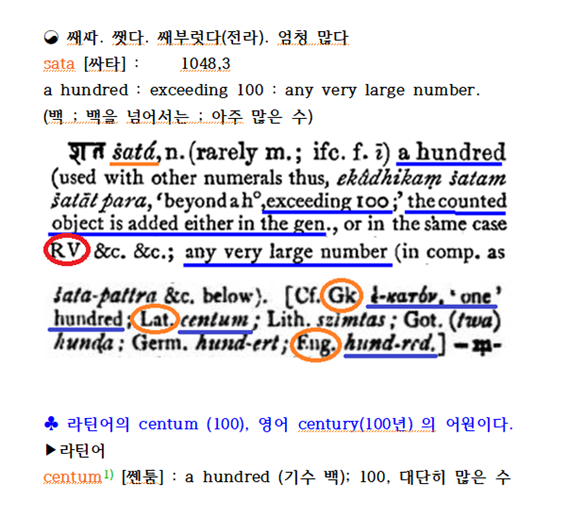
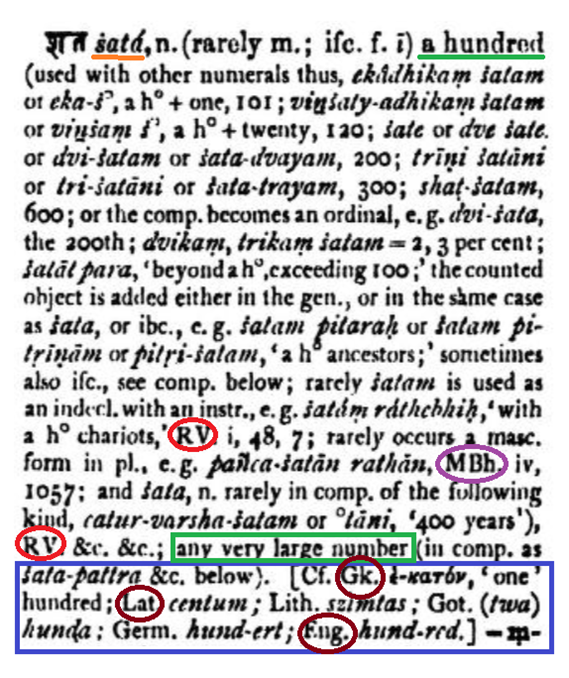
♣ 빨간원 안의 RV는 이 말이 3500년전 Rigveda(리그베다) 경전 속에 들어있다는 뜻.
●스스로 "나"를 사랑하고, 우리말과 역사를 사랑하는 모든 사람들에게 전달해 주십시오.
위 내용은 인터넷 주소창과 카톡에 아래와 같이 바로 입력하여 볼 수 있습니다.
www.다일라.한국/43
www.다일라.한국/2 ☆ 다 깨어 일어나라!!! 다일라!!! ☆ --대한민국 새로운 구호 제창
☆ 다 깨어 일어나라!!! 다일라!!! ☆ --대한민국 새로운 구호 제창
대한민국 새로운 구호 제창 다일라!!! 다 깨어 일어나라! 화이팅은 “투지(鬪志)”“전의(戰意)”를 뜻하는 영미권의 “파이팅 스피리트” (Fighting Spirit)를 사용하면서 생겨났다는 설(說)과 일본
www.xn--2j1b40gc5q.xn--3e0b707e
“Ssaetta, Ssaetda, Ssae-bureotda” , Centum , Century
Kim Seokhoon | Researcher of Korean Linguistic Roots, Editor of Korean Sanskrit Dictionary
| Genealogy & Historical Lineage Researcher, Compiler of the Scroll Cheonje Hwanguk–Joseon Human Lineage History
1. The Flavor of the Jeolla Dialect Words “ssaetta, ssaetda, ssae-bureotda”
ssaetta / ssaetda
→ Mean “extremely many, abundantly, in great quantity.”
ssae-bureotda (from ssae-beoryeotda)
→ An even stronger expression meaning
“to overflow with abundance,” “to pile up massively,” “to exist in overwhelming quantity.”
Example:
“Wow—there’s ssae-bureotda mugwort growing here!”
→ “Wow—there’s an endless, overwhelming amount of mugwort growing here!”
In daily life:
- “There are ssae-bureotda people.” → The place is packed with people.
- “The rain came ssaetda.” → It poured extremely hard.
These expressions are used when the amount is so great that it is no longer even countable.
2. The Connection Between the Dialect Root “ssae-” and Sanskrit sata
When we compare the dialect root “ssae-” with the Sanskrit word sata [sā-ta], their meanings overlap with remarkable precision.
sata [싸타]
- a hundred
- exceeding 100
- any very large number
Meaning:
→ “one hundred,” “more than one hundred,” and by extension,
→ “an extremely large quantity beyond counting.”
Thus, sata is not merely a numerical base unit of 100,
but a concept that already contains the expanded meaning of
“far beyond one hundred—countless in number.”
Phonetically:
sata → ssa-ta → ssae-
Semantically:
“100” → “far beyond 100, an enormous quantity”
Through this dual transformation of sound and meaning, sata naturally converges with the Jeolla dialect expressions
“ssaetta, ssaetda, ssae-bureotda” meaning “overwhelmingly many.”
3. The Same Lineage: Latin centum and English century
From the same ancient root, we also find:
- Latin centum → “one hundred; a great many”
- English century → a period of 100 years
Thus:
sata – centum – century
all share the same numerical origin of “100,” and also the shared extended sense of
“a vast, significant quantity.”
The Jeolla dialect ssae- firmly stands within this same semantic family—
the world of “one hundred and far beyond.”
4. From “One Hundred” to “Countless”: Expansion of Meaning
Even in standard Korean, we commonly say:
- “I told you more than a hundred times.”
- “Even a million pleas wouldn’t be enough.”
These are not literal numbers. They mean:
→ “an uncountable number of times.”
The people of Jeolla simply placed their own refined dialect expression in that same semantic position:
- “ssaetda”
- “ssae-bureotda”
So when someone says:
“Look—there’s ssae-bureotda mugwort here,”
the sentence carries far more than a mere report of quantity. It expresses:
- a field filled entirely with green,
- so abundant that counting becomes meaningless,
- so rich that admiration naturally bursts forth.
It is language saturated with both abundance and emotional astonishment.
5. The Korean Vowel Shift ㅏ → ㅐ and the Formation of “ssae-”
The linguistic mechanism that makes the transition from sata → ssae- possible is the well-known Korean vowel shift from ㅏ to ㅐ.
This shift appears widely in Korean:
- saki → saekki (child)
- agi → aegi (baby)
- pinda → pindae (rice cake)
- gala → garae
- arida → aerida
- sadari → saedari
- saripmun → saerapmun
Applying this same rule:
sata → ssa-ta → ssae-ta → ssaetda
This phonological transition is fully explainable as a natural internal development of Korean.
6. One-Sentence Summary
“ssaetta, ssaetda, and ssae-bureotda” are living Jeolla dialect expressions that originated from the same numerical root as Sanskrit sata, Latin centum, and English century. Through the Korean vowel shift ㅏ → ㅐ and the semantic expansion from “one hundred” to “countless abundance,” they have survived in today’s speech as vibrant expressions of overwhelming plenitude.
Thus, when someone in the fields of Goheung says,
“the mugwort is ssae-bureotda,”
it is not merely a report of quantity.
It is a single spoken echo in which thousands of years of numerical thought, sound change, and cultural memory still breathe quietly within one living sentence.