인생길 그 누구나 나그네
김석훈 | 우리말 뿌리연구가, 『우리말 범어사전』 편저자
| 역사계보 족보연구가, 『천제환국조선인류역사계보 』 두루마리 편
| '다일라 운동' 주창
초겨울 찬 공기에 떠오르는 말, ‘나그네’
초겨울 바람은 언제나 한 인간의 길을 생각하게 한다. 나뭇잎이 모두 떨어지고, 들판이 텅 비어가는 그 쓸쓸한 공기 속에서 우리는 문득 깨닫는다. 인생길은 결국 누구나 나그네라는 것을.
그런데 우리가 너무 익숙하게 써 온 이 말 ‘나그네’는 단순히 길을 떠도는 사람을 뜻하는 정도가 아니다. 그 어원을 따라가 보면 더 놀라운 의미가 드러난다.
1. 나그네의 깊은 뿌리 — ‘발가벗은 채 깨어난 존재’
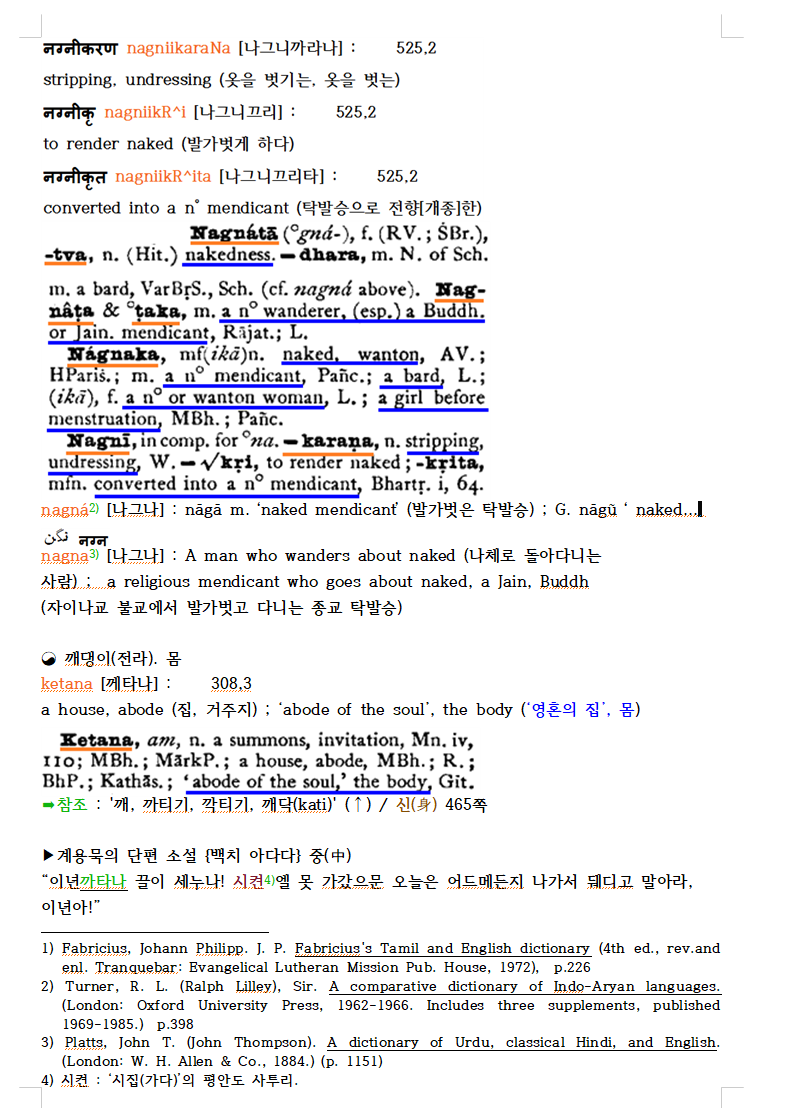
古 문헌—동국정운, 新增類合, 다양한 인디어·타밀어·우르두어·산스크리트어 사전—은 공통적으로 ‘나그네’를 다음과 같이 기록한다.
- nagna / nagna / nakkan / nāgā
→ 발가벗은 탁발승, 나체로 떠도는 수행자, 황량함 속의 시인을 뜻함.
즉, ‘나그네’는 단순한 여행자가 아니라
옷을 벗어 던지고, 세속적 장식까지 내려놓은 존재,
가난하지만 깨어 있는 사람을 의미했다.
이를 통해 우리는 다음의 음운 변화를 확인할 수 있다.
나그나 → 나그내 → 나그네
그리고 흥미롭게도,
영어 naked(벌거벗은) 역시 같은 뿌리에서 나왔다.
우리말과 인도·유라시아 언어들이 이어진 고대의 깊은 흔적이다.
♧ 나그네(nagna) 비교 : Zend. 젠드 ((조로아스터교의 경전 Avesta의 주해서)) 아베스타어(古이란어) maghna ← naghna ;
리투아니아어 nũgas ; 슬라브어 nagǔ ; 고트어 nagaths ; 앵글로색슨어 nacod ; 영어 naked ; 독일어 nackt.
— 모니에-윌리엄스 경(卿) 범영사전 525쪽 두 번째 칸에 기록됨. 서양 여러 언어 속에 ‘나그네(=nagna)’의 어원이 남아 있다.
2. 나그네는 ‘영혼의 주인’이라는 뜻을 가진다
우리 옛말에 ‘께테나(깨댕이)’, 즉 영혼이 깃든 집의 주인이라는 표현이 있다.
겉의 옷도, 지위도, 재산도 벗어버리면 남는 한 가지—
바로 ‘나’라는 영혼의 길을 스스로 걷는 존재,
그것이 나그네다.
나그네는 외롭고 황량하지만, 신비하게도 가장 자유롭다.
세상에 흔들리지 않는 자, 오직 길 위에서 깨어나는 자.
3. 초겨울은 나그네를 재촉한다
초겨울 찬 공기가 볼을 스치면
어느덧 우리도 삶의 본질을 바라보게 된다.
쓸쓸한 들판처럼,
한 해 동안 쌓였던 허식과 욕망도 바람에 씻겨나간다.
바로 그때 우리는 자신에게 묻는다.
“나는 어디서 왔고, 어디로 가는가?”
이 질문 앞에서 인간은 누구나
옷을 벗은 탁발승처럼,
맨몸으로 길을 걷는 나그네가 된다.
4. 다일라—나그네에게 주는 새벽의 외침
모든 것을 벗고 길을 걷는 나그네에게 필요한 말은 하나다.
“다일라!
다 깨어 일어나라!”
세속의 잠에서 깨고,
영혼의 주인으로 다시 서라는 말.
기미독립선언서가 민족에게 깨어남을 명령했다면,
다일라는 개개인의 영혼에게 깨어남을 명령하는 말이다.
결론
초겨울 바람은 우리를 다시 나그네로 만든다.
가진 것을 내려놓고, 본래의 나로 돌아오라는 신호다.
세계 어느 언어와도 깊게 연결된 이 오래된 우리말 나그네는
단순한 유랑자가 아니라,
영혼의 집을 찾아가는 존재를 뜻했다.
그러니 오늘도 한 번 외쳐보자.
다일라!
나그네들이여, 다 깨어 일어나라.
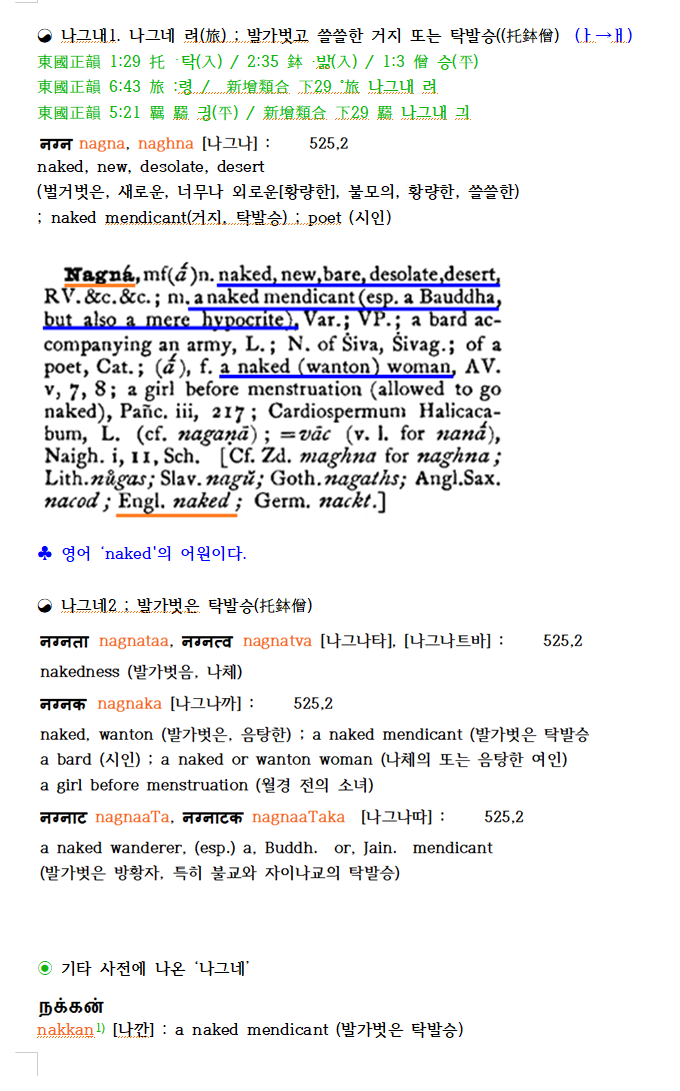
♧ nagna 비교 : [ Zend. 젠드 ((조로아스터교의 경전 Avesta의 주해서)) 아베스타어(고이란어) maghna ← naghna ; 리투아니아어 nũgas ; 슬라브어 nagǔ ; 고트어 nagaths ; 앵글로색슨어 nacod ; 영어 naked ; 독일어 nackt.] — 모니에-윌리엄스 경(卿) 범영 사전 525쪽 두 번째 칸에 기록됨. 서양 여러 언어 속에 ‘나그네(=nagna)’의 어원이 남아 있다.
인터넷 주소창과 카톡에 아래와 같이 바로 입력하여 볼 수 있습니다.
www.다일라.한국/35
www.다일라.한국/2 ☆ 다 깨어 일어나라!!! 다일라!!! ☆ --대한민국 새로운 구호 제창
☆ 다 깨어 일어나라!!! 다일라!!! ☆ --대한민국 새로운 구호 제창
대한민국 새로운 구호 제창 다일라!!! 다 깨어 일어나라! 화이팅은 “투지(鬪志)”“전의(戰意)”를 뜻하는 영미권의 “파이팅 스피리트” (Fighting Spirit)를 사용하면서 생겨났다는 설(說)과 일본
www.xn--2j1b40gc5q.xn--3e0b707e
Seokhoon Kim | Researcher of Korean Linguistic Roots, Editor of The Korean–Sanskrit Etymological Dictionary
| Historian of Genealogical Lineages, Author of The Heavenly Origin of Humanity: Genealogical Scroll of Joseon
🌳 The Word 'Nagne' (Wanderer) Rises in the Early Winter Chill
By Kim Seok-hoon | Researcher of Korean Word Roots, Editor of Korean-Sanskrit Dictionary
| Genealogist & History Researcher, Editor of the Cheonje Hwan-guk Joseon Human History Genealogy Scroll
The chill of early winter always brings thoughts of a human's journey. In the desolate air where all the leaves have fallen and the fields are bare, we suddenly realize that everyone is essentially a wanderer (나그네, Nagne) on the path of life.
Yet, this familiar word, 'Nagne', means much more than simply a person traversing a road. Following its etymology reveals a more astonishing meaning.
1. The Deep Root of 'Nageune' — 'An Existence Awakened While Naked'
Ancient literature—including Dongguk Jeongun, Sinjeung Yuhap, and various Dictionaries of Indic, Tamil, Urdu, and Sanskrit—commonly records the root of 'Nagne' as:
These terms mean: A naked mendicant, a wandering ascetic in the nude, or a poet in desolation.
In other words, 'Nagne' was not just a traveler; it signified a being who had shed their clothes and worldly adornments, an individual who was poor yet awakened.
Through this, we can confirm the following sound change in Korean:
Intriguingly, the English word naked also shares this same root. This is a deep, ancient trace linking the Korean language with Indo-Eurasian languages.
♦ Comparative forms of nagna
(As recorded in Sir Monier-Williams’ Sanskrit–English Dictionary, p. 525, 2nd column)
- German: nackt
- Zend/Avestan: maghna ← naghna
- Lithuanian: nũgas
- Slavic: nagǔ
- Gothic: nagaths
- Anglo-Saxon: nacod
- English: naked
- German: nackt
Across Western languages, the old root for nagna and nagne still survives.
- Comparison of Nagne (nagna): The ancient Iranian language of the Avesta (Zend) uses maghna ← naghna; Lithuanian uses nũgas; Slavic uses nagǔ; Gothic uses nagaths; Anglo-Saxon uses nacod; and English uses naked.
- This is recorded in the second column of page 525 of Monier-Williams' Sanskrit-English Dictionary, showing that the etymology of 'Nagne (=nagna)' remains in many Western languages.
2. Nagne Means 'The Master of the Soul'
In old Korean, there was an expression, 'Kketena' (깨댕이), meaning the master of the house where the soul resides.
When external clothes, status, and possessions are cast off, only one thing remains:
The being who walks the path of the soul—the 'Self'—is the Nageune.
The Nagne is lonely and desolate, yet, mysteriously, the most free. They are the one who is unshakeable by the world, the one who awakens only on the path.
3. Early Winter Urges the Nagne On
When the cold air of early winter brushes against our cheeks, we are prompted to look at the essence of life. Like a desolate field, the pretenses and desires accumulated over the year are washed away by the wind.
It is at that moment that we ask ourselves: "Where have I come from, and where am I going?"
Facing this question, every human becomes a Nagne, walking the path bare, like a naked mendicant.
4. Da·illa — A Cry at Dawn for the Nagne
To the Nagne who walks the road, stripped of everything, one word is necessary:
"Da·illa!
Awaken and rise up completely!"
This is the command to awaken from worldly slumber and stand again as the master of one's own soul. If the Korean Declaration of Independence commanded the nation to awaken, Da·illa is the command for the awakening of every individual soul.
❄ Conclusion
The early winter wind transforms us into the Nagne once more. It is a signal to let go of what we hold and return to our original self.
This ancient Korean word, Nagne, deeply connected to languages worldwide, meant not merely a transient wanderer but an existence searching for the house of the soul.
So, let us cry out today:
Da·illa!
Nagne, awaken and rise up completely!